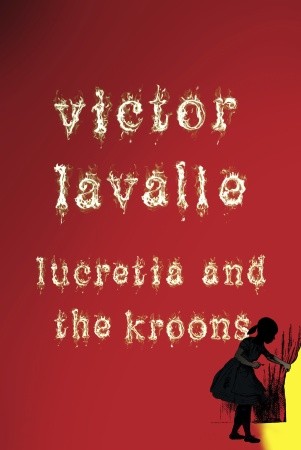
REVIEW: Lucretia and the Kroons, by Victor Lavalle

Twelve year old Lucretia lives in an Queens apartment building with her single mother. Her best friend Sunny (nee Zhao Hun Soong) is dying of cancer. One day, after Sunny is back from a prolonged treatment session, Lucretia arranges a play date with her.  Just when she Sunny is supposed to appear, Lucretia—called Loochie—finds out that Sunny has been kidnapped by the mysterious family of crackheads who live in the supposedly abandoned apartment 6D. Loochie goes up to save her friend.  What she finds there is a twisted, monster haunted version of their neighbor, hidden in a small apartment.

This suspenseful novella crafts turns an urban legend into a tense YA horror story.  The prose is nicely crafted, the mood teeters between classic horror and YA adventure. This slim book is a moving thriller that will remind you of Neil Gaiman’s CORALINE–but much darker. It firmly puts the urban in urban fantasy. The novella serves as a teaser for Victor Lavalle’s forthcoming horror novel, THE DEVIL IN SILVER. Fans of Colson Whitehead and China Mieville should check this one out.

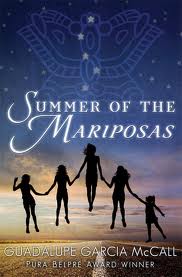
REVIEW: Summer of the Mariposas by Guadalupe Garcia McCall

Syncretic religion mixes two separate religious traditions—say, Christianity with  African Orisha worship—and combines them in a new way that honors both traditions. Garcia McCall has mixes Aztec and Mexican mythology with the ultimate quest story, The Odyssey and come up with a charming, richly layered YA novel. In a small Texas town, the 5 Garza sisters find a dead body floating in their summer watering hole. Odilia, the eldest of the girls, has a vision of Llorona, the mythic weeping woman, who tells her that she and her sisters must return the man’s body to his family in Mexico. She gives Odilia a pair of magic earrings that allow her to call on the magical intervention of Tonantzin, the sacred Aztec mother goddess, should they need it. Since the girls have a grandmother who lives in Mexico, they decide to go visit her as well. Thus begins their odyssey. Along the way, they have many adventures, including run-ins with wily sorceresses, lechuzas (owl-women), evil warlocks and chupacabras (goat blood suckers).  Their adventures are thrilling, full of magic and sometimes quite funny.

Summer of the Mariposas is more than just a high concept work of fiction. The characters, even the magical ones, are real. The five sisters have distinct personalities—Brave Odilia, headstrong Juanita, the twins Velia and Delia who are both bratty and trade on their beauty, and the naïve 10-year old Pita. Odilia is the narrator of the story, and Garcia McCall manages to be both lyrical in her descriptions while also capturing the voices of twenty-first century teenagers. In addition to being a quest story, it is also a story about families and complicated relationships. Summer of the Mariposas weaves the mythic and the mundane together seamlessly. It is a superior work of magical realism. I look forward to seeing what Guadalupe Garcia McCall will write next.

Tu Books

The 2010 Carl Brandon Society Awards Announced

The Carl Brandon Society, an organization that seeks to increase ethnic and racial diversity in Speculative Fiction, announced the 2010 Awards.

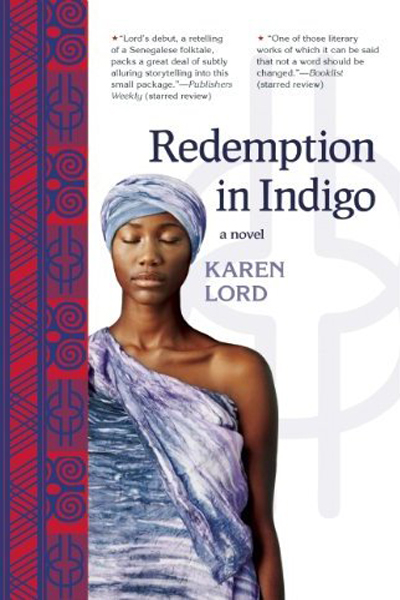
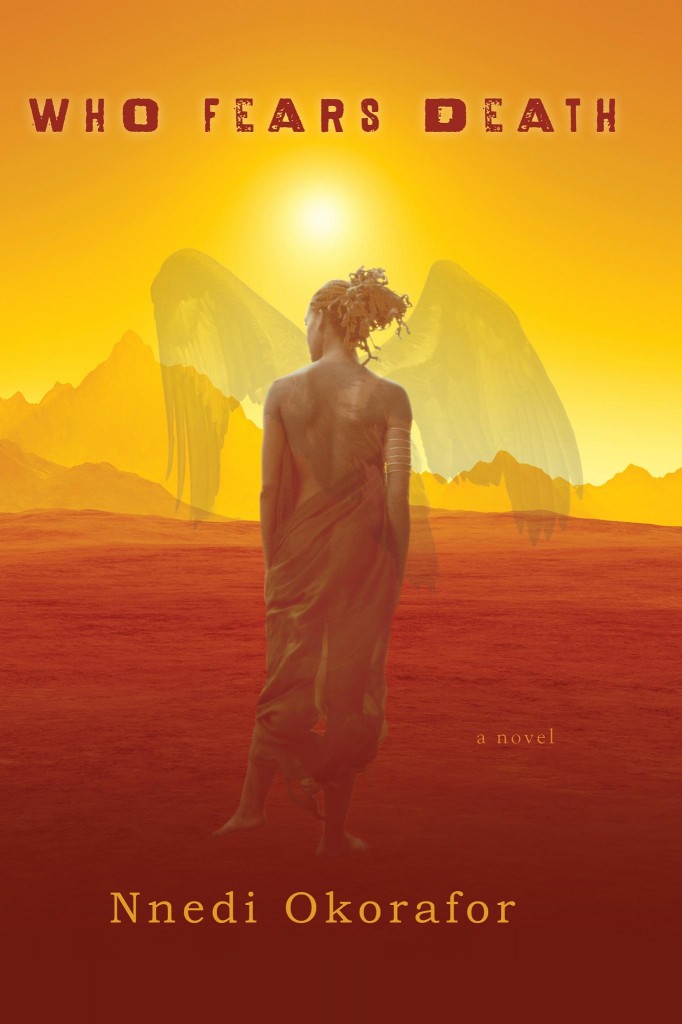
Karen Lord won the Carl Brandon Parallax Award for an outstanding work of speculative fiction by a writer of color. Nnedi Okorafor won the Carl Brandon Kindred Award for an outstanding work of speculative fiction dealing with race and ethnicity.

I read both of them two years ago and loved them both, for very different reasons. Digging through my notes, I unearthed mini-reviews of both of them.

A charming retold Sengalese folktale, very lighthearted and magical.  A whiff of Tutu0la, a sprinkle of Okri, a dash of LIKE WATER FOR CHOCOLATE, told in a witty, wise storytellers voice.  Tricksters and magic and morality tales abound in this colorful story.

I really wanted to enjoy this book–but I couldn’t. And perhaps that was the point. Okorafor uses the trappings of fantasy–a young sorceress, her training, a prophetic quest–to discuss dark subject matters, particularly, the matter of sub-Saharan Africa. So it’s an oddly compelling mash-up of Chinua Achebe and a J.K. Rowling coming of age novel. Issues, like weaponized rape, genocide, slavery, color-caste racism, genital mutilation, and sexism exist along side casual magic (shape-shifting, teleportation, and other dimensions). The characters do go through hell, but the author does manage to inject warmth and humor into the tale. While the first person narrative is engaging, the reader (or this reader) noticed that the text was in conversation with other texts, both literary and political. It made for a richer read, but I fear that other readers might miss the significance and be left in the dark. In short, this is not escapist fantasy literature, though the magic here will transport you to another world. Allegory enrobes this story.

Who Fears Death reminds one of The Unconquered Country, by Geoff Ryman and Ben Okri’s tales of Azarro the Spirit Child. This is a brave book, full of some horrific images.

Congratulations to both authors!

Review: The Cipher by Kathe Koja

Nicholas, a video store clerk and would be poet, and his quasi-lover Nakota, waitress/artist find a mysterious hole in an abandoned storage room. The hole seems to be bottomless and made of pure darkness. The slacker couple begin to drop things down the hole, which spits them back up, beautifully and terrifyingly altered.  Nakota, a ruthless seeker of mystical experience, drops a video camera down the hole, and films what is in there. Nicholas is slightly less gung-ho about the obviously paranormal phenomenon, but ends up having a rather personal and symbiotic relationship with the void, which they dub The Funhole.


This novel is an exemplar of what I’d call Existential Horror fiction. While there are supernatural things that go in the novel, they highlight the anomie and isolation that goes on in Nicholas’ rapidly deteriorating mental state.  The horror also comes from the demimonde Koja evokes—that of bored artists trying to push the envelope, and the characters, particularly Nakota. The unclean, perverted energy of the Funhole—which at times is described as a mouth or an anus—and the graphic body horror is leavened by Nicholas’ mordant sense of humor. He narrates the tale in an associative stream-of-conscious style full of wry asides. Images of decay, and industrial rot and wounds flow through the hallucinatory prose. You can smell and taste the bizarre odors that issue from the Funhole. A friend of mine read the book 20 years ago, and said that it was one of the few books that made him feel ‘unclean’ after reading it.

Roadswell Press