

Advance copies of The Nectar of Nightmares have arrived. There will be another ‘version’ of the book coming, this one with a blurb from Elizabeth Hand. I will be bringing some copies to Balticon to sign!
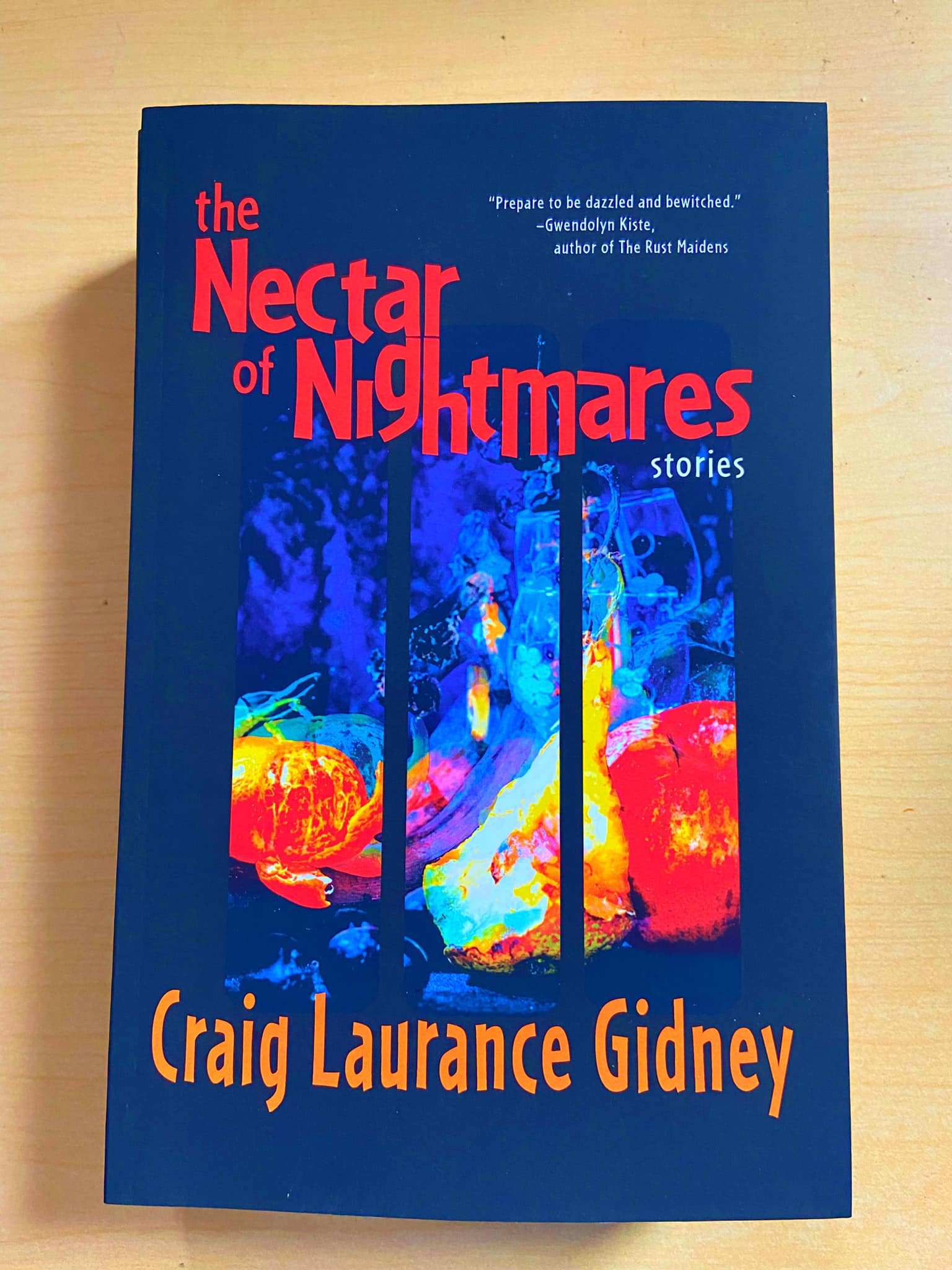
Advance copies of The Nectar of Nightmares have arrived. There will be another ‘version’ of the book coming, this one with a blurb from Elizabeth Hand. I will be bringing some copies to Balticon to sign!
I love words. Beautiful language and prose is my jam. I can taste the quality of prose in a synaesethic kind of way. Some prose has a “clean” taste, like unsalted butter. And some prose is rich and luxurious, like a chocolate truffle. I fell in love with fantasy fiction because the language of myth and fairytale has a certain flavor that I find irresistible. It’s floral, like vanilla, and bitter like dark chocolate with a mouthfeel like clotted cream.
And no-one captured that mythic flavor in prose more than Patricia A McKillip. I read The Forgotten Beasts of Eld when I was a teenager and immediately wrote her fan letter, (which was returned as undeliverable). The elegiac tone she’d captured was singularly haunting. The prose sang, was almost like a spell cast. She kept writing in that mode for all of career in many books—The Alphabet of Thorn, Solstice Wood, The Book of Atrix Wolfe—and many others. Her words were—-are—-incantatory and numinous. They swim and float across the page. Sometimes dismissed as flowery or purple, her language is central to the dreamlike plots of her novels. There is a jewel-like precision to her craft that I think that some critics miss. A couple of critics (and a friend) referred to her work with fairy tales as being the lighter cousin to Tanith Lee’s word-drunk. But I think there’s a tone of deep time and profound sorrow that always played in the background of her writing. Her characters always seemed melancholic, even if they were clever or humorous.
I had the pleasure of meeting McKillip a decade or so ago in New York. She was in town for a book reading, and I went out to lunch with her, Ellen Datlow, Jane Yolen and her husband David Lunde. She was sweet and soft-spoken, and I felt that I was in the presence of quiet genius. McKillip’s ethereal work is a deep influence (I’m ethereallad on Social Media partially inspired by her). I find her influence in many contemporary fantasists. Her voice will be missed.

Below is my Balticon schedule. I hope to have copies of THE NECTAR OF NIGHTMARES for my signing and reading. I’m really excited to see everyone. (Yes, I saw that they misspelled my name).

Toshi and Bernice Johnson Reagon’s adaptation of Octavia Butler’s dystopian novel Parable of the Sower is both texturally and metatexually rich. Part rock opera, part concert, part revival, the performance uses Butler’s novel as a reference point rather than being a literal translation of the narrative. Toshi, flanked by two women, not only narrates the action, she also contextualizes Butler’s thematic concerns, and frequently breaks the fourth wall. The audience is encouraged at certain points during the performance to join in by clapping along, and the actors often roam among the seats.
Sower’s plot in the novel is the first person narration of Lauren Olamina who lives in a US on the verge of social and economic collapse. She lives with her family in a gated community with her family and other like-minded people, mostly sheltered from the chaos outside the gates. In this world, capitalism has deformed into mega-corporations that exploit their workers, climate change has turned the West Coast drought-ravaged and wild-fire prone, and the breakdown of social services has given rise to lawlessness and addiction to a drug, Pyro, which makes the addict crave arson. Though she lives in relative safety, Lauren is a Cassandra-type prophet who can see that it’s only a matter of time before what’s outside comes in. First, her rebellious older brother ventures outside and returns injured. Then her beloved father never returns from his weekly visit outside. Finally, the gates are breached by a violent gang. Lauren becomes a de facto leader of the survivors as they search for a safe new settlement. Along the way, Lauren “sows the seeds” of her pragmatic philosophy, called Earthseed. Earthseed proposes that God is Change, and you can either resist or be proactive about shifts in circumstance. Pretty soon, Lauren gathers followers, who see hope and solace in her carefully curated believes.
The Reagons’ score tells the story through songs that mix folk, blues, rock and gospel. All of the performers (including Toshi Reagon, who also plays guitar) have sterling voices. Marie Tatti Aqeel, who plays Lauren, has a particularly powerful solo that showcases her full range in a song about her missing father. Reagon’s frequent informal asides were witty and referenced current events that Butler eerily predicted, from oligarchy to cryptocurrency to social media’s corrosive effect on the population. (Butler also predicted the rise of a populist nativist who would Make American Great again in the follow-up Parable of the Talents). Somehow, Reagon and her mother turned the dark pessimistic story into a joyous explosion of hopeful survival. Much like Earthseed’s tenets. The final song in the opera was a chillingly beautiful rendition of what sounded like a call-and-response gospel hymn.
It’s a celebration of resilience and community.
–-Seen on April 29, 2022 at the Strathmore Music Center


 Craig Laurance Gidney
You must be logged in to post a comment.