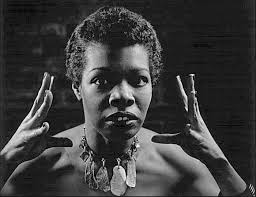
Maya Angelou: April 4, 1928-May 28, 2014

maya angelou

When I was in college, I had the opportunity to see Dr. Maya Angelou read poetry at Smith College. To say say she ‘read’ poetry, however, is imprecise. She performed poetry. She used her entire body, from facial expressions to grand gestures, even incorporating dance movements. And that voice–the most basso profundo of contraltos–emblazoned the imagery in the listener’s mind. She made the words of Dunbar, Hughes, St. Vincent Millay, and Dickinson live.  That performance, and her own work in general, will be with me forever.

Rest in peace, Dr. Angelou

Writing Advice: How to Avoid Stereotyping In Your Fiction.


One of the things that I hear about stereotypes is, “but there are people who like that.” We all know Southern dudebros who drink brewskis and watch NASCAR. Uptight white guys who can’t dance. Sassy gay best friends. Tiger moms. Fat people who are funny. The Wise Ethnic Elder. Etc. So, how do we, as writers avoid these stereotypes in our fiction? Diverse casts full of these lazy stereotypes can be as tiresome as having a non-diverse cast.

First, a parable:

I used to hang out with a MTF transgender woman who I will call Stevie. Stevie was transitioning at the time, and she was very girly, almost stereotypically so. She loved designer handbags, and getting her hair and nails done. One time, we were out at a bar, and she told me her story. Before her transitioning, she had been an Army Ranger. As in, she would scope and infiltrate hostile enemy territory and knew how to kill a man, barehanded. Behind the BeBe dress, and hair and make-up was a complex person with a rich history. The point is, she was both a girly girl and someone who could back you in a fight.

What I learned from “Stevie” was that even people who appear to fit a type have aspects of their personality that exist below the surface. Your task as a writer is to figure out the stories behind the public personas. Give your background characters histories and agendas. Imagine the babushka in your story has a degree in chemical engineering , and it will change how you write her.

The frat dude bro? Was raised by two women.

Your Rush Limbaugh listening blowhard? Might have once been in jazz band. 

In short, humanize your stock characters.

If you want to see an explempary version of a humanized stereotype, watch the character Felix Dawkins (played by Jordan Gavaris) on the clone thriller Orphan Black. He’s flamboyantly gay and full of sassy quips. But, both the writers and the actor give him his own life, history and complexity that makes more than just a Camp Gay from Central Casting.

Jordan Gavaris as Felix Dawkins


BOOK REVIEW: TurquoiseLLE (Colouring Book No. 7) by Tanith Lee. Kafkaesque espionage thriller.

TurquoiselleTurquoiselle by Tanith Lee

There was a British miniseries in the late 1960s called “The Prisoner,” which dealt with a Secret Agent who was mysteriously transported to a remote location, where he was subjected to sinister experiments in drug and mind control. The 7th entry in Tanith Lee’s cross-genre loosely-connected series of dark character studies, references that seminal work, adding her own distinctive vision.

More cannot be said about the plot, which occurs in contemporary London and its suburbs, save that the aloof main character Carver belongs to a shadow security corporation called Mantik Corp, and he gradually becomes aware that he is being manipulated. There are allusions to mythology, and elaborate textual puzzles made up of word and image/color repetition. Lee uses a tight third-person limited narrative style, so the reader doesn’t know more than the character. As a result, the author is messing with the reader’s mind as much as she is the characters’.

As for the genre? I’d call it a Kafka-esque esiponage thriller, but the ending is completely unexpected, both in tone and execution. You’ll just have to read it…

Writing Advice: The Agony and Ecstasy of Diverse Fiction

The recent #WeNeedDiverseBooks hashtag that trended on Twitter resurrected that old canard: angst over writing diverse characters. I thought I would offer my own experiences with that.

First, some background. Much (though not all) of my fiction is centered my own identities as a gay African-American. Even though I am marginalized, I, like everyone, have blinders on and am guilty of being solipsistic.  

A few years ago, I wrote a story where an editor said that the female character–who was  a background character–was portrayed in a sexist manner. (She had a touch of the Manic Pixie about her).  My immediate reaction was to get defensive (which I did internally; I believe I said aloud, “Really?”). So, the story lay dormant for a year. When I was invited to a workshop, where at least half of the participants were women, I took this flawed piece there. While the women (and some of the men) did not outright say that the woman in the piece was sexist, they pointed out that my Manic Pixie did not live beyond the page, and had fallen prey to some tropes. Re-reading the piece, I saw what they were talking about. I revisited the piece after I had absorbed the critiques, and fixed the story. Which, by the way, probably still has some flaws. Most art does.

There are several lessons I learned:

1. Everyone has blind spots and unconsciously uses shortcuts and stereotypes.

2. When people call a character portrayal sexist/racist/homophobic etc., they are not always talking about you*; they are talking about the piece. It just means that something from the dominant culture just slipped through, or you have a blind spot.

3. When you have a piece of fiction where you are unsure of the voice or the characters, workshop it.

I can’t stress the first point strongly enough. Some of the most egregious examples of stereotyping come from black authors. (Ever watched a Tyler Perry drama?)   African American fiction is rife with skin/food metaphors, full of cocoa-mocha-caramel colored heroes & heroines. Various rape tropes, particularly the pernicious  rape=rough sex,  was (and maybe still is) a feature of the salacious bodice-rippers my mother used to read (and I secretly read), many of which were written by female authors. So, this isn’t about a “gotcha” moment or moral superiority or “Oppression Olympics”. It’s about refining your craft.

The second point does need a disclaimer; there are writers who are proud bigots*. But most people are not consciously cruel. And here’s  another thing: you don’t have to agree with the critique. There are people who can’t separate a repellent  POV from the overall tone of the work, people who are lazy readers, and people who miss the point. I view ‘writing diversely’ as another way of saying ‘writing mindfully.’ You already go through the piece word by word, semi-colon by semi-colon, examining everything you have written put on the page. You also need to see what things you’re saying, and examine the subtexts.

The third point: getting feedback on difficult pieces is essential. ‘Nough said.

Finally, a fourth point. Read diverse fiction.  I believe that many people who worry about writing diverse characters or fall into the lazy stereotype trap don’t actually read diverse fiction. Make a point to read your genre of fiction (and beyond) from a wide range of authors.You’ll absorb techniques and get insights. You’ll get ideas. You’ll get inspired. Those voices are out there, waiting to be heard.

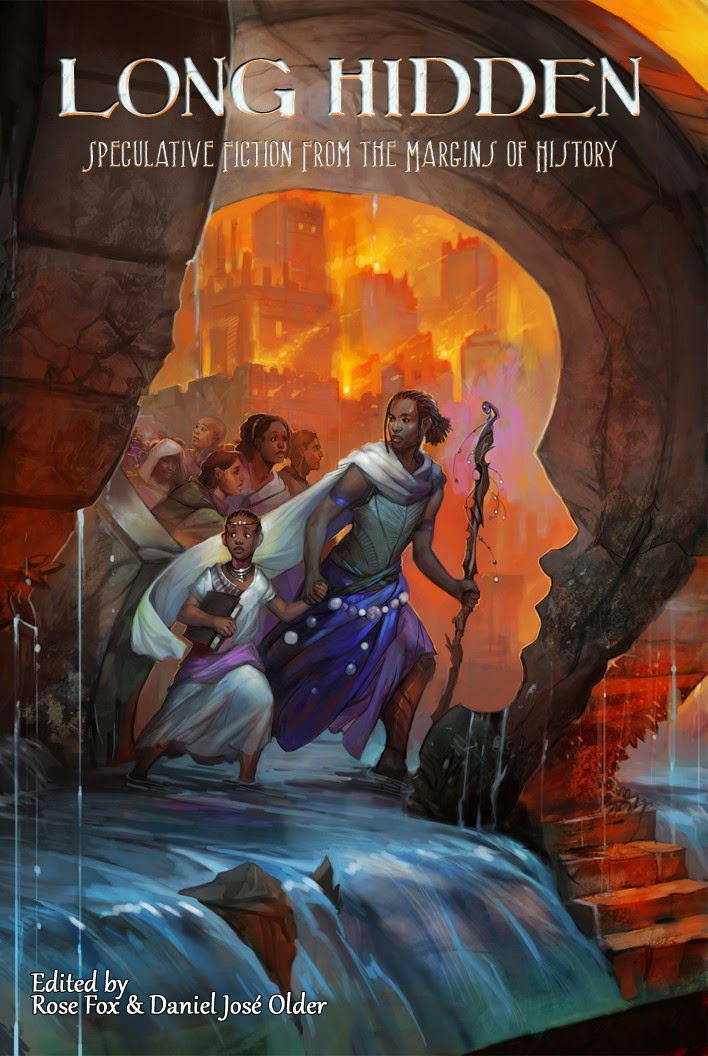
The recently released Long Hidden: Speculative Fiction from the Margins of History edited by Daniel José Older and Rose Fox  sounds like a good place to start.
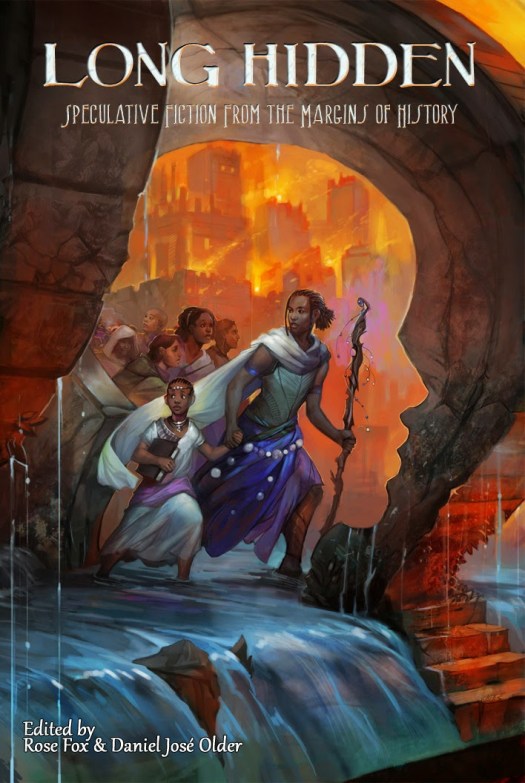
 

longhidden


ICYMI: My interview with Felix Gilman @ the Washington Independent Review of Books.

You can read it here.

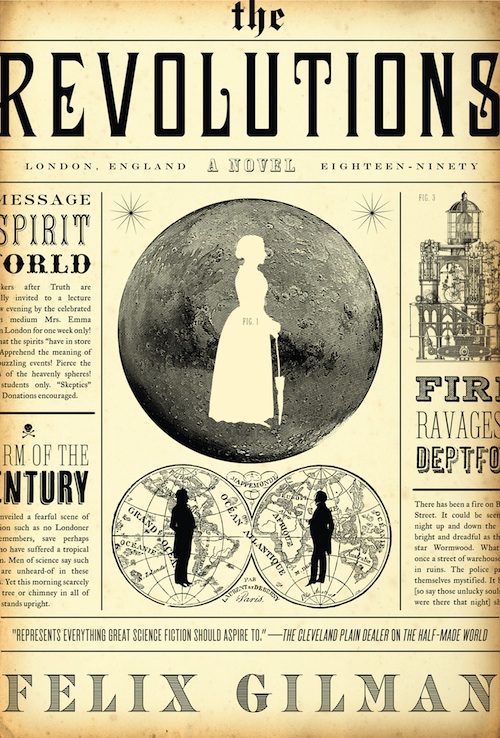
Gilman’s new novel, The Revolutions, is a wonderful tribute to the planetary romances of the late 19th and early 20th Century (Burroughs, Lewis, etc.)

revolutions

In the future, look for pieces at the Washington Independent Review of Books by me on works by Robert Jackson Bennett, Darin Bradley, and Mary Rickert.

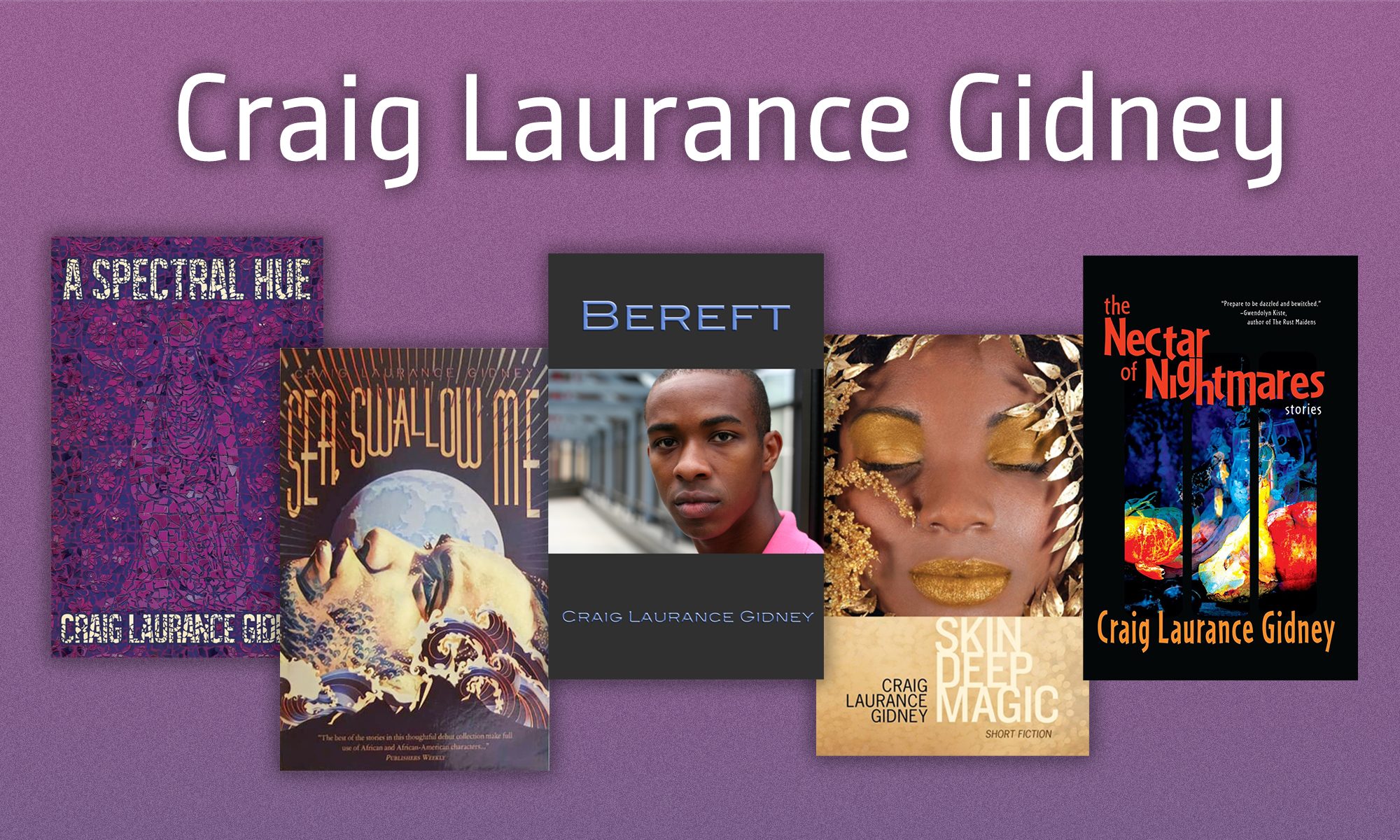
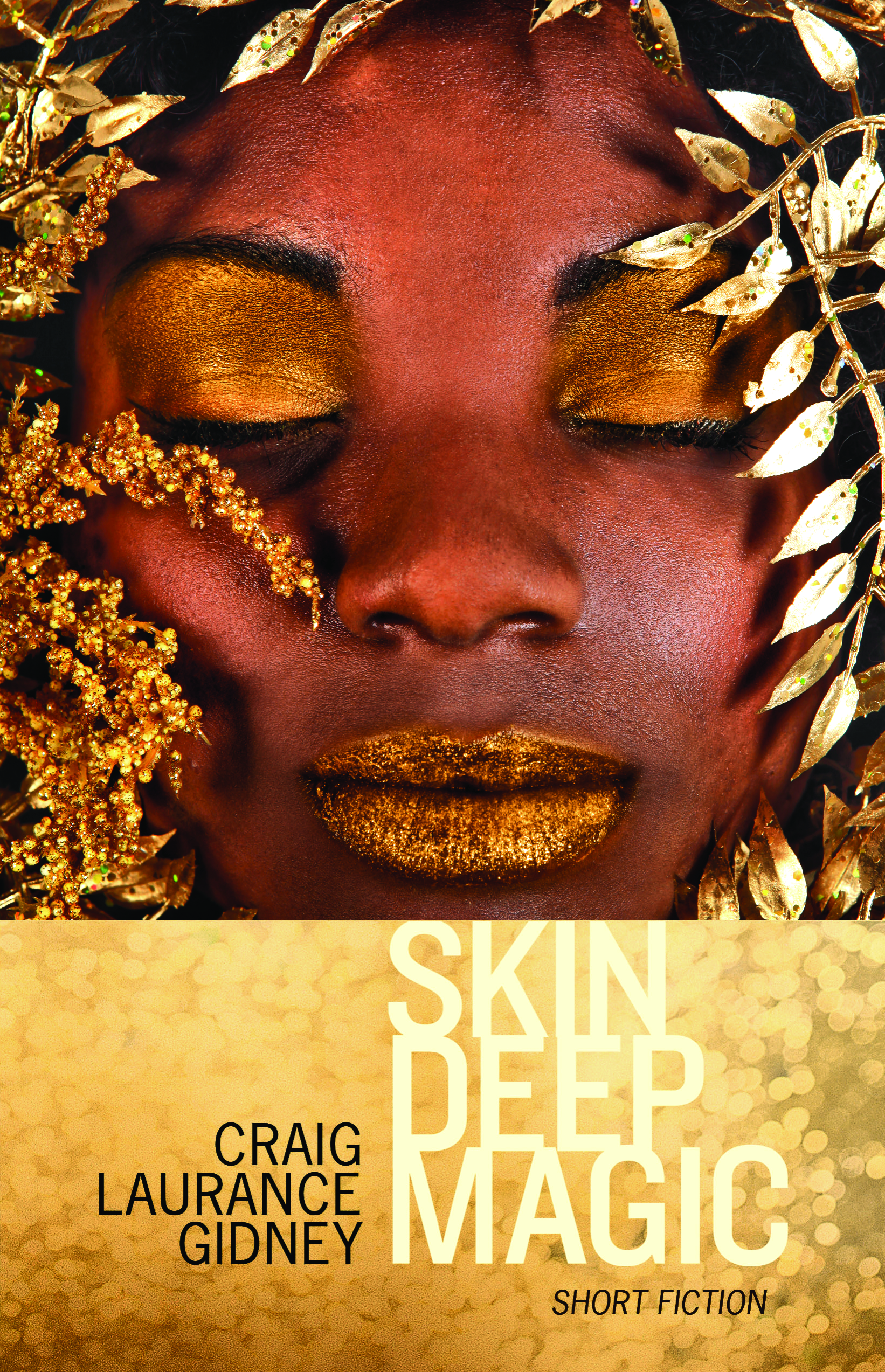
Cover Reveal for Skin Deep Magic, my new short story collection

SDM Cover Reveal


This cover was created by Thomas Drymon, who has done cover art for a couple of my projects. I am very pleased. The back cover copy reads:

Magic is more than skin-deep. It hides in the folds of a haunted quilt, and it illuminates the secret histories of Negro memorabilia. It reveals the destiny of a great storyteller and emanates from a sculpture by an obscure Harlem Renaissance artist. It lurks in the basement of an inner-city apartment building and flourishes in a city park. Magic is more than skin-deep; it shimmers in the 10 stories in this collection.

The collection should be out sometime this summer from Rebel Satori Press.