BOOK REVIEW: Alif the Unseen by G. Willow Wilson. Wonder, awe and revolution.

Alif the UnseenAlif the Unseen by G. Willow Wilson

My rating: 4 of 5 stars

“Wonder and awe have gone out of your religions. You are prepared to accept the irrational, but not the transcendent.”

Alif the Unseen is not just one kind of novel. It starts out as cyber-thriller Neal Stephenson kind of novel and turns into a Neil Gaiman styled fantasia involving the world of djinn. But that’s just the plot. It’s multi-layered, with treatises on religion and politics. In fact, I would say the novel is as much a political allegory–a kind of magical version of the “Arab Spring” revolution–as it is a fantasy adventure. It’s a novel about liminality: between the West and the East, the seen and the unseen, religion and the supernatural, the sacred and the profane.

It’s a novel full of humor and has a rapid, quick-fire plot that never lags. But when it does slow down, there are moments of “wonder and awe” that take your breath away. My favorite sentence:

“As he slipped deeper into sleep, he heard her begin to sing: a soft, wordless cat-song of love gone and children grown, trilling and sad.”

Alif the Unseen is a rare novel that manages to work on the “brain-candy” level and on a deeper level.

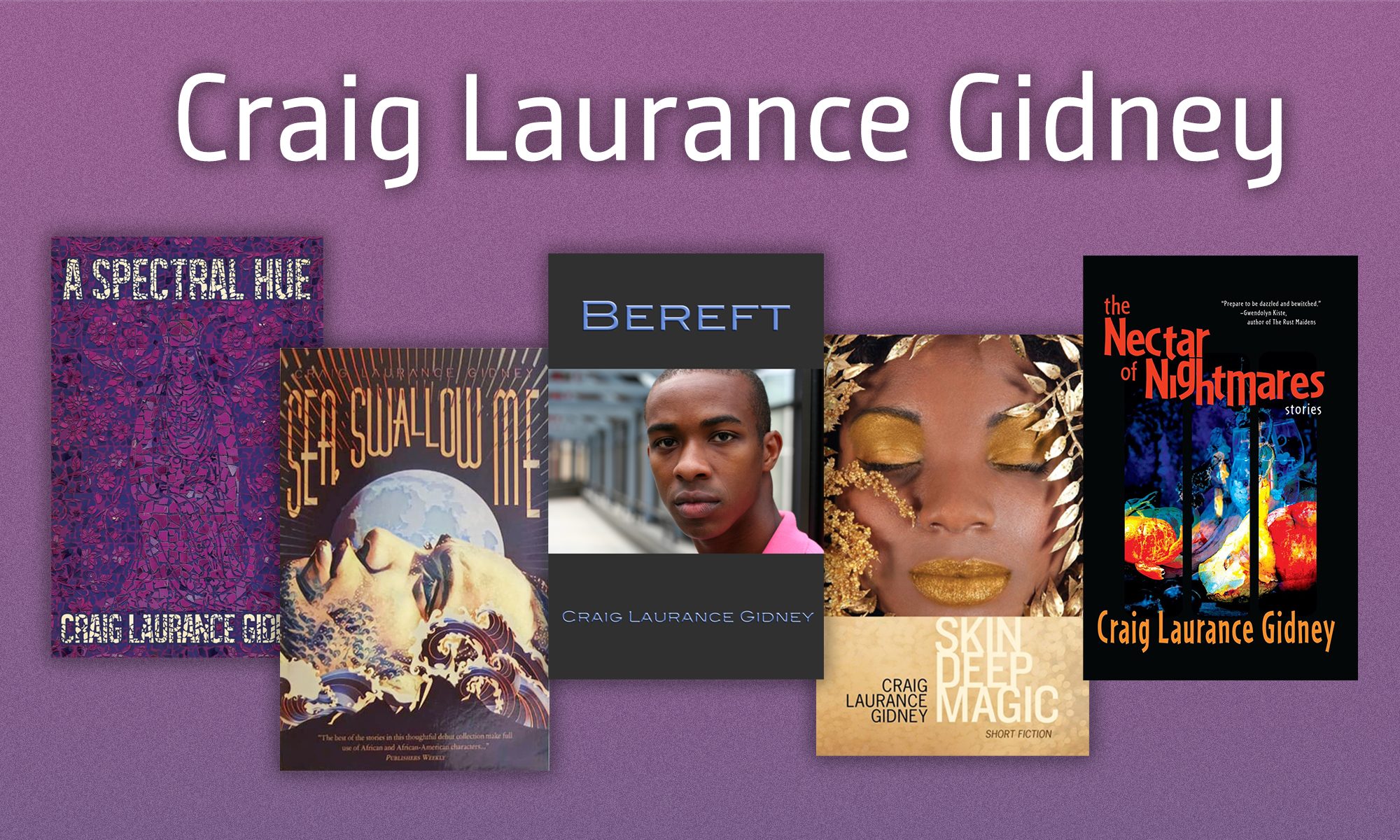
TOC for SkinDeepMagic, my forthcoming collection of short fantasy fiction featuring Black/African-American characters.

Skin Deep Magic Cover TOC

1. Pyschometry, or Gone With The Dust

2. Sapliing

3. Mauve’s Quilt

4. Lyes

5. Conjuring Shadows

6.  Zora’s Destiny

7. Death and Two Maidens

8. Sugardaddy

9. Inscribed

10. Coalrose

Skindeepmagic will be published by Rebel Satori Press.

STORY REVIEW: A Rumor of Angels by Dale Bailey. Magical-realist Americana

A Rumor of Angels: A Tor.Com OriginalA Rumor of Angels: A Tor.Com Original by Dale Bailey

My rating: 4 of 5 stars

The real star of this moody tale is the evocative, immaculately crafted language. At its heart, this is a simple tale that sets a coming-of-age story against the Great Migration during Dust Bowl days. The fantasy element, while essential to the story, is slight and belongs in the Magical Realist tradition of Ray Bradbury. The sense-of-place piece recalls the work of Willa Cather and John Steinbeck.

Winter’s City: The photography of Colin Winterbottom

Today, Washington DC is mantled in snow. The world is chiaroscuro, in tones of grey and white. It looks like a photograph by Colin Winterbottom.

Winterbottom

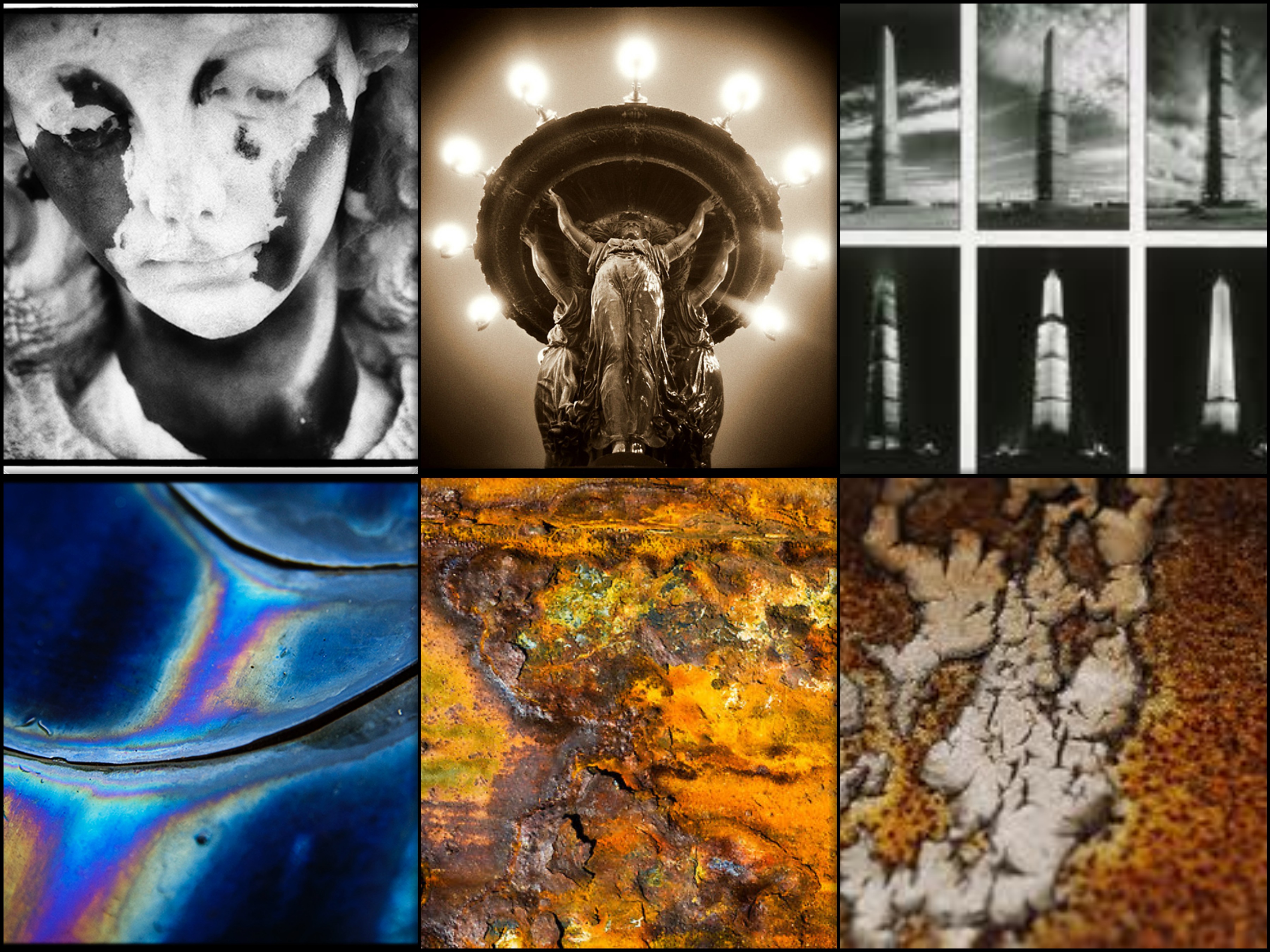
Winterbottom captures DC’s architecture in his photographs. The city becomes a gothic landscape through his lens. The photographs are full of statues, fountains, columns, plinths, cornices and monuments. He chronicles the secret history of my hometown with images made of shadow and light.

In addition to capturing the more iconic touchstones (the Capitol, and the Monument), there is also a nod to the DC’s esoteric places. Abandoned buildings and cemeteries tell their stories to the viewer. There’s a series he’s done on the legendary mental hospital, St. Elizabeth’s—a place where my father did his internship.

DC is his muse, but it’s not his only subject. There are also studies in color (the luminous jewel toned stain glass of the Cathedral) and the abstract images that studies of rust and decay.

MUSES (#blackhistory edition): Moms Mabley, Patron Goddess of the Chiltin’ Curcuit.

The story is that my Aunt Dee went into labor during a Moms Mabley show in Washington, DC. It’s not hard to imagine that, since Mabley was so damned funny.

Jackie "Moms" Mabley
Jackie “Moms” Mabley

I love listening to recordings of her comedy bits. She was one of the queens of the Chitlin Curcuit. She appeared on stage dressed as a frump, in a brightly patterned, tacky nightgown ensemble, and crowned with a cap. She took out her fake teeth and spoke, flapping her gums. Her comedy was in the storytelling mode–raunchy, ribald, and full of witty anecdotes. Listening to her speak is a window in black life in the 20th Century.

Like many comedians, her personal life was more than full of its share of pain. But in spite of (or in some cases, because of) the significant hurdles she faced as an African-American who grew up in the Jim Crow South, as a survivor of sexual abuse, and as a lesbian, she mastered the art of comedic storytelling.

On Lisa Germano’s “Cry Wolf.” (Haunting Music)

Her voice is a bruised, angry little thing, wispy and gravelly at once. It isn’t a pretty voice by a long shot, one that can’t sustain a note for a long time. Her lyrics are stream-of-conscious ramblings, perhaps written at the behest of a therapist, full of self-deprecation and caustic wit. The music is the same, vague, desultory quality, full of reverb and tremolo, with stray bits of violins colliding over simple guitar riffs. Lisa Germano’s music is an acquired taste. It’s uncomfortable and confessional. There are no real hooks per se; it reveals its charms gradually. My favorite song of hers is ‘Cry Wolf.’ It’s written from the point of view of a date-rape victim. The central theme is in a minor, eerie key and very hypnotic. Blurry background voices ooo over the rippling guitar as Germano in lays bare the rhetoric of date rape: Girl who wants it but has no clue/ She’s says she’ll give it, cry, cry wolf/A change of mind in a back seat or that dirty room /They say she got just what she wanted. It’s the center piece song on her concept album, Geek the Girl, about an awkward girl’s misadventures in love.

BOOK REVIEW: The Indigo Pheasant by Daniel A. Rabuzzi. Visionary feminist fantasy.

The Indigo Pheasant (Longing for Yount #2)The Indigo Pheasant by Daniel A. Rabuzzi

My rating: 3 of 5 stars

The Indigo Pheasant is the second and final volume of the visionary fantasy Longing for Yount sequence. It’s a very different book than the preceding volume, mostly because it much more an alternate or ‘hidden’ history novel than the relatively straight forward portal fantasy of The Choir Boats. The book takes place in the London of 1817, and concerns the aftermath of the trip to the otherworldly Yount. The main narrative thrust concerns the building of a new ‘choir boat,’ the titular Indigo Pheasant.

It’s a whirling kaleidoscopic narrative, that includes excerpts of letters and other documents, in addition to more traditional third-person exposition. In this way, the work alludes to 18-Century narrative tropes. First, the bad news: it doesn’t always come together and there are significant pacing issues. Several subplots pop up that are given the short shift. It’s a mash-up of several types of fiction at once. Romantic melodrama, financial woes, and metaphysical dark fantasy all vie for attention. It’s overstuffed, multilayered and confusing. Mood whiplash abounds, as it moves from a romantically tragic, Thomas Hardy-like subplot (think Tess of the D’ubervilles) to a postcolonial revisionist treatise on the treatment of women and minorities (think A.S. Byatt or John Fowles) to a pseudo-religious allegory, a la C.S. Lewis. It’s an ambitious, high-wire act of a novel.

The ex-charwoman Maggie is the novel’s focal point; she’s an African-American mathematical genius who finds her way in the fold of the McDoon family, the stars of the previous novel. She is, in fact, a distant relative. Maggie is a headstrong woman who faces her problems head-on, whether they be racism, sexism or facing the Big Bad—the fallen angel Strix. Whenever Maggie is ‘onscreen,’ the novel comes alive. The same goes for the appearance of Strix, who shape-changes into a demonic owl. The fallen angel, in the way of most incarnations of the Devil, gets the best lines. At one point, he says to Maggie:

“No one has heard of you, except in a backhanded way; they view you (to the extent they see you at all) as a freak, a ‘Calibanna’ who has learned a few tricks for the parlour.”

Unfortunately, the adventures of the rest of the McDoon, particularly the heroine Sally, tend to be overshadowed. Sally, who was stronger in The Choir Boats, becomes mired in tragedy, and becomes a second fiddle to Maggie, as do the rest of the rather large cast.

Rabuzzi’s language is evocative, but at times, overwhelms with its erudition and gives way to full-on purple passages:

Luminescent shadows piled—oozed—into Sally’s attic-room. Grey dimmed to rust- and umber-mottled colors of the cricket’s carapace, with an under-tint of jade, forming and reforming in the corners of the chamber.”

This kind of exalted, high style language works during the scenes of sorcery, which are chilling. Elsewhere, it is overly fussy and stalls the narrative pace. This is a book for word-lovers; Rabuzzi seasons his sentences with swarms of underused and obscure words. But to other readers, the word choice becomes confusing and over-decorous.

At its best, The Indigo Pheasant and the Longing for Yount sequence is one of the most original fantasies in recent years. The magic system–based on mathematics and music theory, is a marvel of an invention. The feminist subtext is infused throughout, from the ‘real’ world scenes to the trippy Gnostic/ Blakean cosmology that under grids the narrative.

View all my reviews
The specter of Gratuitous Diversity and other fictions

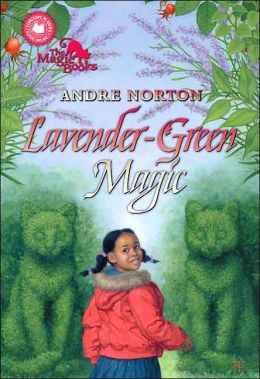
When I was 3 apples high, I went to my mostly white school’s library, and chanced upon a book with a title that intrigued me, Andre Norton’s Lavender-Green Magic. I read it in 2 gulps, not only because it had witches (a perennial favorite subject of mine), but because it featured African-American (or in the parlance of 70s, Afro-American) kids living in a mostly white town. My mind: blown. Up until then, all the fantasy book I’d read either had pseudo European characters or talking animals. I loved the idea that someone who had an experience similar to mine could have magical adventures like those kids in Edward Eager books or the Narnian adventures.

lavender-green magic

A few years later, in the full swing of adolescent angst, I can upon my older brother’s copy of Dhalgren, by Samuel R. Delany. (The iconic paperback version, the one with the engorged sun showing through a destroyed cityscape). Thumbing through it, I read about characters who had unique and somewhat underground sexual appetites—and their sexual identities were integral parts of themselves. Again, my mind was blown. Gays and other sexual minorities were just people….in a science fiction novel!

I bring these examples up not only to talk about the importance of diversity in speculative fiction, and also, to challenge a common strawman argument against it. A little background: the author Alex Dally MacFarlane wrote a provocative article entitled Post-Binary Gender in SF:Introduction on Tor.com, an inaugural post of a series which promises to examine SF that studies that issue. I read the piece, enjoyed it, and moved on. Then I saw, much later (via Jim C. Hines’ blog), that MacFarlane’s article (predictably) rattled the nerves of certain quarters of the SF community.

The chief complaint (once you wade through the de rigueur cries of PC Fascists/ GroupThink/Thought Police) is the concern about Gratuitous Diversity.

It’s the idea that having a cast of characters that reflects the diversity of humanity will automatically result in Aesop fiction full of Sally (or Simon) Soapboxes. I have yet to read a piece of fiction where giving a character an idiosyncratic and unique background (ethnic or sexual orientation or, in MacFarlane’s essay, a non-binary gender orientation) actually destroys the work. Including ‘popcorn’ fiction. One of my Clarion instructors, Pat Cadigan, stressed the importance avoiding ‘default’ mode protagonists: Joe/Jane Q. Public and his/her various incarnations as Mary Sue or Gary Stu. (It wasn’t a commandment, either—rather, Cadigan meant it as one more tool in the authorial kit). If a character is a Sally (or Simon) Soapbox, and the fiction has the quality of an Afterschool Special, that’s a failure of execution. The spectre of Gratiuitous Diversity is mostly just a strawman. (I’d love to see examples of a work of fiction that’s improved by flat characters). I say “mostly,” because I think that certain tropes and stock characters—the Noble Savage, the Magical Negro, for instance–arise from deformed Aesops and well-intentioned fiction. And there’s the case of a certain wizard (we’ll call him ‘Rumblesnore’) in famous series posthumously (and post-serialization) outed as gay, which was arguably shoehorned in. (I remember the articles/blog posts amongst a certain cohort that claimed the author was courting the politically correct crowd). But even then, Rumblesnore being off-screen gay doesn’t hurt the his character or the story; it was the execution that was lacking.

There is no such thing as Gratuitous Diversity. There’s just poorly executed fiction.