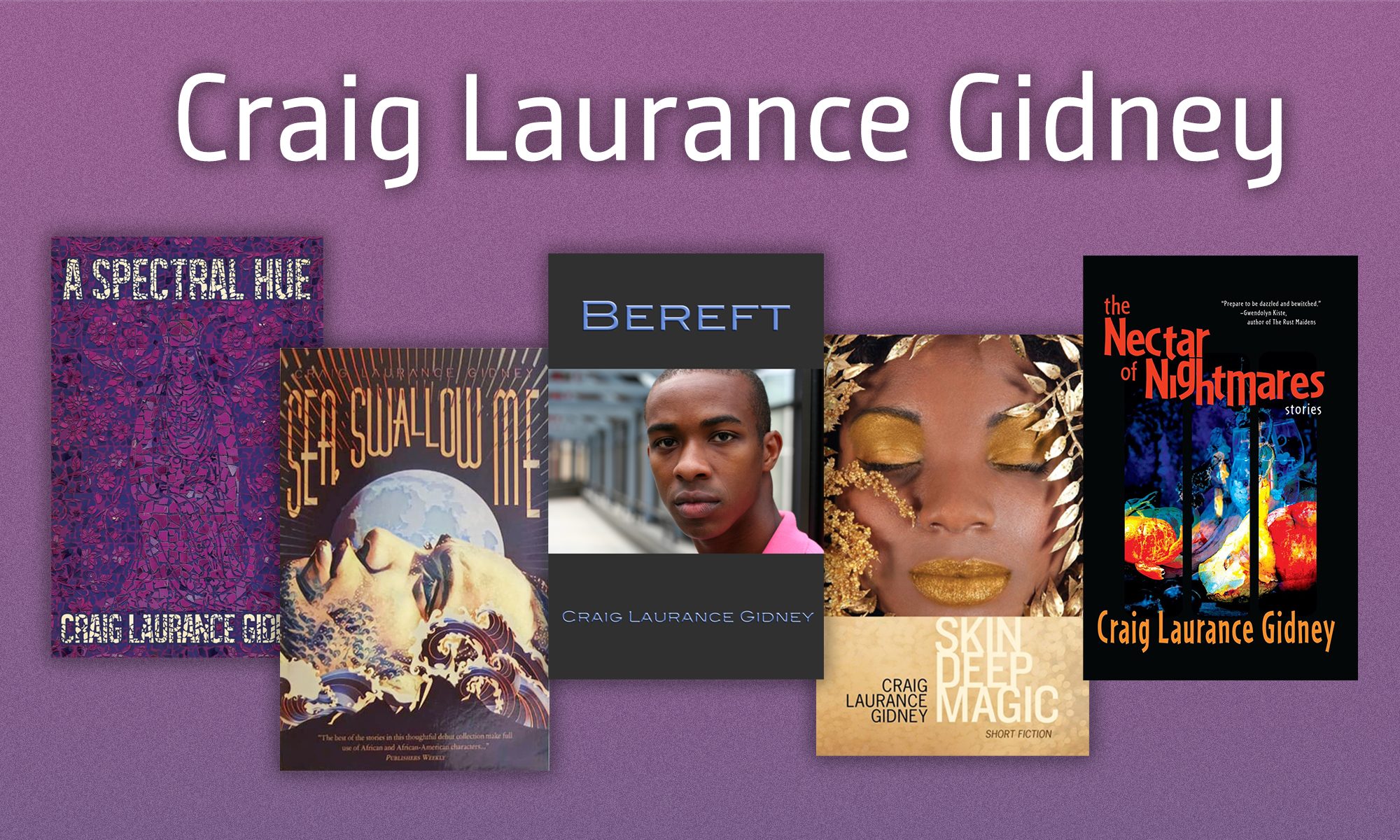
Author of "Sea, Swallow Me & Other Stories" (2008 Lambda Literary Finalist); "Skin Deep Magic" (2014 Lambda Literary Finalist); "Bereft" (2013 Bronze Moonbeam Award and 2014 Independent Publishers' Award) "The Nectar of Nightmares" (Dim Shores Chapbook) and A Spectral Hue (2019)
Gil Roth, who produces the book-centric podcast Virtual Memories, asked me to contribute to his year’s end podcast. I appear with a bunch of other distinguished guests,* discussing the favorite book that I read in 2013.
Charles Blackstone, Lisa Borders, Scott Edelman, Drew Friedman, Kipp Friedman, Craig Gidney, Ed Hermance, Nancy Hightower, Jonathan Hyman, Maxim Jakubowski, Ben Katchor, Ian Kelley, Roger Langridge, Philip Lopate, Hooman Majd, Zach Martin, Ron Rosenbaum, David Rothenberg, Willard Spiegelman, Peter Trachtenberg, Wallis Wilde-Menozzi, and Matt Wuerker. – See more at: http://chimeraobscura.com/vm/podcast-the-guest-list-2013#sthash.pg7y0VqO.dpuf
*Charles Blackstone, Lisa Borders, Scott Edelman, Drew Friedman, Kipp Friedman, Ed Hermance, Nancy Hightower, Jonathan Hyman, Maxim Jakubowski, Ben Katchor, Ian Kelley, Roger Langridge, Philip Lopate, Hooman Majd, Zach Martin, Ron Rosenbaum, David Rothenberg, Willard Spiegelman, Peter Trachtenberg, Wallis Wilde-Menozzi, and Matt Wuerker.
Ben Katchor, Charles Blackstone, Craig Gidney, David Rothenberg, drew friedman, Ed Hermance, Hooman Majd, Ian Kelley, Jonathan Hyman, Kipp Friedman, Lisa Borders, Matt Wuerker, Maxim Jakubowski, Nancy Hightower, Peter Trachtenberg, Philip Lopate, Roger Langridge, ron rosenbaum, Scott Edelman, Wallis Wilde-Menozzi, Willard Spiegelman, Zach Martin – See more at: http://chimeraobscura.com/vm/podcast-the-guest-list-2013#sthash.pg7y0VqO.dpuf
I tried to get off my anti-depressants around the same time my first book was published. Among the reasons I was quitting: no longer afford COBRA payments for my insurance, so I would no longer be able to get prescriptions anymore. Besides that, things were going pretty well. I mean, I had a book out that was the cumulative work of over 20 years of fiction writing. I followed the doctor’s instructions to taper off the drug.
That decision was a huge mistake.
As if it were waiting in the shadows, my depression came back. I call my depression the Echthroi, after the creatures in Madeleine L’Engle’s novel, A Wind in the Door. The Echthroi are the spirits of nihilism and depersonalization. They wish to destroy all joy in life and leave an empty husk, a blank simulacrum. Depression is not exactly like voices in the head, but it is more than just the blues.
I remember being in the subway, deep underground. The Echthroi whispered in that seductive way of theirs, Why don’t you jump in front of a train. It projected a vision of screaming steel, sleek locomotives, and endless silence. Imagine having those images constantly flashed in your brain. I would write suicide notes, and delete them. Some days, I would cry for hours. One time, I had an episode where I threw a cell phone at the place where I was temping. I lost that job.
Depression makes you a marionette whose springs are pulled by the Echthroi.
The thing that stopped me from actually harming myself was constantly reminding myself that it was all faulty wiring and out-of-whack brain chemistry. In the end, I finally got the help I needed.
Sometimes, people listen to the Echthroi. They are very good at what they do. After all, you still feel horrible and get flashes of suicidal actions and feelings of worthlessness even if you don’t succumb to the temptation. They promise an end to the pain, which won’t relent. They work ceaselessly. Even if you have a partner, or children, or a job you love, or you have a critically acclaimed collection of fiction published, they will stalk you and turn the world into Mordor.
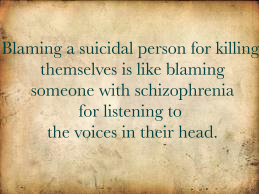
I’m writing this because someone I knew recently succumbed to the siren song of the Echthroi. Sometimes they succeed. I just think it’s important to understand what Suicidal Depression is, and the importance of treatment.
I remember we bonded over the metaphysical side of the singer/songwriter Rickie Lee Jones’ oeuvre. I’ll think of you everytime I play the song Deep Space: An Equestrienne in the Circus of the Falling Star.
Jean Cocteau is perhaps best known for his films, in particular, his elegant, candlelit classic take on Beauty and the Beast. He was a kind of renaissance man, with achievements in literature as well as film and art. He was not a Surrealist, though that movement did influence some of his work. His work is deeply informed by myth and fairy tale; the figure of Orpheus shadows much of his cinematic work. Like the musician Orpheus explored the shadowy underworld, the artist Cocteau explored the subconscious and its language of myth and symbol.
As much as I like his films, it’s his highly idiosyncratic artwork that entices me. The drawings have a child-like simplicity but are deeply mischievous, and, in some cases, openly homoerotic.
The fiction that truly disturbs me, that causes me nightmares, that stays with me, that chills me to the bone all have one element. Beauty. Gore and splatter punk can gross me out and causes a short, sharp shock. But evil beauty, or weird beauty—that stays with me for the long haul.
The first book in the projected Southern Reach Trilogy is a kind of ecological horror novel. It takes the form of a field report of an unnamed biologist who enters a region called Area X, which is a kind of pocket universe or dimension that suddenly appeared one day, killing off the residents of a sparsely populated area. The landscape is pristine and beautiful, save for a couple of anomalies. The first person narrative is full of meticulous descriptions of the natural world. As a result, when the counter-factual appears, it is truly creepy and insidious.
The supernatural moments are all shot through with a weird, textural (and textual) beauty that entices as it disturbs. The images and effects VanderMeer achieves are lush and lingering, at time recalling the landscapes conjured by the surrealist artists. As a counterpoint, the story of the biologist’s past and her own agenda are subtly woven in the tense narrative. This a dense, interior multilayered horror/thriller full of mystery and dread. The novel is atmospheric and open-ended, and most importantly, hauntingly beautiful. Reviews have been popping up about the ‘Lovecraftian’ nature of the work. To me, it’s more reminiscent in tone to the philosophical dark fiction of Robert Aickman and Thomas Ligotti.
Like many mothers, my mom told me fairytales when I was a child. But as a public school administrator (her title was Cultural Coordinator) she had access to a wide breadth of media, including films and ARCs (Advance Reader Copies) of picture books.
Two items in this treasure trove of fairytale lore stick with me.
One was a 16mm short film adaptation of the fairytale ‘Puss In Boots.’ This film, which my mother rescued from a discard pile of educational materials, was simply beautiful. It was black and white stop motion animation. The puppets’ clothing was ornate and rococco, and the sets were meticulously crafted. The black and white photography was luminously elegant—there is a touch of Cocteau’sBeauty and the Beast in the aesthetic. We broke out ‘Puss in Boots’ during birthday parties. It mesmerized me.
The second item was a picture book, an original fairytale about a knight battling a cowardly dragon. The dragon was aided by a kindly fairy godmother, who was a bit of a literal genie in her wish-granting. The knight is a bully, and both the fairy and the dragon figure out a way to beat the knight. Eventually, the dragon and the fairy princess fall in love and live happily ever after. The thing that was notable about the story—aside from it’s humorous trope reversals—was that the fairy godmother was a jive-talking black woman with a huge Afro—imagine a cross between Whoopi Goldberg (at her peak) and Moms Mabley. That book, which I don’t know the name of, was the bomb.
What sparked this memory is that I am current in the process of writing four different fairytales. Thanks, Mom, for the inspiration!
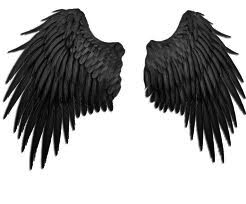
The up and coming author James Champagne sent me a drawing of Mehitabel, the strange angel featured in this year’s weird Holiday story that I sent out last week. I plan to have the story available online in Christmas 2014. Thanks so much, James!
No, I don’t listen to Carrie Underwood. But….I like ‘white’ music. Particularly alternative, gothic and indie music. So I feel this girl’s pain.
I remember when I haunted a record store in college, always looking for an interesting album. Before the Internet, buying music was a bit of a gamble. You had to rely on record reviews, the label that the album was on, and occasionally, the artwork to give you clues to what the music sounded like. So visiting a record store was often a 2 hour ordeal that included much research and contemplation. The staff of this particular record store was used to me, (and many other college students) spending hours among their stacks. However, one Saturday, there was a new staff member who rather overzealously followed me and repeatedly asked me if I needed help. She ignored the other customers, and focused on me with a laser-like precision. Eventually, I left the store, and didn’t return until the spring. I was familiar with this kind of micro aggression. It was a combination of Shopping While Black with a liberal dash of This Isn’t Your Type of Music!
I was relatively lucky before that point. I grew up in an area where it wasn’t uncommon to see PoC at punk and indie shows. Every now and then, someone would glance at me sideways, but that was the extent of it. But that Othering was uncomfortable enough to make me avoid that particular shop. When I returned to the shop, the overzealous employee had left. Maybe someone else complained about her.
Frankly, this incident was small potatoes compared to what I experienced on an online forum circa 1998, when the Internet etiquette had not yet been established. The goth singer Siouxsie Sioux had started a side project with fellow Banshees drummer/husband Budgie, called The Creatures, which she released independently. The Creatures had an active and lively online forum, which I joined. In the ‘intro’ section of the website, I wrote something like, “Hi, I’m Craig…Just wondering if there are any other Siouxsie/Creatures fans of color.”
Reader, you would have thought that I had insulted everyone’s mother and desecrated a thousand graves. Message after message condemned me for even mentioning race. I was a racist of the worst kind; I was like Louis Farrakhan; I hated white people etc. And those were the intelligible responses. I quit that den of obnoxiousness quickly, never to return.
A few years later, I went to hear the world music/goth crossover band Dead Can Dance in concert. I ran into an acquaintance at the concert.
Him: “What are you doing here? Black people don’t like Dead Can Dance!” Me: Throws Shade and eye-rolls so hard that my eyes fall out and roll down the hall.
I’ve been confounding stereotypes since the 80s, and I have no intention of stopping.
Big Machine by Victor Lavalle is an ambitious horror novel about secret societies with subtextual issues about race and class that is full of laugh aloud moments. It’s a sort of tonal patchwork of A Confederacy of Dunces, The DaVinci Code and The Intuitionist.
Ricky Rice is a bus station janitor who receives a mysterious summons to someplace in remote Vermont. Because he’s an itinerant ex-junky, he uses the free bus ticket and arrives at the Washburn Library along with other African Americans misfits and petty criminals who all seem to have turning points of Epiphany buried deep in their checkered pasts. They are branded collectively as the Unlikely Scholars and charged with collecting and cataloging reports of esoteric phenomena. After a period lasting perhaps a year, Rice manages to crack the code, and is sent on a quest to Northern California to track down a heretical Unlikely Scholar.
The wild plot, full of incident and conspiracy and supernatural occurrences is as expertly paced as a Stephen King novel. But it was the narration and characters that kept me glued. Rice tells his story in the first person, full of quips and asides about lower class African American life that ring true. The repartee between Rice and his partner the Gray Lady (aka Adele Henry) zings like the best of Nick and Nora. The scenes of horror and degradation, both personal and environmental, are chilling. It’s a pleasure to read this kind of fiction with such well-realized characters that you don’t often see on the printed page.
Ultimately, I don’t think Big Machine succeeds as well as Lavalle’s most recent novel, The Devil in Silver. The ambition and scope of the plot gets the better of him. But it’s a fun ride, full of beautiful writing.










 Craig Laurance Gidney
You must be logged in to post a comment.