Conjuring Subtexts: thoughts on the movie The Conjuring

I finally saw the horror movie The Conjuring this week. It had all of the things I love about good horror movie.
▪ Atmospheric
▪ Slow build with lots of plausible deniability
▪ The handsome Patrick Wilson
▪ The brilliant Lili Taylor (whom I sat near in RL in a restaurant; ask me about it sometime)
Like Sinister and Insidious, The Conjuring proves that you can scare people with a minimum of gore. I hate violent and slasher films. I can’t watch torture porn, like the Saw and Hostel franchises.

My main criticism with the movie is with the third act, when the mystery is revealed. I actually think it would have been scarier if the line between actual possession and mental disturbance was blurred. We all have dark, atavistic urges and voices hidden deep within our brains.

Annabel doll
Annabel doll

One of the tropes that The Conjuring (and Insidious and Sinister) keep returning to is the idea of possession. An exorcism is the dramatic denouement of most of these films. When I was a child, I couldn’t bear to watch the mother of all demonic possession films, The Exorcist. An innocent person taken over by an evil entity doesn’t really terrify me, per se. And the staples of possession: ravaged, tortured voices, blasphemous oaths, levitation and puking don’t bother me, either. What scared me as child, and still scares me, it what happens to the possessed spirit. Insidious is the only movie I know of that explored the limbo where the ensnared soul was housed.

I am also disturbed with the whole Christian rites as being the only panacea against such evil. What happens if you get possessed and you’re an observant Jew, or are Buddhist, Hindu or Muslim? One of the subtexts of this subgenre is that Christianity is inherently good, something I don’t believe. In The Exorcist, the devil uses a pagan entity, Pazuzu, to get into Regan. According to Babylonian myth, Pazuzu, despite (or even because of) his scary appearance, could be used to drive away other evil spirits. This whole subtext of Christian hegemony kind of spoiled The Conjuring for me.

BOOK REVIEW: Kill the Dead, by Tanith Lee. Tarot-inspired Gothic fantasy

Kill the DeadKill the Dead by Tanith Lee
My rating: 5 of 5 stars

The 1980 novel KILL THE DEAD is a perfect introduction to Tanith Lee’s writing in the Gothic mode. The short novel has all of her hallmarks: two tortured Byronic anti-heroes, a beautiful witch antagonist and a plot that is full of twists that allude to and subvert literary tropes. The novel concerns the mordantly humored exorcist Parl Dro, and his dealings with a hapless musician and a vengeful female lich (an undead sorceress). The prose is lovely and musical, full of rich imagery that incorporates Tarot symbolism throughout the text. The dialogue is is full of quips and dry humor. Some of Lee’s best work is at the novella length, and KILL THE DEAD, reissued as an ebook by Immanion Press, is an excellent example.

View all my reviews

#DiversityInSFF Roundup: Some Links

This is an issue close my heart.

danieljose's avatarThe Nerds of Color

The #DiversityInSFF hashtag gave a solid signal boost to the longstanding, often-ignored, ever-trolled, much-needed convos about race and gender, privilege and science fiction/fantasy that have been going on since the dawn of time. For a few weeks twitter was all aflame with debates, links and related shenanigans. We have these convos, increasingly in depth, at cons and across the blogosphere. Backlash against those who speak out has come in the form of death and rape threats, hate mail, doubling down on sexist/racist/homophobic/ableist material, and mind-numbingly nonsensical counterarguments. And, of course, comments sections. Still, we move forward, take breaks to recuperate and then move forward some more towards a vision of SF/F that isn’t just another white male savior fantasies, a diversity that’s more than fake smiling multicolored dress up dolls.

This month Rose Fox and I have been wrapping up the selection process for Long Hidden, an anthology of…

View original post 220 more words

Racial Discrimation in the DC LGBT Community: A Game of Cards

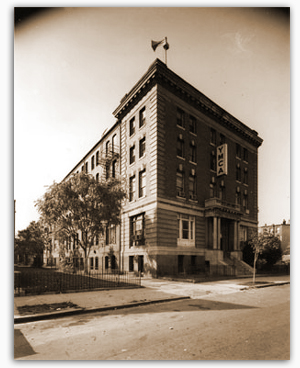
Last night I attended a panel discussion about racial discrimination in the DC gay bar scene, put together by the Rainbow History Project. (The discussion was held in the Thurgood Marshall Center, that had formerly served as the “Colored” YMCA back in the day; Langston Hughes used to room there).

Thurgood Marshall Center/ 12th Street YMCA

Many bars and clubs used the practice of “carding” to deny entrance to African-Americans, transgender people and women. “Carding”  = demanding multiple forms of I.D. for one set of customers, while the desired demographic gets to enter with only one (driver’s license).  One  bar, the Lost and Found, was sued over this practice and the court testimony included bar employees recounting a staff meeting where they were instructed not to serve “n*ggers.” Another club, Badlands, reached a settlement after that accusation. Eventually a law was passed whereby drivers/ non-drivers licenses were the only required identifications needed to enter bars. Many of the panelists and the audience members also recounted their experiences in those days. One older gentleman said that he would be let in when accompanied by white friends, but would be denied entrance when he was in a group of fellow African Americans.

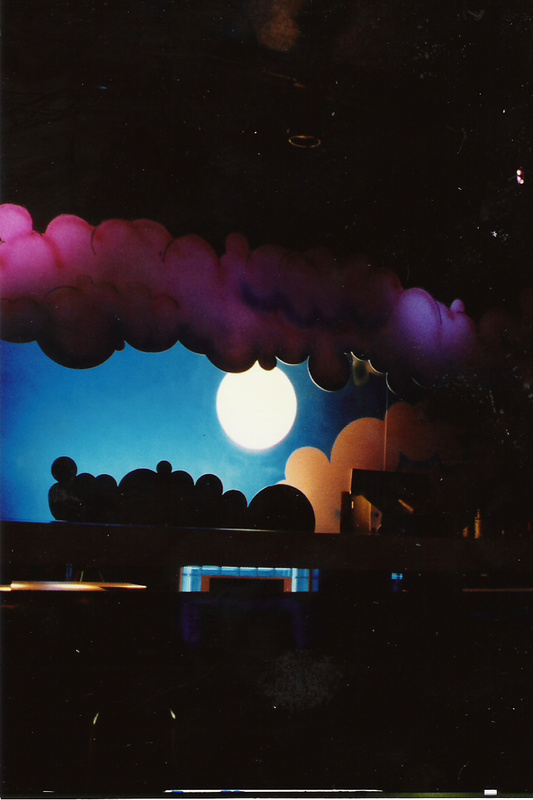
The inside of the Lost and Found, courtesy of the Rainbow History Project digital archives

A few years ago, I was on an online forum where a couple of white gay men were talking about how Black Pride festivals were “reverse racist.” When I brought up the issue of “carding,” they all vehemently denied the mere possibility of such a practice. Before leaving the forum, I posted a link to the article that showed that such things happen even today.

The Legend of Cool “Disco” Dan: the secret history of Chocolate City

DC in the 80s was a hellish place. It was a city plagued by poverty, murder and the scourge of the Crack Epidemic. I was shipped off to high school in nearby Maryland during that time, where my mostly white and affluent classmates would marvel that I lived in the sordid mess that was the District. I remember one of my classmates even told me, quite snottily, that in the suburbs, “At least we have trees!” (Please note that my house was directly across from Rock Creek Park, and we would get routine visits from deer, possum, and raccoons). My older brother was shot in the late 80s, after being carjacked.

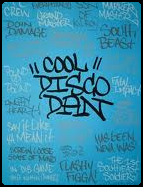
During those turbulent times, if you rode the Metro, you saw the graffiti tag  Cool “Disco” Dan everywhere. On the buses, against the walls, on rooftops, under bridges. This mysterious artist’s (or vandal, depending on who you spoke to) signature  appeared everywhere in the Metro Area. Who was this person?

disco dan

The documentary The Legend of Cool “Disco” Dan examines the man behind the tag. Dan was a man who started tagging in his teen years, fueled both by his love of the indigenous  Go Go scene and his own mental anguish. The film contextualized his avocation against the larger zeitgeist of the Reagan 80s, the Crack Epidemic, Go Go music and the heyday of Chocolate City. While not exactly agitprop, the emblematic logo was and still is a sign of times and of the DC that exists in the shadows of the federal government. Dan became a kind of folk hero.

Other things learned: the “Disco” nomenclature came from an episode of the 70s sitcom What’s Happening!! where there was a character named “Disco Danny.” Before I saw the movie, Cool “Disco” Dan himself was in the lobby, signing posters.

My horror story Tinkerwench is set in the gay circuit boy scene of the 90s. A tale of #addiction and #desire.

Tinkerwench is a horror story, written from the point of view of a club drug. It was written in the late 90s, when Ecstasy and Crystal Meth (or “Tina”) were in the gay club scene. At the time, my (ex) roommate was in the full swing of a meth addiction.

Tinkerwench Cover Art

Lois Lenski, the John Steinbeck of children’s literature: regional tales of diversity and classism

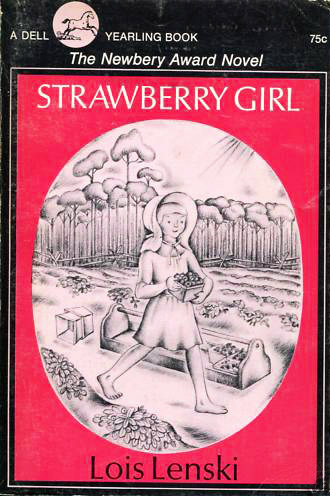
Strawberry Girl was the first novel I read by children’s book author and illustrator Lois Lenski (October 14, 1893 – September 11, 1974). I read the book in the fifth grade in secret, because with its pink cover, not to mention title, was girly. At the time, I was in the process of reading books that had the Newbery Award, regardless of content. There were some duds in that bunch. For instance, I could not get into Dr. Doolittle by Hugh Lofting, due to the archaic language and the fact that there was a stereotypical black character.

strawberry-gril-lois-lenski

Strawberry Girl’s synopsis sounded girly, too. According to the back cover blurb, Birdie Boyer is a plucky ten-year old heroine in turn of the century Florida who oversees a crop of strawberries in the hopes of winning some Four H-styled prize. The actual story is somewhat darker. It’s about a Hatfield vs McCoyesque feud between the Boyer’s neighbors, who are in reality, squatters. The father, in particular, is a drunken lout with rage issues. The mother is not much better. The Boyers, by contrast, are one class above them, and while not educated, per se, have strong bourgeois values and a Puritan work ethic. The neighbors don’t resort to violence. Instead, they use criminal mischief, such as ignoring property boundaries and destroying crops. The neighbor’s son is the lone good egg in the family, and with the help of Birdie, tames his wild streak. The families enter into an uneasy truce, thanks to the friendship between the two kids. The story is accompanied by the author’s stark, black-and-white illustrations that have the austere quality of folk art.

I ended up reading other Lenski books that year. Her regional series followed the lives of children in various US locales. Most of the scenarios dealt with poverty in some form or another. Appalachia is explored in Blue Ridge Billy. Judy’s Journey is about migrant workers. She even dealt with racism in a book that I only heard about, entitled Mama Hattie’s Girl, which features an all-African American (or in the parlance of the time, Negro) cast.  Yet another novel is set in San Francisco’s Chinatown. Lenski was prolific, writing and illustrating many picture books, historical novels and even songbooks. Her focus on poverty and effects on children make her a kind of children’s lit version of John Steinbeck.

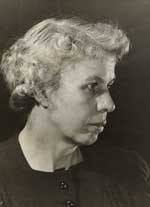
Lois Lenski
Lois Lenski

Much of her work is out of print. This past summer, I volunteered for my local library (MLK Public Library here in DC), and I had the pleasure of working with the Rare Children’s Book Collection. Many Lenski works are housed in there.

It’s a shame that more of her stuff isn’t in print. Her focus on the vulnerable left an impresseion my young mind, and made me empathetic and curious about the lives of others.

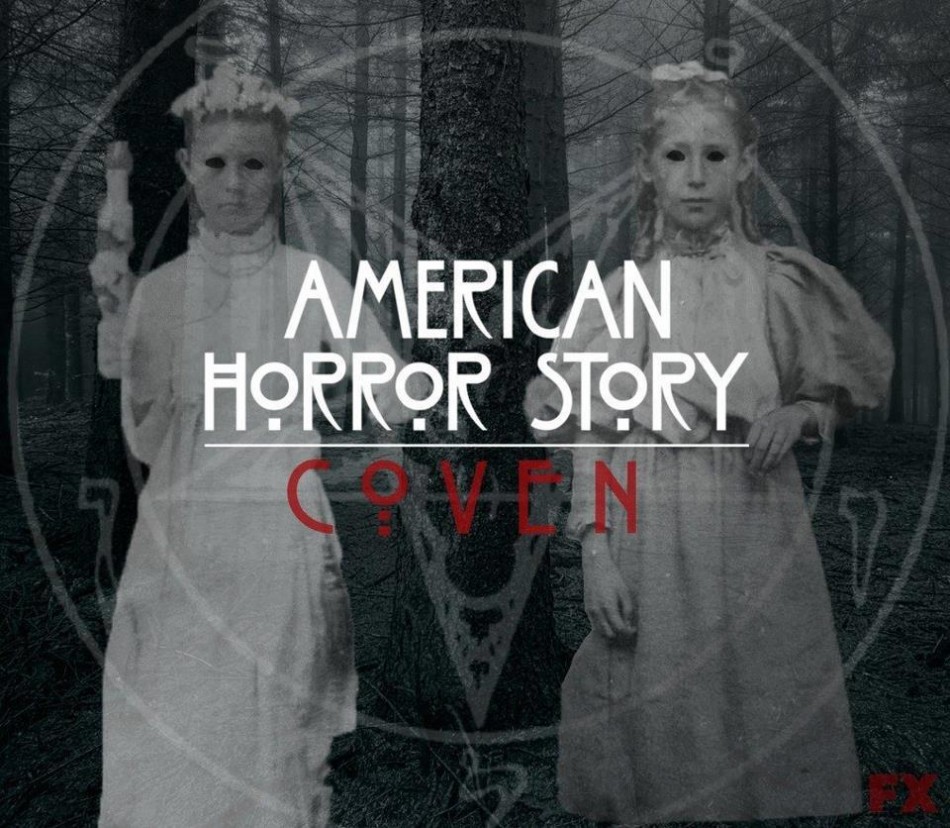
American Horror Story: Coven, Ep. 1; Grand Guignol, High Camp and the Spectacle of Black Suffering

I loved American Horror Story: Asylum. It was an excessive mess of Grand Guignol horror and over the top campyness. The new season, subtitled Coven, debuted last night. True to form,It was luridly disturbing. Race and rape and gendered tropes abounded; it is unclear whether the story is subversive or not. Catfights, and scenery-chewing competed with some really dark material. I had more than a touch of Post Traumatic Slave Syndrome watching the Madame LaLaurie sequence, where the black male body was tortured. Nightmare fuel =  the grindhouse horror of seeing flayed, punctured and surgically modified black flesh. Slave torture combined with high camp gave this opening gambit some serious mood whiplash. I hope that the story does give the enslaved a voice. At its best, horror can be cathartic. I hope that the subversive elements comes in soon. Angela Bassett as Marie Laveau and the rest of the excellent cast is not enough to erase the bitter afterimages of black suffering.

Coven

Othering or 50 Shades of Chocolate. Food as metaphor for skin-tone.

I admit-it often takes me a while to absorb certain concepts and critiques.
I was first made aware of the ways of describing skin tone as food (spices and coffee and chocolate) in a writing workshop. A fellow workshopped found an instance of it in my story. I filed the critique away for future examination. (There was a lot wrong with my story, so there was much to take on-board). The idea that describing people of color using food imagery didn’t bother me before. But since I was alerted to it, I began noticing it all the time.
•    My niece and nephew are biracial; they are often called “Cafe Au Lait” or cinnamon.
•    Personal ads often use various these descriptors. Mocha skin. Chocolate Princess. Honey.
•    And Urban Fiction and Blacksplotation Films are full of titles using those conventions: Chocolate Revenge. Coffee. etc.

A sexy cacao pod
A sexy cacao pod

Because it’s so ingrained, it doesn’t bother me enough to throw me out of the story. For instance, how many white protagonists are described as being rosy-cheeked, or apple-cheeked or with skin as white as cream/milk?  Tales of Snow White (and her occasional pal, Rose Red) depend on these surface descriptors.

Years after that critique, I began to see the point. Describing skin tone as food is kind of lazy. It belongs in the purple prose hall of shame, right along with “russet-maned,” and “chestnut tresses.” (Or “man root” and “secret flower” in describing genitalia). And it does bother me now in erotica (or porn).

Since objectification is one of the purposes of erotica/porn, it strips away all the obfuscation in other texts. It is clear that you are meant to (sexually) consume the Chocolate Mandigo; the Onyx Thug is supposed to dominate you, and his very blackness is part of what is supposed to make you feel dominated.

Food as skin-tone serves as a euphemism for othering.

Some texts are “grandfathered” in such uses.  (E.G., If an author is being deliberately archaic or in some cases, viewing a character through the lens of another character). But from now on, there will be no more Cocoa-Mocha-Coffee-Tea-Milk-Cinnamon beauties or hunks in my fiction. (Exceptions made for parodies and satires).