BOOK REVIEW: The Daylight Gate by Jeanette Winterson. Feminist Fantastika & Witchy Prose Poetry

The Daylight GateThe Daylight Gate by Jeanette Winterson
My rating: 5 of 5 stars

The Daylight Gate exists at a crossroads, between fact and fiction, reality and fantasy, and prose and poetry. Jeanette Winterson uses History to spin a mediation on persecution, feminism, polyamory, power, religion and abuse.

The history she uses this time is that of the Pendle witch trials in the 1600s Britain. A group of women and men were hanged for witchcraft, and using everything from flights of fantasy to ribald humor to Grand Guignol horror, Winterson tells their tales. The main protagonist is Alice Nutter, a wealthy and independent woman who gained her wealth by creating a a unique magenta dye. She is at the center of several circles. She owns the land where the accused witches live. She also is the lover of a banished Catholic who (allegedly) tried to assassinate King James. In the past, she worked with Queen Elizabeth’s court mathematician/magician John Dee, and through him, met her other lover, the beautiful Elizabeth Device—who is the matriarch of the accused Pendle witches. Nutter is the central piece of the kaleidoscopic text, which includes the priggish chief lawyer Thomas Potts, a cameo by Shakespeare and the points of view of the other accused people.

The real star, though, is Winterson’s marvelous prose. Each sentence sparkles with invention. Her imagery is magical, brutal, funny and terrifying—often at the same time. The story is multilayered and full of symbolism, but it is also fun. The Daylight Gate could be read as a dark gothic fantasy, a feminist parable, a lesbian fairytale or a prose poem.

View all my reviews

Gaslighting Racism: A parable

Internet comments on articles are where many ideological battles are fought these days, and in spite of the admonishment, “don’t read the comments,” I keep doing so anyway, out of a morbid curiosity. In the post Zimmerman trial articles, I find one persistent idea put forth, mostly by trolls, but some genuine folks actually believe this idea, as well. It’s the idea that racism is an illusory specter that doggedly haunts black people. In the age of Oprah and Obama, racism shriveled up and black people just have a collective chip on their shoulders. We’ve heard such sentiments phrased in a myriad of ways. They range from accusations of “playing the race card” to “black people are the true racists because they only see race.” This belief occasionally comes from black folks themselves—see Ward Connerly and Clarence Thomas.

racecard

The most insidious form of this sentiment comes in the form of gas lighting racism. This is where (mostly) (some) white people will twist themselves into logic pretzels to deny racism, even when it is obvious. The first time I experienced this was when I was in college. I was a part of an anti-discrimination task force made up of students, faculty and staff. The point of the task force was to examine racial issues from our respective spheres, and then report them and make recommendations to the college. As a member of the task force, we were given access to the historical records of the college. I discovered that there had been a cross burning in front of an on-campus house full of black students in the 70s.

I remember relaying this information one time at lunch. One white girl, who was very sweet, began to come up with a series of bizarre reasons why a cross burning couldn’t possibly be racial. One of them was, “Maybe they were pagans.” And it was just coincidental that the burning cross was in front of where a group of black students lived. At the time, I was stunned. Somewhere along the line, I came to realize that to some white people, even overt racism is a thing of the past and black people are just over-sensitive and over-emotional. This attitude—of ‘gas lighting’ racist incidents—was just the first of many that I’ve experienced.

I have come realize that when people say, “I don’t see race,” they mean, “I don’t see racism.” It’s difficult, because often the people who do such ‘gas lighting’ are good, well-intentioned people.

BOOK REVIEW: The Death of the Necromancer by Martha Wells. Swashbuckling Gothic Fantasy

The Death of the Necromancer (Ile-Rien, #2)The Death of the Necromancer by Martha Wells
My rating: 5 of 5 stars

I’d always planned on reading THE DEATH OF THE NECROMANCER but it was out of print by the time I got around to it. Thanks to technology, the novel has a new life. It’s a kind of “gaslight” fantasy, set in an ancient city that has overtones of Belle Epoch Paris and Dickensian London where magic exists alongside steam trains and gas lights. Vienne, with its decadent Great Houses, predatory aristocracy and pockets of ruin, is a character in it’s own right. The master criminal Nicholas Valiardre is the debonair, dashing hero. (I cast Ryan Gosling as Valiardre). The female lead, the actress and amateur sorceress Madeline is a secondary POV–I saw Jennifer Lawrence in this role. The plot of a mix of court intrigue, mystery and penny dreadful. References include Dangerous Liaisons, the works of Dumas and the Gothic fiction of LeFanu or Gaston Leroux.

View all my reviews

A prose-poem I wrote when I was 21

A old college friend of mine unearthed the long-forgotten following piece from a defunct literary journal. I was 21 at the time, and enamored of  the poetry of Aime Cesaire, stream-of-conscious writing and automatic writing. This is the only copy of the piece that survives. Please forgive the wall of text and clumsy metaphors.

a tree some rocks benches but no clouds: had there been clouds this would look just like Charleston in summer where the plaza’s elegant arrangement held hues of euphoria along with various shades of sungold: a jasmine breeze lifted carnival-colored dresses strands of white people’s thin thin hair paper leaves and choir robes: there was a hush a silence as profound as music then the singing began weakly at first but it gathered strength till every particle of air quivered with the ululation of human voice: your voice you asked where is my voice does the lady in third row hear me: for a while you heard the individuals Etta Maes theatrical tremolo Mauvines  giantess soprano Urseles I’ve seen it all and child don’t I sound like Mahalia Jackson screams: but you forgot about them and let the pure sound roll over you lost yourself in it no thought just God as sound: the last song remember especially swing lowsweetchariot coming for to carry me home cause white people started to clap not because it was good—it was a cliche arrangement—but because it was the generic negro spiritual and you got a kick out of how they can get so worked up over something so easy to understand for them its a gorgeous hopeful work song reward for being a good nigger it says is heaven milk honey: but they can’t hear the dark of the song the magic the power they hear gonewiththewind: after the concert the Hazel Street Ladies Book Club wept and commented over the concert by the seventh street baptist church you smiled and ate the naggingly mediocre food still something burned into you from that day and it wasn’t the choir or the weather it was the old immense black woman who began to sing right outside of the courtyard brutal tarnished dark it held that intangible magic only men and women knew whose aliens threatened the antiseptic souls: little clouds formed over the Ladies heads and written in them was o my a nigress: this however is not Charleston but it will suffice: you close your eyes sway find the power a voice bleeds and fills the space between rafters neon signs the linoleum: lazy gaunt stick figures think old fool but you abandon them and move towards the danger that draws you like a magnet: you haunt enchant curse the undecided dots of color the people move and shift a thousand little clouds with o my a nigress: maybe five are captured and feel the wound of your song a sharp sweet knife: you sing of chains that bruise the tender flesh of tumescent white genitals and black ones hitting sun baked earths in showers of blood or babies brains dashed against wooden walls of anathema but well hidden in themanilove masterthetempest strangefruit: you make up worlds to flamencosketches pure musical scarves for orangeswasthecolorofherdressthensilkblue you murder summertime with bitterness your underwrite Porter/Gershwin with sarcasm: you sing you leave your body you don’t feel the knife entering your throat or the bracelets of metal around your wrists or the blood on your dress because you remember with triumph: this magic this enchantment this beauty has one price you must pay your life your death: but you will haunt: with rage: with beauty.
—1988

INTERVIEW: Colten Hibbs interviewed me for his blog

Aspiring author Colten Hibbs graciously interviewed me for his blog. We discussed issues of identity and diversity in the YA sphere.

He writes:

Approximately two weeks ago, I became rather interested in observing a movement that has been gaining steam in the writing community.

The issue of Diversity in YA literature.
Needless to say I am a strong advocate for those who would bring characters of various minorities, sexual orientations, and cultures onto the Middle Grade/Young Adult stage.
Not only did I begin to examine my own work, but I begin to notice within the Twitterverse (where I find 99% of my writing/publishing contact) I was one of a remarkably few people of color.

Read the rest of the interview.

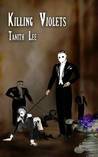
REVIEW: Downton Abbey directed by Lars von Trier–Killing Violets (or God’s Dogs) by Tanith Lee.

Killing Violets: Gods' DogsKilling Violets: Gods’ Dogs by Tanith Lee
My rating: 4 of 5 stars

Certain works of art are meant to be disquieting and disturbing. I think of the work of film-makers like David Lynch or Lars Von Trier, or the paintings of Francis Bacon or the music of Siouxsie And The Banshees. Classical music that incorporates dissonance into their sounds, like some of Stravinsky or artists that include menstrual blood or urine in their work. The diamond-encrusted skulls of Damian Hirst…. The list can go on. At it’s worst, such works of art feel like they are chores to get through; I am not fond, for example, of the “torture porn” sub-genre of horror films and some Goth/Emo music that is dark for the sake of being dark is tedious. At its best, though, disturbing art can be illuminating, cathartic and empowering. Think of Octavia Butler’s bleak futures or the blistering satire of Herzog’s film Even Dwarves Started Small.

Tanith Lee’s short novel, Killing Violets (subtitled God’s Dogs) is one of her most disturbing works. It has the raw, unadulterated atmosphere as a Von Trier film. Plot-wise, it has “break the beauty” as a major trope. Certainly, Lee has explored this theme before in many of her works. What makes Killing Violets different is it set in the recent historical past (1934) and is a realistic novel.

The novel opens with a lost, fragile woman named Anna starving to death in some small European town. She is picked up by a man, Raoul, who dashingly brings her out of the rain and gives her food and shelter at his hotel. He also initiates a sexual relationship with her, and lures her to England and his obscure aristocratic family’s vast estate. Once there, Anna notices that the Basultes are horrible people, who play complex power games with their servants. The Basulte men, in particular, delight abusing the female servants. Realizing this, Anna attempts to escape, but is captured, and, as a punishment, demoted from love interest to scullery maid. Anna’s tragic past in an unnamed small town (it seems vaguely Hungarian) is interspersed throughout these horrific stories, like a dreamy fable.

Like Selma in Von Trier’s Dancer In the Dark, Anna is an innocent, a shattered, vulnerable soul who is forced to suffer for no reason. And like many Von Trier heroines, she also has dark secrets of her own, and can assert her atavistic power when she has to. Like many Lee characters, Anna mostly lives in her head, and is aloof and allusive, sometimes maddeningly so. In that way, she reminds one of Blanche DuBois—stubbornly clinging to illusions of the past at the expense of her sanity.

Killing Violets is beautifully written, with a blurred water-color touch to the imagery. Love and passion is at the center of novel, but it is a horror novel in way, with the brutish, rigid class caste British system rather than the supernatural as the thing that terrifies. Indeed, some of the scenes recall the elegant cruelty depicted in Pier Paolo Pasolini’s films. The title’s meaning becomes brilliantly clear in the tragic third act.

View all my reviews

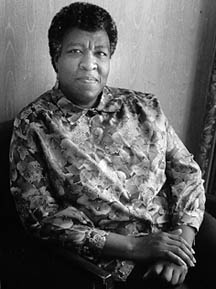
The Parable of Octavia E. Butler

I went to hear Octavia Butler speak when her novel, Parable of the Sower was released. This was before she won the MacArthur Genius Grant. The thing was, at that time, she didn’t read. Always self-deprecating to a fault, Butler instead gave a talk about her work and writing the process, and at least to me, that was as enthralling as any recitation could be. She told a story about how she had been stuck with writing her current novel at one point, so she went for a walk to buy some food at a supermarket. Butler lived in Southern California at the time, and she wasn’t a driver—a rarity, if you’re at all familiar with greater Shangri-L.A.

octavia-butler-3

She paid for her purchases with a $100 bill. The cashier stopped the process, and called over a manager. Apparently, there had been a rash of counterfeit 100 dollar bills floating around the area, and they needed to confirm that the bill was legitimate. The store took the necessary steps, and Butler walked out of the store with her groceries. She wasn’t too far from the store when a phalanx of police cars converged on her—she described it as more than two cars, with their engines whirring. She stopped, and they detained her in the store’s parking.

The officers explained the counterfeit issue again. Butler asked why the police had been called, since she had already paid and been cleared by the store’s management. The reason was, she looked suspicious. Butler was a tall black woman (she might have been 6 feet tall) and walking along the side of the highway in L.A.. That had been a red flag for the store’s owners.

The audience listened to this story in quiet shock. Octavia Estelle Butler, one of the greatest SF writers ever, had been racially-profiled! Butler, being a writer, saw this incident as important, and it influenced Parable of the Sower’s sequel, Parable of the Talents.

Racial profiling is something that many African Americans face. It’s a fact of life. My 83-year old mother, an ABD (all but dissertation) Ph.D, was recently mistaken as a waitress in her retirement community home. It can be used as a justification to kill, if you tell a certain narrative. The Martin case, like the Rodney King case before it, exposes an issue faced by black male youth.

Butler used her experience to create a masterwork of speculative fiction. I hope that the Martin case can be used as a springboard to stop profiling and murder, bring justice to everyone.

Muses: On Mapplethorpe and the Black Male Body

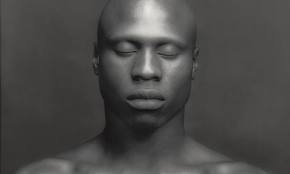
I have a complicated relationship with Robert Mapplethorpe’s work. And I don’t mean his flowers and fruit pictures. The way he fetishizes the black male body disturbs me; he makes me a partner in their objectification. I mean, these men and the light with which they are cast and their poses are undeniably beautiful. But they are just icons, and in a way, no different than the glossy eggplant photo or the calla lilies he captured.


Mapplethorpe


Captured.


These men are captured in black and white, on film, in the camera’s eye, and in my own. Is the baggage that I bring to these images my own or is it deeper than that?


Back in the early 90s, my then-partner created a video, a mediation on interracial relationships. The video was eventually picked up by the Festival Circuit. The video had showings internationally, including places like Italy and South Africa. I narrated portions of the video, which included a poem by Harlem Renaissance writer Claude McKay, called The Snow Fairy, which could be interpreted as an ode to an interracial encounter. I went to a showing of the video in New York. One of the scenes in the video has me kneading the flesh of my then-partner. When the video finished, the floor opened up for a discussion about what we had seen. One man thought the video was racist. He highlighted the scene where my hands were on the the white flesh of my partner. He thought that scene showed that I was like a slave, pleasing his master.


This incident, for me, encompasses all of the issues I have with this section of Mapplethorpe’s work. The black men on display in his work are ciphers, upon which a viewer’s thoughts/agendas may be placed. Like the men in those photographs, I was a willing participant in an act that could be seen as racist, regardless of intent. The fact that I don’t think so is immaterial; in the video, I was just a symbol, an image. I’ve learned that many of the men that Mapplethorpe photographed were friends, and indeed, lovers with the photographer. Does that change the meaning or doesn’t it?


I identify with the photographer and the photographed.


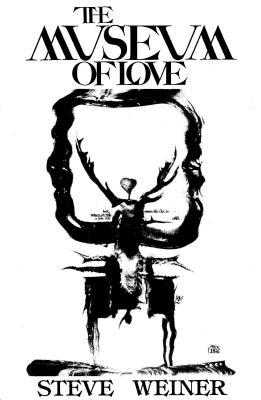
Books I Wish I’d Written: The Museum of Love by Steve Weiner

Museum of Love

Like the whimsical/ repulsive image from a Brothers Quay film that graces the cover, The Museum of Love is a nightmarish, hallucinogenic quest novel. It crackles with a strange, hypnotic energy. Mixing Catholic mysticism, the brutal reality of the Canadian physical, psychic and cultural landscape, the novel defies description. It is reminiscent of the strange bildungsromans of Hesse, Genet, and Kafka. In an era of PC, cookie-cutter fiction, The Museum of Love  is deliberate, surrealist and elusive. The protagonist is homosexual, but you won’t find a “feel-good” resolution. And Weiner’s black, bleak humor and startling imagery raises the book above any simple explaination. Having the logic of a dream, the tension of a suspense novel, horror strong enough make Stephen King look like a wimp, and the depth of Joyce is hard to pull off.

Adapted from my Amazon review in 1996