Muses: The mystical genius of William Blake

I discovered William Blake’s work when I was a child. At the time, Kahlil Gibran’s book The Prophet was very popular and my family had a copy of it. The words were poetic and philosophical; but it was Gibran’s black and white drawings that held my interest. The mystical opaque paintings that accompanied the inspirational, allegorical prose poetry held my imagination. I could stare at those pictures forever. At 10, I wrote and illustrated my own work of Inspirational Fiction, entitled Bird of Stars. It had a one print run, and it no longer survives.

william_blake_-_nebuchadnezzar_-_wga022161

Gibran was described as a “modern day William Blake.” I found that was only superficially true. Gibran is a talented visionary, but Blake is a genius. His symbolic paintings are portals to other worlds, and reflect a very personal version of Christian mythology. His work is febrile and opiated, full of colors that have no precise name. The luminous beings in his paintings seem more summoned than painted. Blake created a private mythology that overlapped and incorporated Christian myth. It’s said that he had visions, a kind of Gnostic awakening. Even his demonic images are imbued with this grace.

REVIEW: Fossil Circus by John Kaiine. Lewis Carroll directs Silence of the Lambs

Storm Constantine is reprinting John Kaiine’s horror novel Fossil Circus via her Immanion Press.  I reviewed it when it first came out in 2005. Kaiine is an artist as well as a novelist–and the husband of Tanith Lee.

Four former psychiatric patients are given a palatial, ruinous asylum by their kind, eccentric doctor in her will. The troupe of misfits includes Ernie, a grown man mentally flash-frozen at the age of six; the misanthropic (and therefore misogynist, and racist) cripple Mr. Jackson; the Byronic necrophiliac Roane; and the flatulent, hapless Norman. The four men move in together, and settle into a dysfunctional family unit. The house has its own history, and affects all who live there-particularly Roane, who is prone to psychic frequencies. Meanwhile, a serial killer, Jerusalem Lamb, cuts a bloody path across London, drawn to the strange, almost supernatural pull of the former asylum.

book_fossil_circus_front_sized

Kaiine’s debut alternates between sick comedy (think John Waters meets Erasehead-era David Lynch) and warped horror (Lamb is as chilling and surreal as Hannibal Lechter). Norman and Ernie form a kind of Pooh and Piglet friendship, and get trapped in all sorts of odd, comic situations. Nasty Mr. Jackson’s foul proclamations are only matched by those of his pet parrot, Maudsley. And Roane wanders the weird asylum, a tortured Theseus in a labyrinth. Lamb, meanwhile, moves through London’s underground, mired in murk and gore.

All of this is written in a pun-filled, present tense poetic prose. The inventive language, shot out with rapid-fire wit, draws the reader into these strange characters’ mindscapes. It’s as if Monty Python decided to produce Peake’s Gormenghast. Other times, it’s Lewis Carroll’s version of Silence of the Lambs. Kaiine has a strong grasp of dialog and dialect, and a love of the surreal. There’s nothing quite like it. The closest reference is (American) southern horror writer Caitlin Kiernan, with a dash of Vonnegut.

REVIEW: The Half-Made World by Felix Gilman. Manifest Destiny as a literal demonic force.

The Half-Made WorldThe Half-Made World by Felix Gilman
My rating: 4 of 5 stars

There’s a famous painting by John Gast called American Progress in which a giant white woman garbed in gossamer leads American settlers Westward into an ominous, uncreated world. I wouldn’t be surprised if Gilman didn’t have that very picture as a screensaver when he penned his New Weird Western novel, The Half-Made World. The ominous, bleak tone of this work also brings to my mind a song by the gothic/worldbeat Dead Can Dance, a song called “Frontier.” DCD’s female lead singer is known for her ideoglossia—Lisa Gerrard, like Elizabeth Fraser and Jonsi of Sigur Ros sing in private languages on the phoneme-level. On this song, however, she sings one recognizable phrase: “I see the bloodstains on the floor.” Or, I think that’s what she’s singing. I bring this up, because this novel is about the bloodstained mythic past.

The plot of the novel has been explained by others—or you can read the cover flap copy. The Half-Made World is chase and quest novel, complete with a MacGuffin. On this level, it is suspenseful and has the juggernaut-like pacing of both cinematic and literary Westerns. But it is the world-building and more importantly, the trope-twisting that is truly fascinating.

Gilman presents the West as a literally uncreated landscape, where creatures and plants are in their experimental or “beta” phase. Land and sea haven’t resolved themselves as separate entities. This part of world is stewarded by the First Folk, who may or may not be human or may or may not be immortal. They are described as long, pale black-maned people with red eyes and seem to live in a kind of amorphous Dreamtime existence. (The First Folk seem more modeled on Aborigines than on Native Americans—and even here, there is a interesting trope-twist). The settled West presided over by two rival faction demonic Spirits. Controlled by sentient Engines, The Line wants to colonize the West and turn it into a grim industrial land. (The current, real-world issue of fracking resonates here). The Gun is an anarchistic organization, who seem to worship chaos and destruction. They possess their Agents and almost become symbionts with them. (The spirit-symbionts live in their Agents’ supernaturally powered Guns; unhoused Gun spirits return to a Lodge—which reminds one of the creepy otherworld lodges referenced in David Lynch’s Twin Peaks TV series).

In fact, the whole novel has the dark surreality of a Lynchian film. It puts the phantasmagoria into fantasy. It’s a rare novel that manages to be both high-low and pulpy at the same time.

View all my reviews

An Open Letter to Paula Deen

An eloquent Open Letter to Paula Deen by an African-American culinary historian. It’s a must read, if you have the time.

michaelwtwitty's avatarAfroculinaria

An Open Letter to Paula Deen:

meinkitchen

Photo Courtesy of: Johnathan M. Lewis

Dear Paula Deen,

So it’s been a tough week for you… believe me you I know something about tough weeks being a beginning food writer and lowly culinary historian.  Of course honey, I’d kill for one of your worst days as I could rest myself on the lanai, the veranda, the portico (okay that was really tongue in cheek), the porch..whatever…as long as its breezy and mosquito-free.  First Food Network now Smithfield.  (Well not so mad about Smithfield—not the most ethical place to shill for, eh, Paula?)

I am currently engaged in a project I began in 2011 called The Cooking Gene Project—my goal to examine family and food history as the descendant of Africans, Europeans and Native Americans—enslaved people and enslavers—from Africa to America and from Slavery to Freedom.  You and I are both human, we…

View original post 2,223 more words

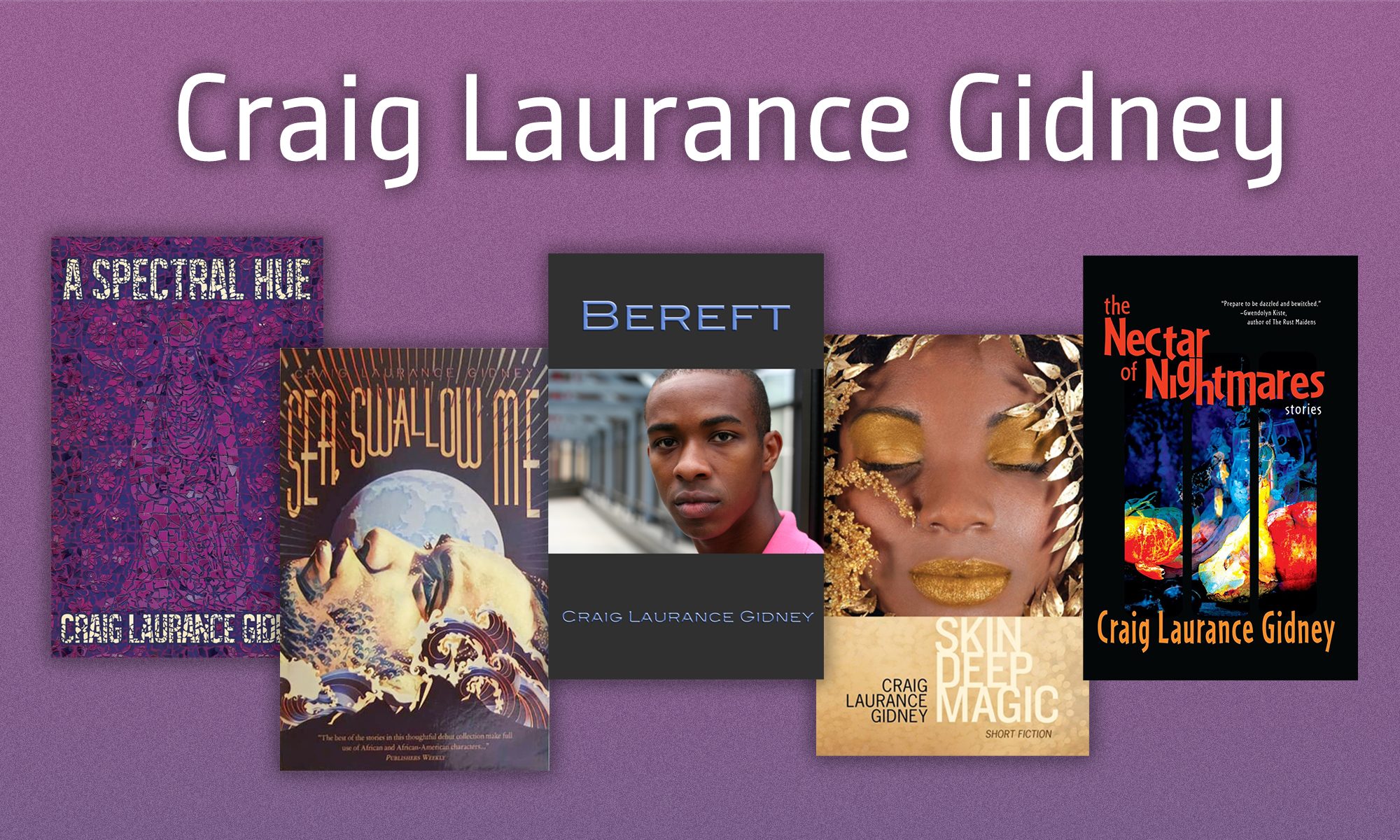
My novel BEREFT gets a great review from Lambda Literary

Reviewer Lydia Harris says of BEREFT:

“Gidney’s storytelling abilities, complemented by his deftness with words and strong writing skills, result in an outstanding contribution to the young adult genre. The believably realized characters, strong description, and relevant knowledge of the adolescent experience, when combined with his willingness to take on the “hard” controversial issues facing today’s youth’s marks him as an author to watch. Undoubtedly his future work will be even more rewarding for readers”

Read the rest of this great review over at Lambda Literary Online.

Gidney’s storytelling abilities, complemented by his deftness with words and strong writing skills, result in an outstanding contribution to the young adult genre. The believably realized characters, strong description, and relevant knowledge of the adolescent experience, when combined with his willingness to take on the “hard” controversial issues facing today’s youth’s marks him as an author to watch. Undoubtedly his future work will be even more rewarding for readers. – See more at: http://www.lambdaliterary.org/reviews/06/24/bereft-by-craig-laurance-gidney/#sthash.ZCCNJcDy.dpuf

Short Story Recommendation: The Thing Under the Drawing Room by Jedediah Berry

Jedediah Berry’s story, The Thing Under the Drawing Room, is now up at the inaugural issue of the online zine Interfictions. It’s as colorful as a Jack Vance tale, with a distinct hint of P.G. Wodehouse. It’s a mash-up of the Mighty Thewed Barbarian trope and the coming drawing room comic tale. It has a sardonic wit that reminds of certain Tanith Lee fiction–and like many of Lee’s characters, sexual orientation is amorphous.  Berry’s prose is neat and crisp, and not purple. Maybe a little lavender. This is the second of Berry’s pieces I’ve read; check out the wonderful but very  different A Window or a Small Box now up at Tor.com.

BOOK RECOMMENDATION: The Castings Trilogy by Pamela Freeman. Grim-Dark meets Social Justice Allegory

The Castings Trilogy (Castings, #1-3)The Castings Trilogy by Pamela Freeman
My rating: 4 of 5 stars

I finished this omnibus novel last week. The writing is at times lyrical and the characters are solid–I could see them outside of the plot. Many readers have complained about the shifting POVs–in addition to the three main characters, Freeman adds first person vignettes from superfluous characters. Frankly, I loved that about the book.
!.) It makes the 11 Domains seem like a real world because she focuses on really mundane characters;
2.) Those tales really do come together in the end, as a wondrous tapestry of pain and catharsis and story telling.

The Castings Trilogy subverts many fantasy tropes. The reluctant Chosen One doesn’t have a whole lot power or agency in her world–she’s not really magical. The Big Bad has a legitimate beef, mainly, the ethnic caste system in his world. And the male lead isn’t a hidden prince. The kingdom is a group of Balkanized nations rather than a united kingdom. And the history of ethnic cleansing and oppression isn’t clear-cut; its complicated.

The magic system has a sense of wonder–ghosts, elemental spirits, necromancy and fortune-telling–but it’s also organically built and consistent.

The Castings Trilogy is a unique take on the Grim-Dark epic fantasy that adds a dash of social justice as a subtext.

View all my reviews

The Age of the AfroGeek

Image

I was a geek growing up. A black geek.
Bookworm? Check yes.
Science Fiction and Fantasy fan? Check yes.
Alternative/avant garde/world/ambient music fan? Check yes yes yes.

I didn’t fit in. Square peg, etc. But there’s a unique issue faced when you’re a geek and of African American descent.

You’re an anomaly, an outcast, the punchline of the end of a joke.

See: Urkel, Stephen Q. You get funny looks at SF conventions.
The record-store clerk asks you if you need help, because you are obviously in the wrong section of store. (In my case, the Import section).

Your black peers also think you’re strange.

They police your blackness.

If you read at all, you should read ONLY  The Autobiography of Malcolm X  or  Makes Me Wanna Holler.

(“I swear that Octavia Butler is black…Just ignore the picture of the white women on the cover!”)

Don’t get me started in music.
Siouxsie, Liz Fraser and Lisa Gerrard sang the soundtrack of my late teens. Thank God(dess) that those Tower Record bags weren’t see-through!

(“Yes, A.R. Kane are two Afro-Brits… Yes, their music is strange…. And yes, they don’t appear on the cover of their albums; that’s a thing now.”)

Now, it seems that there are more Afro-eccentrics out there than before.
The field of SF/Fantasy now has Jemisin, Okorafor, Hopkinson, Daniel Jose Older and more
Music has Cold Specks (gothic tinged gospel), Janelle Monae (SF and Kate Bush and funk are influences) and now a heavy metal band of African American preteens called Unlocking The Truth and much more.

We’re coming. We’re here.We’re frightening the horses, shaking the foundations and laying down our roots.

Afrogeeks are no longer novel, or “in the closet.”

There’s a damn pop culture Renaissance going on!
This the Age of Afrogeekdom.

The enduring influence of “academic” racism

Back in the early 90s I worked in a bookstore—one of the now defunct “superstore” chains. The store was located in Bethesda, on the border of Rockville, Maryland, just outside of Washington, DC. That area was then mostly populated by people who had participated in the “White Flight” migration of DC proper, leaving the District as a mostly black and, in three quadrants, lower middle class to poor city. At that time, The Bell Curve was published was a ‘controversial’ bestseller, rare for an academic book. (Bestsellers at that time included a diet cookbook written by Oprah’s personal chef and the first Dr. Laura self-help book). The clientele of the store was privileged, not only in material wealth, but also in attitude. Customer service and dealing with the public can be challenging and I have my share of war stories.

One particular story involves The Bell Curve. Having read Gould’s The Mismeasure of Man in college, in addition to being aware of the media storm that surrounded the book, I knew that it was pseudoscientific claptrap. An elderly woman sidled up to the Information Desk where I had been stationed. I was the only person not helping a customer, so she deigned to engage me.
“Excuse me, young man,” she said. “Do you know where the book The Bell Curve is?”
There was a stack of the book at the front of the store. I was about to show her where the requested book was, but she interrupted me: “That’s spelled ‘B-E-L-L space C-U-R-V-E.”
Did I hear that right? Did that patrician doyenne actually spell out the title for me, as if I were an illiterate, ignoble savage?
I would love to tell you that I went all Sarcastic Darky on her, shuffled over to the book, and said “Yes ma’am. De books be here. I ‘preciate you spellin it out fuh me. I’se not too good wit de letters!’
Alas, I did not. I needed the job, so I silently pointed her to the stack of books.

The allure of that book, which has been thoroughly debunked, still reigns supreme among the fringes in the Age of Obama. I see its influence in the circles where I associate. Most recently, the gay writer Andrew Sullivan gave credence, once again to the research of differences between the races and opined that racial differences were not unlike the difference between various dog breeds. Science Fiction and Fantasy Writer’s Association, an professional organization of genre writers (of which I am not a member) has been relentless attack by a member who subscribes to the theories laid out in the book (ostensibly to drum up interest in his mediocre fantasy fiction).

The point of my anecdote is show how such poisonous theories manifest in the real world. It isn’t about ‘censoring’ intellectual curiosity, which seems to be Sullivan’s interest in prolonging discussions about race. Rather, it is grist for the racist mill, a justification for treating people of color rudely. It isn’t a coincidence that the mediocre author is boorish and nasty in his attacks. Back in 2011, a principal who subscribed to white supremacist doctrines was unmasked, after spending years catering to a mostly minority population.

My anecdote at the bookstore is mostly humorous. Other people’s direct contact with this vile form racism is serious, and has lasting effects.