Muses: Arthur Rimbaud, Cosmic Vagabond

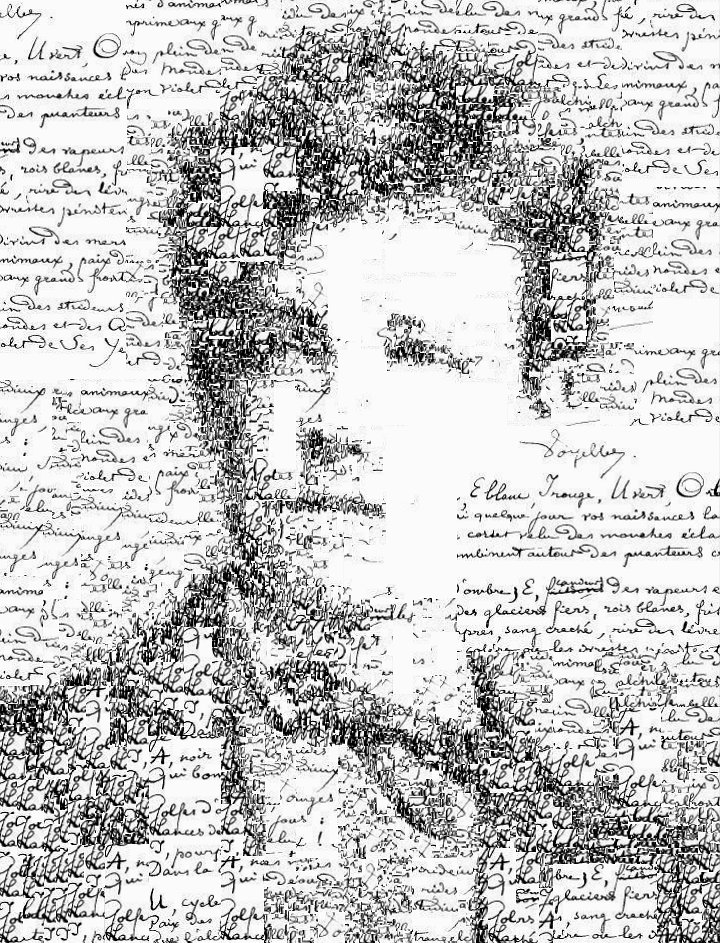
Arthur Rimbaud’s brief meteoric rise and fall as poet is the stuff of legend. His writing career spanned five years and ended abruptly at 21.

Rimbaud

His poems are more like incantations. Violent, mystical, always transforming itself–he thought words were like alchemical formulas. Poems were portals to both Heaven, Hell and all between. He created a new alphabet that reflected hidden energy of language. Illuminations, his final work, eschewed poetic form; they are prose poems full of  sacred and profane images in an opiated language that hints of an otherworld.

New review of Bereft

Critic Amos Lassen says of Bereft,

There is no happy ending here and I doubt there ever will be if we do not live up to our responsibilities to make the world a better place for everyone. I suspect that there is a lot of the author’s own life here but even if there is not, I believe we can all agree that we do not yet live in a world that is free of racism and homophobia. It is surprising that we have to be reminded of that. If we do have to be reminded, I am glad that it is Craig Gidney’s powerful and beautiful prose.

Read the whole review.

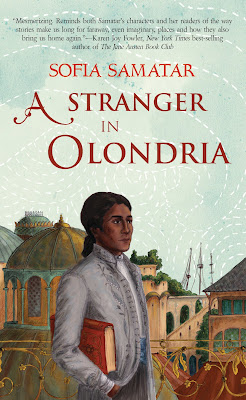
BOOK REVIEW: A Stranger in Olondria by Sofia Samatar

All of the reviews I’ve read about A Stranger In Olondria talk about it being about bibliophilia, that is, the love of books. The love of books certainly does run through the novel, but I actually think it’s more about spirituality—with the written word being the locus through which transcendence is achieved.
stranger in olondria cover

The form the novel takes is the bildungsroman: a novel about the initiation of a youth into the wider world. Jevick is the son of a prosperous pepper merchant, a tyrant of a man who has two wives and controls a plantation on a tropical island. When it becomes clear that Jevick’s older brother is unfit for inheritance, Jevick is trained to be his father’s successor. A tutor from the distant, northern land of Olondria is hired, ostensibly to teach young Jevick the language and customs of that land in order to be a competent trader. But the tutor instills in the boy a love of the written word and an obsession with the exotic land.  Jevick eventually travels to Olondria on his first routine trade trip, and—very much against his will—becomes literally haunted by the ghost of Jissavet, a young woman and fellow islander he met on the voyage from the Tea Islands. Ghosts, in a heretical Olondrian religion, are considered angels, and those who communicate with them are living saints. When Jevick’s haunting becomes public knowledge, he is placed under arrest and becomes the unwilling pawn between two religious factions.

In spite of this fairly complex set up, the novel isn’t about politics. The narrative form is that of the memoir, or its even more antiquated cousin, the philosophical romance. Jevick’s narrative meanders, often interrupting the narrative flow to quote poetry or bits of Olondrian philosophy. It’s slow, and richly descriptive—a marked difference  the often breakneck pace of other fantasy novels. At times, the book becomes a travelogue—kind of like the books written by John Berendt (e.g., Midnight in the Garden of Good and Evil). Because of this solemn quality, the magic and the world-building is organic and believable. Other times, it has the elegiac melancholy of Hermann Hesse’s novels (particularly Steppenwolf and Siddhartha). The land of Olondria is a character. The country has a Mediterranean feel, in its fauna and cultures. The imaginary religion borrows from Hinduism and Egyptian mythology with a dash of decadence, resonant of the Greek mysteries.

The novel’s ending is ambiguous; no magic ring is recovered or kingdom conquered. Rather, Jevick, and Olondria itself, are spiritually changed. A Stranger in Olondria is a richly rewarding experience for those who love prose poetry and non-traditional narratives. Sofia Samatar’s debut novel is a fine exemplar of bibliomancy.

What I’m listening to: #BlueHawaii, #StillCorners, #JohnGrant, #Colleen

Blue Hawaii: Untogether. Floating, dreamy technopop that reminds me of Bjork’s Vespertine–with a touch of eerieness.

Blue-Hawaii-Untogether

Still Corners: Strange Pleasures. Melodic dreampop full of hooks, with a dash of electronic. The mood is hazy. Think Beach House meets Mazzy Star.

Still Corners

John Grant: Pale Green Ghosts. Grant’s awesome baritone and killer lyrics drift over music that’s a blend of electronica and folk-rock. Truly wonderful songwriting and enthralling performances.

John Grant

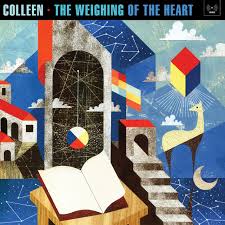
Colleen: The Weighing of the Heart. Multi-instrumentalist Cecile Schott’s first foray into vocal music. Pastoral post-rock with references to classical minimalism. Meredith Monk and Julia Holter are touchstones. Quite beautiful.

Colleen

Muses: Angela Carter, Oneiromantic Warrior

Image

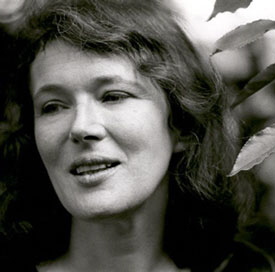
The first Angela Carter fiction I read was her collection Saints and Sinners. I was immediately entranced by the dense, layered symbols embedded like diamonds in her stories, and the baroque prose with which she cloaked her tales. She became an obsession–I devoured everything she wrote, from The Passion of New Eve to The Infernal Desire Machines of Doctor Hoffman. Her work drew from a host of sources, from surrealism to B-movies to fairytales to Jungian psychology. Her work also addressed a variety issues, from feminism to racism without ever being didactic. Her work was fantastic and intellectually robust.

Angela Carter was one of the first authors to show me that fantasy fiction could as philosophically and social engaged as literary fiction.  Her work used the tropes of fantastic and surrealistic fiction to examine challenge the mythological roots of our culture.

Muses: Aime Cesaire, chief sorcerer of the Negritude Movement

Cesaire

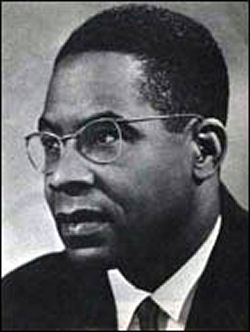
I first discovered the poetry of Aime Cesaire in a college class about surrealism and literature. I loved surrealist painting, but the actual literature left me cold. It was rootless and meandering, vaguely aligning itself with leftist politics and magic. Then I learned about the Negritude movement, a kind of offshoot of the Surrealist movement. The Negritude movement was comprised of people from  the black and African countries colonized by the French. The subtext–the dismantling of the colonialist rhetoric–added passion to the magical imagery of surrealism.

And Cesaire was the chief sorcerer of Negritude. His poetry was full of galvanic imagery: serpents, swamps, decay. It was underscored by mythology and righteous anger. Words and images erupted from the page–even in translation, their power is awesome. Not since Rimbaud, had I read such a marvelous derangement of the senses. I was cast into a world as immersive as any fantasy novel. Here was truly revolutionary poetry, that set the soul aflame.


Muses: Nina Simone, High Priestess

Nina

The first Nina Simone song I heard was “4 Women,” a hypnotic ballad that is a character study of Black American women throughout the generations, from slavery to the Black Power Movement.  The lyrics were powerful, but the Voice–a rich, mournful contralto–was haunting. It was (and still is) one of those voices that could sing the phonebook and I’d still listen. The album was from my father’s vinyl collection–long since sold. (The collection was extensive–with many vintage and first edition jazz albums). I found out that my mother knew Nina as a child; they grew up in the same town and Mom knew her by her birthname–Eunice Waymon.

Simone has been dubbed the High Priestess of Soul. But soul music was only part of her repertoire. In addition to her own material, she sang jazz standards, Bretchian showtunes, and Dylan. She was also an accomplished piano player. The ‘high priestess’ tag was correct–there is something supernatural about her performances, both live and recorded. One of my (as yet unpublished) pieces, “Coalrose,” is based upon her.

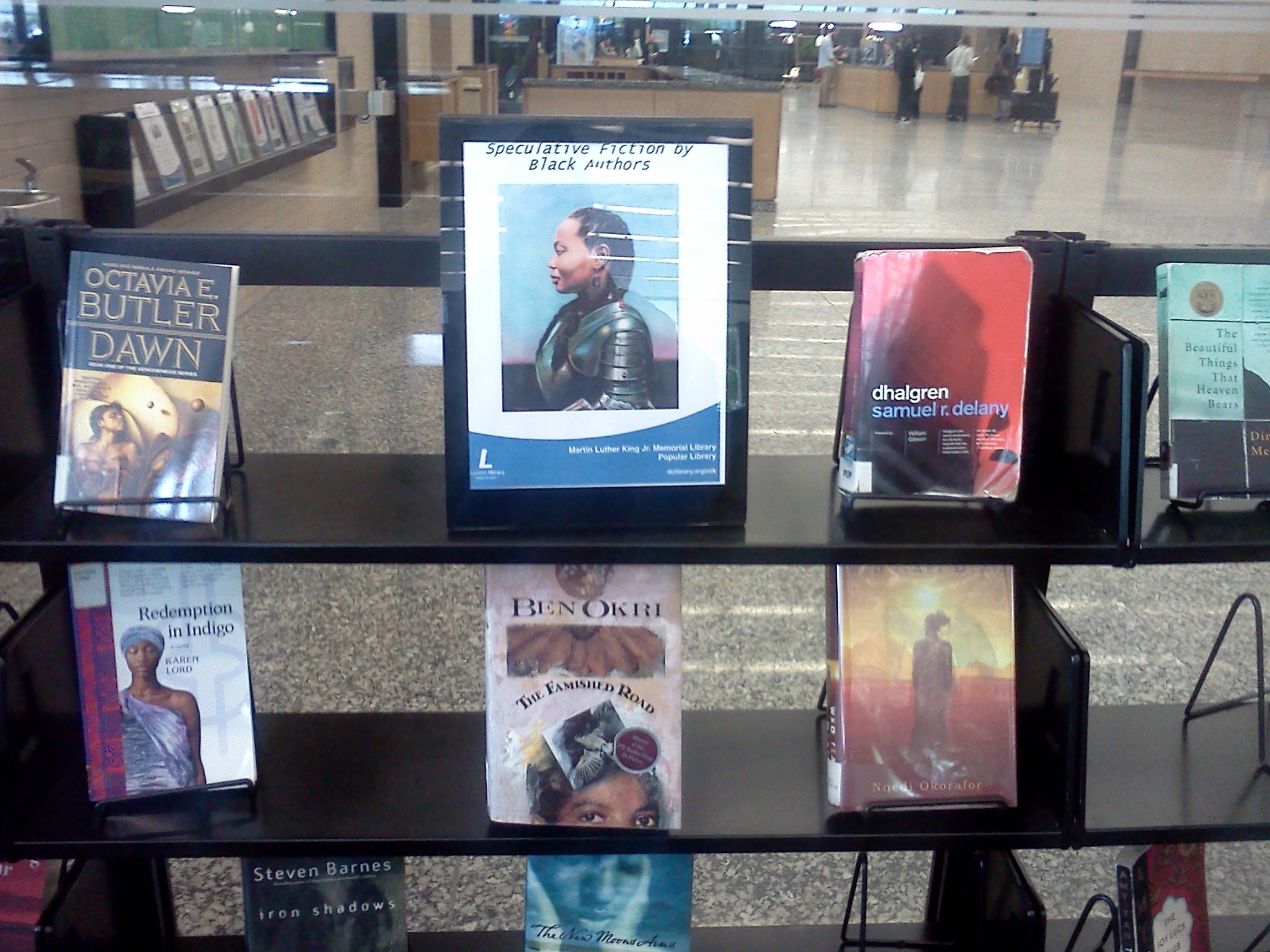
Pic: Library Display of Black Speculative Fiction Authors

Today, at Martin Luther King Library (in DC) there was a display featuring books by black science fiction and fantasy authors. It included books  by Nalo Hopkinson, Octavia Butler, Steve Barnes, Karen Lord, Nnedi Okorafor, Ben Okri and Samuel Delany–most of whom I’ve met!

MLK picture

#BOOKREVIEW: The Serpent Sea by #MarthaWells.

When I was in my teens, I was obsessed with the work of Andre Norton. Her science fiction/fantasy books were muscular with action, full of strange, slightly trippy imagery and featured outcasts and misfits as their lead characters. Martha Wells’ THE SERPENT SEA, the second in her Books of the Raksura series, is imbued with the spirit those Norton books.

Wells’ Raksura novels take place in on an alien science-fantasy world called the Three Worlds. The Raksura are shape-shifters: one of their forms is as ‘groundlings’ and the other, as scaled, winged beings. They are rare in a world full of groundlings (earth dwellers) and waterlings (water dwellers). The main character is Moon, a foundling Raksura, and follows his initiation into the complex customs of the struggling Raksura court, Indigo Cloud. Picking up just after the end of THE CLOUD ROADS, Indigo Cloud moves into their long abandoned ancestral mountain-tree, and find that the tree is missing one vital component—the seed that magically guarantees the continued life of the tree. Moon and his friends start a quest to find the missing seed.

serpentseafull

The quest, full of adventure and derring-do, is also a chance to explore the flora and fauna of Wells’ imaginative land. Full of monsters and magic, the book is both a throwback to the Planetary Romances of Norton and nods to the New Weird creations of China Mieville. While Wells has an ear for crisp dialogue and her characters are nicely delineated, the world-building is the real star here.

I look forward to the next and final installment of Raksura novels: THE SIREN DEPTHS.