INTERVIEW: Colten Hibbs interviewed me for his blog

Aspiring author Colten Hibbs graciously interviewed me for his blog. We discussed issues of identity and diversity in the YA sphere.

He writes:

Approximately two weeks ago, I became rather interested in observing a movement that has been gaining steam in the writing community.

The issue of Diversity in YA literature.
Needless to say I am a strong advocate for those who would bring characters of various minorities, sexual orientations, and cultures onto the Middle Grade/Young Adult stage.
Not only did I begin to examine my own work, but I begin to notice within the Twitterverse (where I find 99% of my writing/publishing contact) I was one of a remarkably few people of color.

Read the rest of the interview.

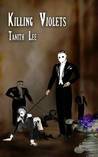
REVIEW: Downton Abbey directed by Lars von Trier–Killing Violets (or God’s Dogs) by Tanith Lee.

Killing Violets: Gods' DogsKilling Violets: Gods’ Dogs by Tanith Lee
My rating: 4 of 5 stars

Certain works of art are meant to be disquieting and disturbing. I think of the work of film-makers like David Lynch or Lars Von Trier, or the paintings of Francis Bacon or the music of Siouxsie And The Banshees. Classical music that incorporates dissonance into their sounds, like some of Stravinsky or artists that include menstrual blood or urine in their work. The diamond-encrusted skulls of Damian Hirst…. The list can go on. At it’s worst, such works of art feel like they are chores to get through; I am not fond, for example, of the “torture porn” sub-genre of horror films and some Goth/Emo music that is dark for the sake of being dark is tedious. At its best, though, disturbing art can be illuminating, cathartic and empowering. Think of Octavia Butler’s bleak futures or the blistering satire of Herzog’s film Even Dwarves Started Small.

Tanith Lee’s short novel, Killing Violets (subtitled God’s Dogs) is one of her most disturbing works. It has the raw, unadulterated atmosphere as a Von Trier film. Plot-wise, it has “break the beauty” as a major trope. Certainly, Lee has explored this theme before in many of her works. What makes Killing Violets different is it set in the recent historical past (1934) and is a realistic novel.

The novel opens with a lost, fragile woman named Anna starving to death in some small European town. She is picked up by a man, Raoul, who dashingly brings her out of the rain and gives her food and shelter at his hotel. He also initiates a sexual relationship with her, and lures her to England and his obscure aristocratic family’s vast estate. Once there, Anna notices that the Basultes are horrible people, who play complex power games with their servants. The Basulte men, in particular, delight abusing the female servants. Realizing this, Anna attempts to escape, but is captured, and, as a punishment, demoted from love interest to scullery maid. Anna’s tragic past in an unnamed small town (it seems vaguely Hungarian) is interspersed throughout these horrific stories, like a dreamy fable.

Like Selma in Von Trier’s Dancer In the Dark, Anna is an innocent, a shattered, vulnerable soul who is forced to suffer for no reason. And like many Von Trier heroines, she also has dark secrets of her own, and can assert her atavistic power when she has to. Like many Lee characters, Anna mostly lives in her head, and is aloof and allusive, sometimes maddeningly so. In that way, she reminds one of Blanche DuBois—stubbornly clinging to illusions of the past at the expense of her sanity.

Killing Violets is beautifully written, with a blurred water-color touch to the imagery. Love and passion is at the center of novel, but it is a horror novel in way, with the brutish, rigid class caste British system rather than the supernatural as the thing that terrifies. Indeed, some of the scenes recall the elegant cruelty depicted in Pier Paolo Pasolini’s films. The title’s meaning becomes brilliantly clear in the tragic third act.

View all my reviews
The Parable of Octavia E. Butler

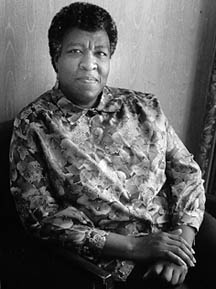
I went to hear Octavia Butler speak when her novel, Parable of the Sower was released. This was before she won the MacArthur Genius Grant. The thing was, at that time, she didn’t read. Always self-deprecating to a fault, Butler instead gave a talk about her work and writing the process, and at least to me, that was as enthralling as any recitation could be. She told a story about how she had been stuck with writing her current novel at one point, so she went for a walk to buy some food at a supermarket. Butler lived in Southern California at the time, and she wasn’t a driver—a rarity, if you’re at all familiar with greater Shangri-L.A.

octavia-butler-3

She paid for her purchases with a $100 bill. The cashier stopped the process, and called over a manager. Apparently, there had been a rash of counterfeit 100 dollar bills floating around the area, and they needed to confirm that the bill was legitimate. The store took the necessary steps, and Butler walked out of the store with her groceries. She wasn’t too far from the store when a phalanx of police cars converged on her—she described it as more than two cars, with their engines whirring. She stopped, and they detained her in the store’s parking.

The officers explained the counterfeit issue again. Butler asked why the police had been called, since she had already paid and been cleared by the store’s management. The reason was, she looked suspicious. Butler was a tall black woman (she might have been 6 feet tall) and walking along the side of the highway in L.A.. That had been a red flag for the store’s owners.

The audience listened to this story in quiet shock. Octavia Estelle Butler, one of the greatest SF writers ever, had been racially-profiled! Butler, being a writer, saw this incident as important, and it influenced Parable of the Sower’s sequel, Parable of the Talents.

Racial profiling is something that many African Americans face. It’s a fact of life. My 83-year old mother, an ABD (all but dissertation) Ph.D, was recently mistaken as a waitress in her retirement community home. It can be used as a justification to kill, if you tell a certain narrative. The Martin case, like the Rodney King case before it, exposes an issue faced by black male youth.

Butler used her experience to create a masterwork of speculative fiction. I hope that the Martin case can be used as a springboard to stop profiling and murder, bring justice to everyone.

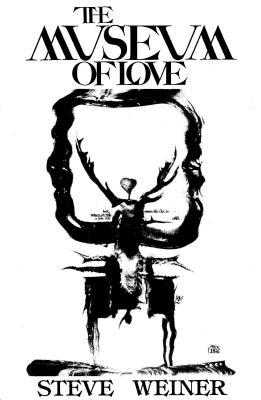
Books I Wish I’d Written: The Museum of Love by Steve Weiner

Museum of Love

Like the whimsical/ repulsive image from a Brothers Quay film that graces the cover, The Museum of Love is a nightmarish, hallucinogenic quest novel. It crackles with a strange, hypnotic energy. Mixing Catholic mysticism, the brutal reality of the Canadian physical, psychic and cultural landscape, the novel defies description. It is reminiscent of the strange bildungsromans of Hesse, Genet, and Kafka. In an era of PC, cookie-cutter fiction, The Museum of Love  is deliberate, surrealist and elusive. The protagonist is homosexual, but you won’t find a “feel-good” resolution. And Weiner’s black, bleak humor and startling imagery raises the book above any simple explaination. Having the logic of a dream, the tension of a suspense novel, horror strong enough make Stephen King look like a wimp, and the depth of Joyce is hard to pull off.

Adapted from my Amazon review in 1996

REVIEW: Fossil Circus by John Kaiine. Lewis Carroll directs Silence of the Lambs

Storm Constantine is reprinting John Kaiine’s horror novel Fossil Circus via her Immanion Press.  I reviewed it when it first came out in 2005. Kaiine is an artist as well as a novelist–and the husband of Tanith Lee.

Four former psychiatric patients are given a palatial, ruinous asylum by their kind, eccentric doctor in her will. The troupe of misfits includes Ernie, a grown man mentally flash-frozen at the age of six; the misanthropic (and therefore misogynist, and racist) cripple Mr. Jackson; the Byronic necrophiliac Roane; and the flatulent, hapless Norman. The four men move in together, and settle into a dysfunctional family unit. The house has its own history, and affects all who live there-particularly Roane, who is prone to psychic frequencies. Meanwhile, a serial killer, Jerusalem Lamb, cuts a bloody path across London, drawn to the strange, almost supernatural pull of the former asylum.

book_fossil_circus_front_sized

Kaiine’s debut alternates between sick comedy (think John Waters meets Erasehead-era David Lynch) and warped horror (Lamb is as chilling and surreal as Hannibal Lechter). Norman and Ernie form a kind of Pooh and Piglet friendship, and get trapped in all sorts of odd, comic situations. Nasty Mr. Jackson’s foul proclamations are only matched by those of his pet parrot, Maudsley. And Roane wanders the weird asylum, a tortured Theseus in a labyrinth. Lamb, meanwhile, moves through London’s underground, mired in murk and gore.

All of this is written in a pun-filled, present tense poetic prose. The inventive language, shot out with rapid-fire wit, draws the reader into these strange characters’ mindscapes. It’s as if Monty Python decided to produce Peake’s Gormenghast. Other times, it’s Lewis Carroll’s version of Silence of the Lambs. Kaiine has a strong grasp of dialog and dialect, and a love of the surreal. There’s nothing quite like it. The closest reference is (American) southern horror writer Caitlin Kiernan, with a dash of Vonnegut.

REVIEW: The Half-Made World by Felix Gilman. Manifest Destiny as a literal demonic force.

The Half-Made WorldThe Half-Made World by Felix Gilman
My rating: 4 of 5 stars

There’s a famous painting by John Gast called American Progress in which a giant white woman garbed in gossamer leads American settlers Westward into an ominous, uncreated world. I wouldn’t be surprised if Gilman didn’t have that very picture as a screensaver when he penned his New Weird Western novel, The Half-Made World. The ominous, bleak tone of this work also brings to my mind a song by the gothic/worldbeat Dead Can Dance, a song called “Frontier.” DCD’s female lead singer is known for her ideoglossia—Lisa Gerrard, like Elizabeth Fraser and Jonsi of Sigur Ros sing in private languages on the phoneme-level. On this song, however, she sings one recognizable phrase: “I see the bloodstains on the floor.” Or, I think that’s what she’s singing. I bring this up, because this novel is about the bloodstained mythic past.

The plot of the novel has been explained by others—or you can read the cover flap copy. The Half-Made World is chase and quest novel, complete with a MacGuffin. On this level, it is suspenseful and has the juggernaut-like pacing of both cinematic and literary Westerns. But it is the world-building and more importantly, the trope-twisting that is truly fascinating.

Gilman presents the West as a literally uncreated landscape, where creatures and plants are in their experimental or “beta” phase. Land and sea haven’t resolved themselves as separate entities. This part of world is stewarded by the First Folk, who may or may not be human or may or may not be immortal. They are described as long, pale black-maned people with red eyes and seem to live in a kind of amorphous Dreamtime existence. (The First Folk seem more modeled on Aborigines than on Native Americans—and even here, there is a interesting trope-twist). The settled West presided over by two rival faction demonic Spirits. Controlled by sentient Engines, The Line wants to colonize the West and turn it into a grim industrial land. (The current, real-world issue of fracking resonates here). The Gun is an anarchistic organization, who seem to worship chaos and destruction. They possess their Agents and almost become symbionts with them. (The spirit-symbionts live in their Agents’ supernaturally powered Guns; unhoused Gun spirits return to a Lodge—which reminds one of the creepy otherworld lodges referenced in David Lynch’s Twin Peaks TV series).

In fact, the whole novel has the dark surreality of a Lynchian film. It puts the phantasmagoria into fantasy. It’s a rare novel that manages to be both high-low and pulpy at the same time.

View all my reviews

BOOK RECOMMENDATION: The Castings Trilogy by Pamela Freeman. Grim-Dark meets Social Justice Allegory

The Castings Trilogy (Castings, #1-3)The Castings Trilogy by Pamela Freeman
My rating: 4 of 5 stars

I finished this omnibus novel last week. The writing is at times lyrical and the characters are solid–I could see them outside of the plot. Many readers have complained about the shifting POVs–in addition to the three main characters, Freeman adds first person vignettes from superfluous characters. Frankly, I loved that about the book.
!.) It makes the 11 Domains seem like a real world because she focuses on really mundane characters;
2.) Those tales really do come together in the end, as a wondrous tapestry of pain and catharsis and story telling.

The Castings Trilogy subverts many fantasy tropes. The reluctant Chosen One doesn’t have a whole lot power or agency in her world–she’s not really magical. The Big Bad has a legitimate beef, mainly, the ethnic caste system in his world. And the male lead isn’t a hidden prince. The kingdom is a group of Balkanized nations rather than a united kingdom. And the history of ethnic cleansing and oppression isn’t clear-cut; its complicated.

The magic system has a sense of wonder–ghosts, elemental spirits, necromancy and fortune-telling–but it’s also organically built and consistent.

The Castings Trilogy is a unique take on the Grim-Dark epic fantasy that adds a dash of social justice as a subtext.

View all my reviews

#BOOKREVIEW: The Serpent Sea by #MarthaWells.

When I was in my teens, I was obsessed with the work of Andre Norton. Her science fiction/fantasy books were muscular with action, full of strange, slightly trippy imagery and featured outcasts and misfits as their lead characters. Martha Wells’ THE SERPENT SEA, the second in her Books of the Raksura series, is imbued with the spirit those Norton books.

Wells’ Raksura novels take place in on an alien science-fantasy world called the Three Worlds. The Raksura are shape-shifters: one of their forms is as ‘groundlings’ and the other, as scaled, winged beings. They are rare in a world full of groundlings (earth dwellers) and waterlings (water dwellers). The main character is Moon, a foundling Raksura, and follows his initiation into the complex customs of the struggling Raksura court, Indigo Cloud. Picking up just after the end of THE CLOUD ROADS, Indigo Cloud moves into their long abandoned ancestral mountain-tree, and find that the tree is missing one vital component—the seed that magically guarantees the continued life of the tree. Moon and his friends start a quest to find the missing seed.

serpentseafull

The quest, full of adventure and derring-do, is also a chance to explore the flora and fauna of Wells’ imaginative land. Full of monsters and magic, the book is both a throwback to the Planetary Romances of Norton and nods to the New Weird creations of China Mieville. While Wells has an ear for crisp dialogue and her characters are nicely delineated, the world-building is the real star here.

I look forward to the next and final installment of Raksura novels: THE SIREN DEPTHS.

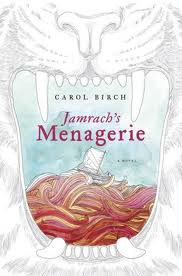
BOOK IMPRESSION: Jamrach’s Menagerie by Carol Birch

Jamrach’s Menagerie is a historical novel that reads like a classic boy’s adventure novel. It’s full of seafaring adventure and written in an antiquated poetic prose, reminiscent of Dickens and Robert Louis Stevenson.

Jamrach

After an encounter with a tiger in the streets of London, circa 1880s, young Jaffy finds himself forever linked with naturalist and exotic pet dealer Charles Jamrach (a real life person). Jaffy starts as an employee of Jamrach, mostly mucking stables and caring for the wild creatures in the shop. Eventually, he signs up for mission to collect a Komodo Dragon for one of Jamrach’s clients. The novel mostly follows the events of that voyage, which range from wonder to pure terror. The novel almost becomes a literary horror novel, after some serious mood whiplash.

Birch captures Jaffy’s first person narrative perfectly. The sights and smells of London and the sea come vividly and sensually to life. While the secondary characters are kind of flat, it is more than made up for by richly descriptive world-building Birch does. The book maintains the sense of wonder you get from classic seafaring adventure texts.