An incisive review of BEREFT.

Here’s an excerpt from Chris Herrmann’s lovely review of BEREFT:

Ultimately the novel is about balances: between Rafe’s persona of the shy fantasy geek and the teenager inwardly deciding he might be gay, angry at the injustice around him, the spiritual beliefs of a Christian mother (symbolized by opaque angels) and the cultural beliefs of a father (symbolized by the mall kiosk Dan masks), the predators both virulently open and cunningly hidden in the prep school, and Rafe’s own decisions of balancing who he will become in his own life.

Read the rest of the review here.

REVIEW: Errantry: Strange Stories by Elizabeth Hand

Errantry

The devil is in the details in this collection of well-crafted short fiction that sits on the uneasy border of slipstream and horror fiction. The pieces in this collection are as dense as novels, filled with telling, carefully chosen descriptions and character-revealing dialogue. When the supernatural (or counterfactual) appears, it has a rich background to interact with. In the opening tale, The Maiden Flight of McCauley’s Bellerophon, the relationship between the middle-aged men who attempt to recreate a mysterious film that documents a flying machine is rife with details about and character sketches that are as important and enticing as the steampunkish ‘hidden history’ trope the story is built around. Hand weaves together such disparate strands, such as late 70’s life, working at the Smithsonian, cancer, and the pains of widowhood and single fatherhood, in such a natural way that the ‘strangeness’ of the story is , while essential, just another fascinating plot point. The spooky Near Zennor terrifies by insinuation as much as by actual incidence: Hand creates a fascinating red herring subplot about a series of creepy children’s books that aid and abet the disquieting denouement of the tale. The collection is mostly dark fiction, but it’s closer to the work of, say, Isak Dinesen or Robert Aickman than it is to Stephen King or Clive Barker. Part of has to do with the elegant way Hand constructs her tales; each small world is crammed with essential detail, like a motherboard. For instance, the use of Icelandic folklore in Winter’s Wife, or the character study of the titular Uncle Lou. And part of it has do with the craft its self: even on the sentence-level, each image is exquisite. The one outlier piece in the collection, the Jack Vance pastiche Return of the Fire Witch, adds humor to the mostly bleakly beautiful collection.

Favorite Spooky Reads: Beloved by Toni Morrison

Beloved may be the only horror novel to win a Pulitzer Prize. And it is a horror novel, in my opinion. It makes use of the tropes supernatural gothic fiction (in this case, a vengeful ghost) to examine the dehumanizing effects of America’s great sin, the Peculiar Institution of slavery. Beloved is, of course, also a historical novel that takes as its jumping off point a historical footnote about an escaped female slave who murdered her own child rather than have her be raised in slavery. But Beloved, the spirit of the murdered infant come back as a young woman forms the bulk of the novel.


Sethe (perhaps her name alludes to Lethe, the Greek river of forgetting) has escaped with her four children from Sweet Home, a hellish plantation where slaves are routinely tortured. When the foreman, the sinisterly named Schoolteacher, finds her in Ohio (a slave-free state), he witnesses her slitting the throat of her unnamed infant daughter. He declares her a wild animal and not fit for slave service. The murdered child becomes a poltergeist, driving away both her sons after a few years with her wild antics. When a fellow escaped slave, Paul D, arrives at Sethe’s house, the ghost child is temporary banished.

Beloved comes back in corporeal form, as a young woman. Forget Samara (the video ghost girl of the Ringu trilogy) or the possessed Regan McNeil (The Exorcist) or even telekinetic terror Carrie White. Beloved could have them for a light lunch. Because Beloved is a cipher, and her agenda is never clear. She is endlessly hungry, for Sethe, for love, for experience, for sweets. Does she want to possess Sethe—both figuratively and literarly? Or does she want to destroy her? Beloved is every wrong thing about slavery and racism given form, and she will do anything—to fill her endless, aching and damaged need. Beloved is beautiful, seductive, perverse and brutal.

Morrison’s Faulkner language quivers and fractures in her attempt to capture the essence of this spirit. The imagery she uses is violent and disturbing—light, blood, sugar are invoked. Because Beloved has a strong historical subtext, its horror is even more powerful.

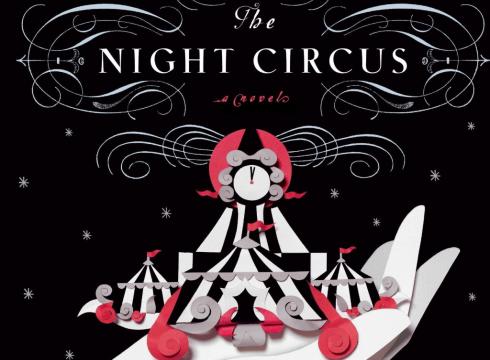
REVIEW: The Night Circus by Erin Morgenstern

The circus/carnival novel is a well-worn subgenre in the fantasy genre. Circuses are places where magic and mystery hide in plain sight, so they are a natural place for fantastic exploration. They come in various flavors, from the surreal (Angela Carter’s Fellini-esque Nights at the Circus) to the sinister (Katherine Dunn’s Geek Love) to the nostalgic (James Blaycock’s Land of Dreams). Erin Morgenstern’s much hyped debut, The Night Circus is not the most unique retooling of the circus trope (that belongs to Genevieve Valentine’s dystopian steampunk novel Mechanique), but it is addictive.


It’s an unabashedly romantic tale of rival magicians connected to a travelling circus around the turn of the century. Morgenstern’s language is sensual and bejeweled—a tad precious for some tastes.  The passionate pas de deux between the magicians Marco and Celia isn’t half as interesting as elegant night circus that Morgenstern creates. It’s full of wonder and whimsy—paper animals that move, labyrinths, rooms of ice and room of scented bottles. The book moves at a languid pace, pausing to describe the rustle of a gown, the detail on a clock, the smell of caramel. Both Marco and Celia are unwilling pawns of their enchanter fathers; in spite of some moments of heated conflict, even that drama isn’t as important as the rich, dreamy atmosphere Morgenstern conjures. Her brocaded text reminds me of those Art Deco paintings by Erté. The Night Circus is a sophisticated fairytale for adult readers, free of irony and jadedness, and full of enchantment.

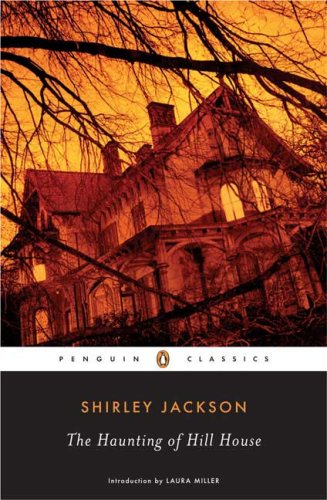
Favorite Spooky Reads: The Haunting of Hill House

Shirley Jackson’s 1959 novel, The Haunting of Hill House, updated the ghost story, and used its various tropes to create a new kind of character study. (Forget those douchetastic ghosthunter shows—this team has a suave elegance to their work). It’s mostly the story of Eleanor, a lonely, mousy misfit of a woman who slowly and disturbingly falls in love with the foreboding, architectural monstrosity known as Hill House. Eleanor has an active imagination and never seems quite connected with the mundane world. She comes alive in Hill House, where she is a part of parapyschological research team. And the house, seemingly, seems share her affections. It communicates with her in ways that are scary….and oddly, tender. The reader wants Eleanor to join with her beloved, and escape from it at the same time. Jackson creates marvelous secondary characters—the brash, chic probably lesbian artist Theo, the bratty playboy heir to Hill House Luke, and doddering Professor who heads up the research team. She also adds a kind of mordant humor, such as the dour doomladen housekeeper. Jackson’s prose is written with a delicate beauty that suffuses even the more suspenseful set pieces; neither movies that used the book as source material manage to capture that sensibility. The Haunting of Hill House is novel that stays with reader. It leaves you with deep, lingering horror.

REVIEW: The Bards of Bone Plain by Patricia A. McKillip

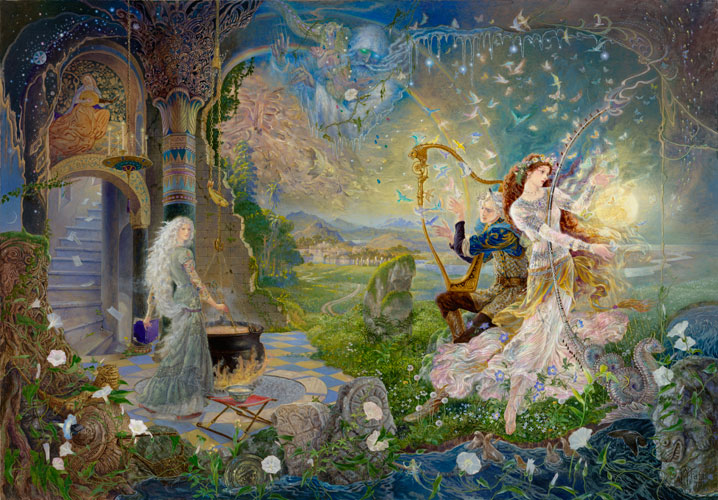
Above is the Kinuko Craft cover for Patricia A McKillip’s THE BARDS OF BONE PLAIN. Take a gander at it. It’s intricate, full of enchantment, done in a neo-classical style. Sylph-like ladies in translucent fabrics, butterflies exhaling from golden harps, twisty hidden images. Craft’s cover art mimics McKillip’s wordcraft. Richly embroidered filmy lacy language, full of opacity and mystery. I mostly read McKillip to revel in writing on the sentence level. The new book has all of the hallmarks of McKillip’s fiction in that regard.

The novel is set both in the past and present of the kingdom of Belden. The past sections are more medieval and center around a wandering bard and his trials and tribulations. The present sections center around a bardic school, located in the capital city. The present here has steam-powered technology, perhaps a nod to the current preoccupation of steampunk. The present plot line mostly meanders and has a “cozy” non-magical fantasy-of-manners feel of books like, say Ellen Kushner’s Swordspoint while the past storyline is very Celtic-based high fantasy. The past plotline has more oomph, while the present plotline is more character-driven. Of course, the two plotlines eventually, and slowly, converge. The themes–magic hidden in language and music–are McKillip’s stalwart themes.

The beautiful writing, full of lovely images, however, does not hide the lack of narrative tension in the plot.  McKillip loves her quirky characters–which include an archaelogist princess and a bored but studious bard–to put them into too much danger. As a result, the sinister elements and subsequent suspense falls flat. Still, THE BARDS OF BONE PLAIN, if kind of slight, is a wonderful introduction to McKillip’s oeuvre.

Patricia A. McKillip on her fiction.

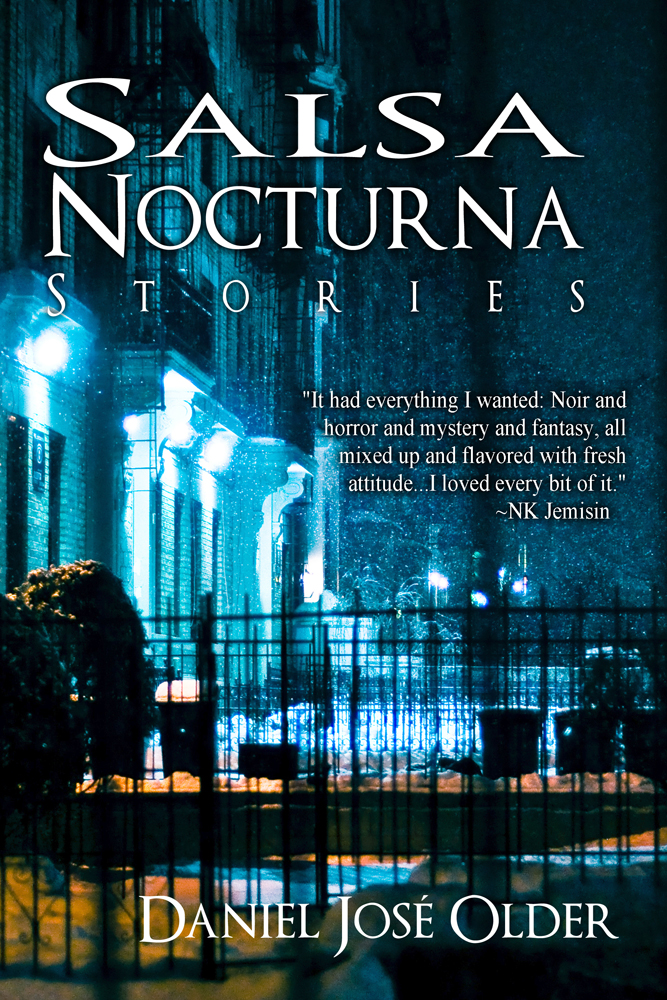
REVIEW: Salsa Nocturna by Daniel José Older

The art of the verbal quip is on display in Salsa Nocturna, a debut collection of linked stories by Daniel José Older. Set in modern New York, most of the stories deal with the adventures of half-resurrected soulcatcher/ Agent of the New York Council of the Dead Carlos Delacruz as he deals with the various cases the bureaucratic organization throws his way. These include the absurd (a ghostly wooly mammoth) and the terrifying (a horde of soul-eating dolls on Staten Island). Some of the stories follow interlopers in Agent Delacruz’s life, such as a supernatural old woman who collects the city’s psychic stories, or a taxicab driver hired by Delacruz’s crew. The action scenes are full of spiritual mayhem and unfold like a movie, with quick cut scenes and rapidfire prose. These aspects alone are worth giving the collection a try. While not a novel, each story builds on another in a sustained narrative arc.

But the real star is the voice the stories are told in. With one exception, all of the tales are deep first person narratives, full of messy and funny observations about the zeitgeist. Mostly centered around the black, Puerto Rican and Dominican enclaves of the city, the narratives are soaked in vernacular and inside jokes. Some of the best scenes in this short collection occur when the characters—particularly Delacruz’s ghostly sidekicks Riley and Gordo—shoot the shit with their crude gallows humor. New York City itself—from its various tribes to the hipster invasion—is very much a character. At times, the Salsa Nocturna reminded me of the witty genre-savvy of Joss Whedon, the nouveau noir of Walter Mosely, and the character-driven fiction of Junot Diaz.

http://salsanocturna.com/

REVIEW: Radiant Days by Elizabeth Hand

Image

Elizabeth Hand’s first foray in YA fiction is not quite a time travel book, or historical fiction, or a bildungsroman, though it has elements of all three sub-genres.

In 1978, young Merle Tappitt is from the middle of nowhere, Virginia, where she lives with her alcoholic father and two younger brothers. She has just gotten a prestigious scholarship to the Corcoran School of Art, located in Washington, DC (the setting of many a Hand novel). She is a young lesbian, and in DC just before and during the burgeoning harDCore (punk) scene. She manages to get kicked out of school, in spite of her talent (mostly due to her lack of preparation and the culture-shock), and breaks up with her manipulative older girlfriend, who happens to be a married art instructor. Merle, who has bratty tendencies but explosive artist talent, becomes homeless, and starts expressing herself through graffiti.

In 1870, Arthur Rimbaud is a fifteen year would-be poet, a rebel without a cause, chaffing at the control that his cold religious fanatic mother holds over him. Before and during the Prussian War, he runs away from home, and goes to Paris several times, meaning to get into the poetry scene there. He manages to get arrested, and at one time, joins in the Paris Commune during the Prussian siege.

The two strands of the book—vivid artpunk memoir and biographical fiction—smash into each other in a clever way when, through mysterious magic, both malcontent teenagers meet . Rimbaud wanders through late 70s Georgetown, and Merle ends up in the Paris commune, both with each other as guides. The parallels and differences between these two soul twins is sometimes humorously highlighted: both are visionary queer art-nerds from the sticks.

Hand’s familiarity with DC’s punk scene comes and Merle’s first person narration is the more lively of the two narrative strands. The Rimbaud sections have a bit of a studied air about them, as if she’s handling the material with kid gloves. When the two young artists met, everything about the book—the language, the dialogue, the lush imagery—is suffused with  magic. These are sections are when the prose sings and become flavored with Rimbaud’s visionary poetry.

In the end, this brief novel is more a meditation on Art and Youth than it a traditional  YA novel. The ending scene is quite lovely.

As a DC native, it was a hoot to see my hometown through someone else’s eyes. I loved how Hand was enchanted as was by the Rimbaud mythos—the title of this blog, Strange Alphabets, refers to one of Rimbaud’s most famous poems.

Elizabeth Hand

REVIEW: Deep Water by Pamela Freeman (Castings Trilogy #2)

The second book of the Casting Trilogy draws us deeper in the world of the Eleven Domains and its mysterious magic. Gods that are whispers in the mind, demons of the deep, spirits of Earth, Wind, and Fire (no pun intended). It follows the adventures of Bramble, Ash, and Saker, and adds the perspectives of Martine and Leof as they each (both knowingly and unknowingly) fight against the plague of vengeful revenants that threaten the land. Freeman’s world is pretty standard Medieval  fantasy fare, with a warlord/serf system set in place and magic at the fringes. What makes it interesting is that Freeman tells her tale from lower caste/class and outsiders, and with a decidedly feminist perspective that’s refreshing in the “grimdark” fantasy genre. Imagine a George R.R. Martin novel written by Ursula LeGuin, for a reference point.  Her prose sings and her characters are complex, and the first person narratives from minor characters make her fantasy world become more grounded. The larger allegory—the mistreatment of an ethnic minority in a colonialist society—is deliciously complicated and problematized. There were times the narrative dragged, but the last 50 pages go by at a fast clip. I look forward to seeing how Freeman ends her saga.

The Castings Trilogy

REVIEW: Lucretia and the Kroons, by Victor Lavalle

Twelve year old Lucretia lives in an Queens apartment building with her single mother. Her best friend Sunny (nee Zhao Hun Soong) is dying of cancer. One day, after Sunny is back from a prolonged treatment session, Lucretia arranges a play date with her.  Just when she Sunny is supposed to appear, Lucretia—called Loochie—finds out that Sunny has been kidnapped by the mysterious family of crackheads who live in the supposedly abandoned apartment 6D. Loochie goes up to save her friend.  What she finds there is a twisted, monster haunted version of their neighbor, hidden in a small apartment.

This suspenseful novella crafts turns an urban legend into a tense YA horror story.  The prose is nicely crafted, the mood teeters between classic horror and YA adventure. This slim book is a moving thriller that will remind you of Neil Gaiman’s CORALINE–but much darker. It firmly puts the urban in urban fantasy. The novella serves as a teaser for Victor Lavalle’s forthcoming horror novel, THE DEVIL IN SILVER. Fans of Colson Whitehead and China Mieville should check this one out.