


The 2014 Moonbeam Children’s Book Awards were announced yesterday. The Moonbeam Awards are about, “Celebrating Youthful Curiosity, Discovery and Learning through Books and Reading”
Bereft placed third in the “Young Adult Fiction-Mature Issues” category–the Bronze Medal.
My publisher, Tiny Satchel Press, also had another win: Drifting by Lisa R. Nelson won the Silver medal.
Writing is such a solitary pursuit; it’s great to get recognition every now and then.


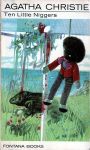
It started with a Golliwog.
My late Aunt Lou was going to London to visit the tea and coffee museum there. She collected teapots, (when she died with over 800 of them in her collection). She would be accompanied by her best friend, who I’ll call Kay. Kay had her own agenda. Kay collected black dolls of all kinds. From brown-skinned porcelain beauties, to rustic rag dolls, to openly racist caricatures. She wanted to add a golliwog to her large collection. This was in the days before the Internet, sometime in the late 80s/early 90s. I had no idea of what a golliwog was; they are a distinctly Anglophile phenomenon. I had, however, seen a golliwog before. One of my mother’s old paperbacks was an Agatha Christie mystery novel titled, 10 Little Niggers. (I have no idea how my mother got the novel. The novel was retitled to American audiences as the (then) slightly less offensive 10 Little Indians, but somehow we were in possession of a British edition. The cover of the book featured a lurid imaged of a hanged trollish creature. It was horrible; I thought the novel was actually a horror novel, and not a murder mystery. In retrospect, I realized that this pop-eyed, wild-haired doll was a golliwog. Anyway, before Lou and Kay went off to their English adventure, I remember chatter about black collectors of black memorabilia. What was the allure of frankly unflattering historical (mis)representations? It went beyond kitsch. There’s a whole community of collectors of such items—mammy salt and pepper shakers, nostalgic Uncle Ben and Aunt Jemima advertisments, Topsy dolls, and assorted ephemera.
Years later—during the Internet age—I found the excellent Jim Crow Museum of Racist Memorabilia, and after spending hours there, the seed for the story, “Pyschometry, or Gone With the Dust” was born.
Uncle Remus was my first encounter with a Magical Negro. I saw him in the (now banned) Disney movie, Song of the South when I was a child. I remember seeing an elderly black man walking through the fields, so gloriously happy that animated bluebirds swirled around him as he sang. I remember thinking that he was some sort of sorcerer, like Merlin. Like Dr. Doolittle, he could speak to animals, and knew their tales. I barely remember the frame story, which was some treacly affair about a runaway tow-headed tyke who was (rightfully) enchanted by Remus and his store of animal tales. For some reason the (white) adults didn’t care for Remus and forbade little whatshisname from seeing him. (Didn’t they know that he was a great magus?) The kid gets attacked by an angry (real-life) bull and Remus saves the day, which is what honorable wizards do. The frame story was a distraction from the vividly animated exploits of B’rers Rabbit and Fox, but I actually thought Remus was the more interesting character. I couldn’t grasp why he lived in poverty, when he was so obviously a warlock or whatever. I began to devise adventures about him. Move over, Gandalf, Jeannie and Samantha. Remus is in town! He was the protagonist in my stories. Remus FTW! Years later, I recognized that Uncle Remus was a Magical Negro. That is, a stock figure in fiction (and other narrative media) meant to teach and/or accessorize white protagonists. They have no real life beyond being helpful wise people.

The Magical Negro shows up in a variety of books and movies. The MN has no back story. They are allowed to be sassy comic relief, but primarily, they set up the white protagonist for victory over various odds. Certain black actors have long careers playing versions of the MN. Oda Mae Brown in Ghost is one massively popular example. Oda Mae somewhat subverts the paradigm. She does, for instance, have an extensive backstory (as a petty criminal) and much is made about her being a reluctant supporter of the titular ghost and his living lover. Oda Mae is much more a player in her story than Remus was in SOTS, and her portrayal by Goldberg steals the show. The actual plot of Ghost escapes me, but Oda Mae stays with me. I would watch the hell out of an Oda Mae-based sequel. (A tragically separated couple who make phallic clay vases and like ‘Unchained Melody’ a little too much—not interesting).
I guess what I’m saying is this: I have a complicated relationship with the MN trope. I recognize how its harmful and stereotypical. Can this narrative device be reclaimed, retooled, subverted? The untold stories of Remus: The Real Grand Wizard of the Old South and The Oda Mae Chronicles really ignite my imagination, perhaps more than is healthy.
My own fiction deals with race in one way or another; Otherness is a recurrent theme. I use fantasy tropes, both on the literal and allegorical level. After a while, I found that I had amassed a body of magical realist/urban fantasy/weird fiction where people of African descent were the main protagonists. The stories range from satire to horror to whimsy. These ‘magical negroes’ are in the spotlight. So, in a way, Skin Deep Magic is inspired by those ur-Magical Negroes. I’ve given them a voice. The characters are flawed, some of the stories are discomforting. But they have their own voices and histories to share. I aim to be provocative as well as entertaining. Like Remus, I am a storyteller. But, I’m a liberated one, smashing stereotypes and remixing tropes.
 The Flame Alphabet by Ben Marcus
My rating: 4 of 5 stars
“Language is another name for coffin.”
People have suddenly developed a debilitating, and ultimately fatal allergy to the speech of children. It seems to start with Jewish families, particularly an esoteric sect that listens to sermons via shortwave radio in private lean-tos. But soon the language toxicity spreads to everyone, with the result being that no adult can stand hearing or even reading language. Symptoms include “facial smallness” (presumably, the tightening of facial skin), tongue thickening, and malaise.
The novel unfolds in three acts. The first act focuses on a single family as they struggle with a daughter’s increasingly poisonous effect on her family. Narrated in the sardonic first person voice of Sam, who does everything to help his wife, Claire, who is in denial about the encroaching disease. Their 14-year old daughter Esther’s toxic speech syncretizes with her rebellious teenager phase, making her cruel, particularly to her mother. The family slowly falls apart, even as it becomes apparent that a pandemic has taken hold of the world.
The second act finds Sam separated from his family, as the children are quarantined. He begins working with a group of researchers, trying to develop either a cure or a new way to communicate, given that speaking is no longer safe. He clashes with the leader of the research unit, who is condescending and amoral. I will not discuss the third act, due to spoilers.
It’s a hard to categorize novel. It shares its topography with horror and science fiction, but it’s not a thriller. Part One is almost a family drama, while Part Two is almost an absurdist dystopian work. The plot often pauses for pages, as philosophy, religious parables and other discursive theories are floated by either the narrator or in discussions with other characters. The beautiful brutality of the prose is what propels the book forward.
For a book that’s about the end of language, it revels in its use. The descriptions of illness are expertly culled, and cause shivers. It’s almost as if the author wants to infect the reader with the disease described in the world of the novel. It’s disgustingly, compulsively readable, highly reminiscent of the body horror of David Cronenberg’s films.
I’m unsure whether or not The Flame Alphabet is an extended metaphor about the breakdown of human communication, a Biblical allegory or a linguistic horror story. I do know that it was deeply disturbing and wonderfully written.
John H. Stevens (known on Twitter as the Erudite Ogre) was kind enough to give a brief review of Skin Deep Magic on the Three Hoarsemen podcast hosted by SF SIGNAL. He says some nice about the collection. Check out the podcast, which also discusses Guardians of the Galaxy–both the movie and the comic series.




 Craig Laurance Gidney
You must be logged in to post a comment.