BOOK REVIEW: TurquoiseLLE (Colouring Book No. 7) by Tanith Lee. Kafkaesque espionage thriller.

TurquoiselleTurquoiselle by Tanith Lee

There was a British miniseries in the late 1960s called “The Prisoner,” which dealt with a Secret Agent who was mysteriously transported to a remote location, where he was subjected to sinister experiments in drug and mind control. The 7th entry in Tanith Lee’s cross-genre loosely-connected series of dark character studies, references that seminal work, adding her own distinctive vision.

More cannot be said about the plot, which occurs in contemporary London and its suburbs, save that the aloof main character Carver belongs to a shadow security corporation called Mantik Corp, and he gradually becomes aware that he is being manipulated. There are allusions to mythology, and elaborate textual puzzles made up of word and image/color repetition. Lee uses a tight third-person limited narrative style, so the reader doesn’t know more than the character. As a result, the author is messing with the reader’s mind as much as she is the characters’.

As for the genre? I’d call it a Kafka-esque esiponage thriller, but the ending is completely unexpected, both in tone and execution. You’ll just have to read it…

Writing Advice: The Agony and Ecstasy of Diverse Fiction

The recent #WeNeedDiverseBooks hashtag that trended on Twitter resurrected that old canard: angst over writing diverse characters. I thought I would offer my own experiences with that.

First, some background. Much (though not all) of my fiction is centered my own identities as a gay African-American. Even though I am marginalized, I, like everyone, have blinders on and am guilty of being solipsistic.  

A few years ago, I wrote a story where an editor said that the female character–who was  a background character–was portrayed in a sexist manner. (She had a touch of the Manic Pixie about her).  My immediate reaction was to get defensive (which I did internally; I believe I said aloud, “Really?”). So, the story lay dormant for a year. When I was invited to a workshop, where at least half of the participants were women, I took this flawed piece there. While the women (and some of the men) did not outright say that the woman in the piece was sexist, they pointed out that my Manic Pixie did not live beyond the page, and had fallen prey to some tropes. Re-reading the piece, I saw what they were talking about. I revisited the piece after I had absorbed the critiques, and fixed the story. Which, by the way, probably still has some flaws. Most art does.

There are several lessons I learned:

1. Everyone has blind spots and unconsciously uses shortcuts and stereotypes.

2. When people call a character portrayal sexist/racist/homophobic etc., they are not always talking about you*; they are talking about the piece. It just means that something from the dominant culture just slipped through, or you have a blind spot.

3. When you have a piece of fiction where you are unsure of the voice or the characters, workshop it.

I can’t stress the first point strongly enough. Some of the most egregious examples of stereotyping come from black authors. (Ever watched a Tyler Perry drama?)   African American fiction is rife with skin/food metaphors, full of cocoa-mocha-caramel colored heroes & heroines. Various rape tropes, particularly the pernicious  rape=rough sex,  was (and maybe still is) a feature of the salacious bodice-rippers my mother used to read (and I secretly read), many of which were written by female authors. So, this isn’t about a “gotcha” moment or moral superiority or “Oppression Olympics”. It’s about refining your craft.

The second point does need a disclaimer; there are writers who are proud bigots*. But most people are not consciously cruel. And here’s  another thing: you don’t have to agree with the critique. There are people who can’t separate a repellent  POV from the overall tone of the work, people who are lazy readers, and people who miss the point. I view ‘writing diversely’ as another way of saying ‘writing mindfully.’ You already go through the piece word by word, semi-colon by semi-colon, examining everything you have written put on the page. You also need to see what things you’re saying, and examine the subtexts.

The third point: getting feedback on difficult pieces is essential. ‘Nough said.

Finally, a fourth point. Read diverse fiction.  I believe that many people who worry about writing diverse characters or fall into the lazy stereotype trap don’t actually read diverse fiction. Make a point to read your genre of fiction (and beyond) from a wide range of authors.You’ll absorb techniques and get insights. You’ll get ideas. You’ll get inspired. Those voices are out there, waiting to be heard.

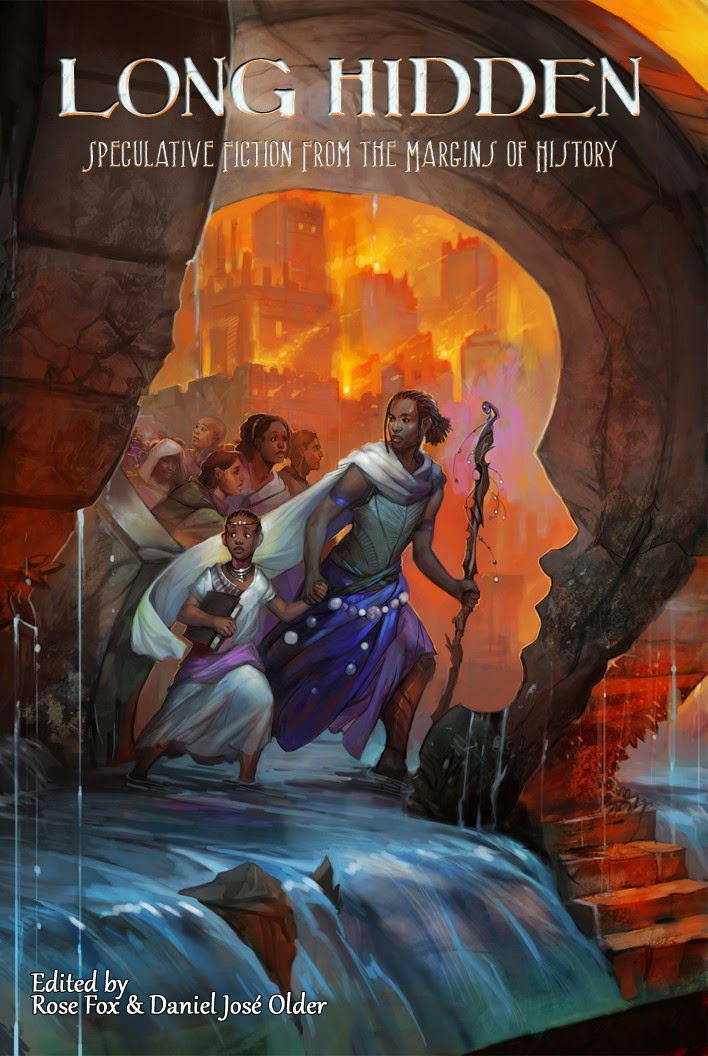
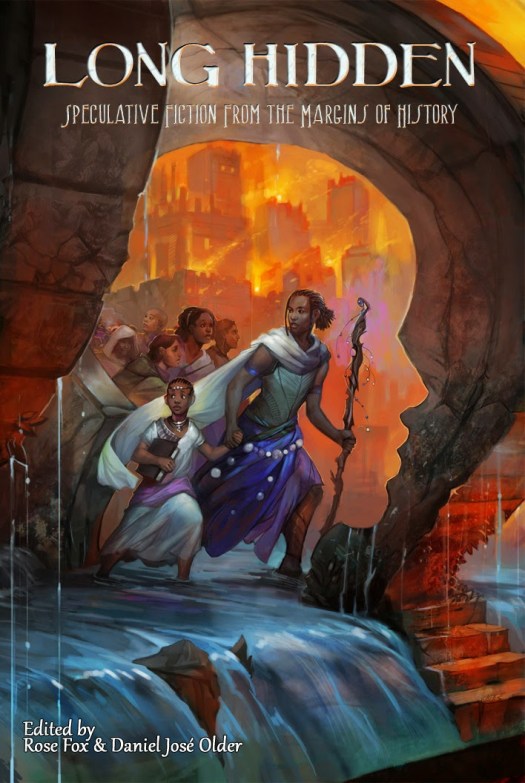
The recently released Long Hidden: Speculative Fiction from the Margins of History edited by Daniel José Older and Rose Fox  sounds like a good place to start.
 

longhidden


ICYMI: My interview with Felix Gilman @ the Washington Independent Review of Books.

You can read it here.

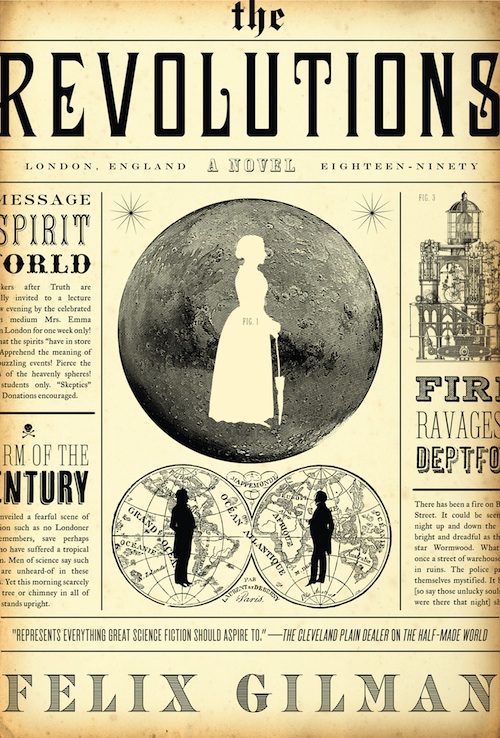
Gilman’s new novel, The Revolutions, is a wonderful tribute to the planetary romances of the late 19th and early 20th Century (Burroughs, Lewis, etc.)

revolutions

In the future, look for pieces at the Washington Independent Review of Books by me on works by Robert Jackson Bennett, Darin Bradley, and Mary Rickert.

MUSES: The incendiary poet Essex Hemphill

Yesterday my local library branch (in Mount Pleasant) had an event honoring the late Washington-based poet Essex Hemphill. Hemphill became famous for his incendiary political performance poetry which addressed issues of race, gender and sexuality. His work was featured such films as Tongues Untied and Looking for Langston.

hemphill

Hemphill was also instrumental in my coming out process.

Back in the late 80s, I was a bit of a hermit in college. One Sunday I was holed up in the library when the head of the gay men’s organization invited me to hear Hemphill read. I went, and heard him. Hemphill exuded star power. He was funny, and invited people to participate in the performance. I recall him reading—really, perfuming—a poem about the Tuskegee Experiment, and performing another about the crack epidemic which was in full sway in DC. (I also recall that he mentioned that he was a Kate Bush fan; he mentioned her then new song Experiment IV in introducing the Tuskegee Experiment poem).

After his performance, I officially came out to everyone I knew.

Yesterday’s tribute feature both readings and heartfelt remembrances of this groundbreaking poet-activist.

http://en.wikipedia.org/wiki/Essex_Hemphill


BOOK REVIEW: Religion and Dystopia in Atwood’s THE YEAR OF THE FLOOD

The Year of the Flood (MaddAddam Trilogy, #2)The Year of the Flood by Margaret Atwood

My rating: 4 of 5 stars

A sequel to Oryx and Crake (and the 2nd book in the newly-dubbed MaddAddam Trilogy), The Year of the Flood is a better book, in my opinion, than the series opener. The story is told through the eyes of two women, Ren and Toby, who are once and future members of an eco-cult called God’s Gardeners. Ren grows up in the cult after her mom leaves one of the gated pharmaceutical communities that control the world. Her narrative is first person and traces her life from an impressionable child to tough adulthood. Toby’s narrative is in third person, and she initially becomes a Gardener to escape a dire circumstance. Each of their contrasting sections is short and they end on a cliff hanger moments. Through these fragments, you get a different glimpse into the dystopian future Atwood’s created, with its Corporate structure and science gone amok. Interspersed are sermons and hymns from the cult. A warning: the book is very dark, even grim-dark. Atwood doesn’t shy from describing the horrors these two very different, and differently strong women face. A criticism: I found it hard to believe one major plot point which I won’t spoil. The Year of the Flood also reminded me of Octavia Butler’s Parable series, in the use of religion and dystopian themes.

MUSES: The return of the mystical side of Natalie Merchant

The first show I went to at DC’s famed 9:30 Club, back when it was at 9th and F Street, was 10,000 Maniacs. They had just released their major label debut, The Wishing Chair. The front woman, Natalie Merchant, was a triple-threat, as they say in show business lingo. She had a lilting, beautiful voice; wrote intelligent lyrics about serious subjects; and was visually arresting. And by “visually arresting,” I don’t mean she was a babe. I mean her gloriously oddball stage person. The performance I saw back in 1985 featured her trademark spinning, on-stage costume changes involving numerous shawls and scarves, and using her long hair as a prop. In-between song, instead of banter, she would sing a cappella fragments of old folk songs. And in souped up jam session, she ‘sang’ impromptu lyrics from Yamyatin’s We.

Natalie

She became a star on the next album, In My Tribe, with a jaunty hit single about Seasonal Affective Disorder called “Like the Weather.” Her lyrics became less poetic and more preachy, something cemented in the follow-up album Blind Man’s Zoo. At her worst, she comes across as a sanctimonious scold. Sally Soapbox became her default setting. She rivals Morrissey in her ability to annoy me with her judgmental and often hypocritical pronouncements. (Case in point: “Candy Everybody Wants” portrays TV-viewers as morons and yet 10,000 Maniacs were often musical guests on numerous TV programs; in another article, she went on a mad bromide against the Lady Gaga/Beyonce campy video “Telephone,” failing to find humor in its homage to trashy women’s prison; yet her former band’s name at best, trivializes, people with mental disabilities).

But some of her songs can make me blub like a baby. “Cherry Tree,” about illiteracy, does it every time. And “These Are Days” practically defines nostalgic euphoria. That song kicks me out of any funk I’m in. She has a new album coming out, and it appears to draw from the Poetic side of her oeuvre. The haunting video and the lyrics to the song “Giving It Up” is very promising.


Myth and Music: “Meremennen” by Autumn’s Grey Solace

The song “Meremennen” by Autumn’s Grey Solace has no known lyrics. Phrases emerge every now and then, like flotsam and jetsam, on the oceanic currents of the music. But for the most part, it is a kind of semi-coherent glossolalia: flowing and dissolving and pierce notes over a delicate arpeggio’d guitar and subterranean bass-line.  The title holds the clue to the content: meremennen is an old English word for a kind of water spirit. This track, with its siren vocalizations, is a homage to an elusive, mythic creature.

Myth and Music: The Scandinavian fairy-tale music of Norway’s Bel Canto


Just the other day, I found some rare tracks from the Norwegian ethereal-wave band Bel Canto. Listening to them confirmed for me that Anneli Drecker has a simply amazing voice and it’s a shame that she is not as well known as she should be. She effortlessly melds the complex vocal gymnastics of Elizabeth Fraser with the pan-ethnic warbling of Lisa Gerrard— with a dash of Bjorkian whimsy.

Bel Canto started out as kind of Gothic synthpop band; imagine Depeche Mode crossed with Siouxsie and the Banshees. By the second release, Birds of Passage, they moved more into the atmospherics of Cocteau Twins or Kate Bush. Drecker expanded the range of her voice so that she could reach soprano highs that were positively operatic, and there was a definite Medieval sound to the stately synths. Lyrically, the songs borrowed from mythology, with songs about mermaids, minotaurs, and Baron Munchausen. But it is their third album, Shimmering, Warm & Bright, is a classic of mythic pop music.

Drecker’s voice is stately and beautiful. The music weaves folk instruments into the elaborate synthesized orchestrations. The lyrics, some of them in French and German, are full of images from Scandinavian myths: giants (“Shimmering, Warm and Bright”), fallen warriors (“Sleep in Deep”), and witchcraft (“Spiderdust”). The album’s centerpiece is an epic musical homage to a Hans Christian Andersen tale, “The Story of a Mother,” sung in German.

Subsequent Bel Canto albums visited mythic themes sporadically, opting instead for a sleek pop-oriented sound.

Shimmering, Warm and Bright