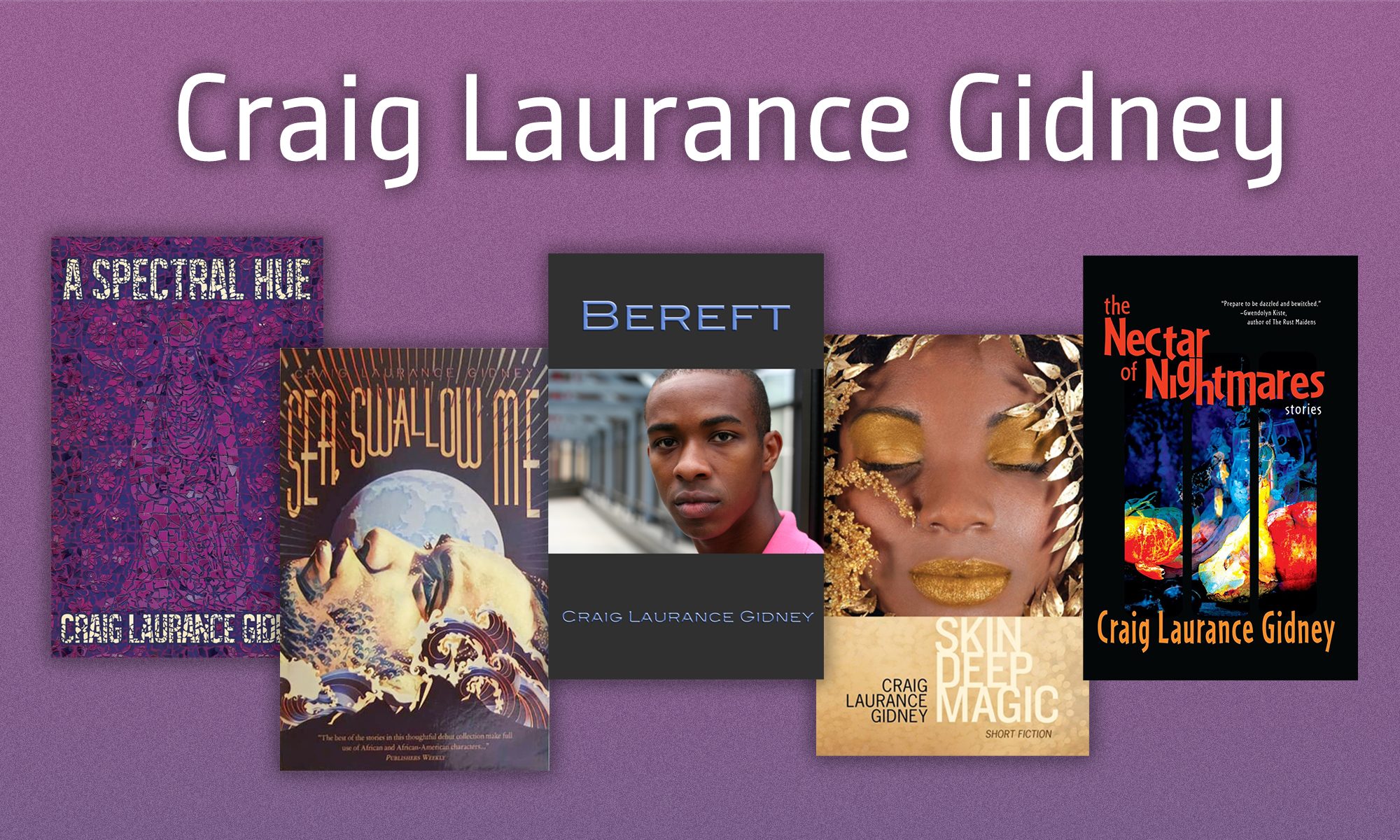
I’ve posted my short homage to the cult British author Anna Kavan, over on Wattpad. Please enjoy.


I posted a piece of flash fiction on Wattpad–a rumination on lookism and the fashion industry.

 The Daylight Gate by Jeanette Winterson
My rating: 5 of 5 stars
The Daylight Gate exists at a crossroads, between fact and fiction, reality and fantasy, and prose and poetry. Jeanette Winterson uses History to spin a mediation on persecution, feminism, polyamory, power, religion and abuse.
The history she uses this time is that of the Pendle witch trials in the 1600s Britain. A group of women and men were hanged for witchcraft, and using everything from flights of fantasy to ribald humor to Grand Guignol horror, Winterson tells their tales. The main protagonist is Alice Nutter, a wealthy and independent woman who gained her wealth by creating a a unique magenta dye. She is at the center of several circles. She owns the land where the accused witches live. She also is the lover of a banished Catholic who (allegedly) tried to assassinate King James. In the past, she worked with Queen Elizabeth’s court mathematician/magician John Dee, and through him, met her other lover, the beautiful Elizabeth Device—who is the matriarch of the accused Pendle witches. Nutter is the central piece of the kaleidoscopic text, which includes the priggish chief lawyer Thomas Potts, a cameo by Shakespeare and the points of view of the other accused people.
The real star, though, is Winterson’s marvelous prose. Each sentence sparkles with invention. Her imagery is magical, brutal, funny and terrifying—often at the same time. The story is multilayered and full of symbolism, but it is also fun. The Daylight Gate could be read as a dark gothic fantasy, a feminist parable, a lesbian fairytale or a prose poem.
 The Half-Made World by Felix Gilman
My rating: 4 of 5 stars
There’s a famous painting by John Gast called American Progress in which a giant white woman garbed in gossamer leads American settlers Westward into an ominous, uncreated world. I wouldn’t be surprised if Gilman didn’t have that very picture as a screensaver when he penned his New Weird Western novel, The Half-Made World. The ominous, bleak tone of this work also brings to my mind a song by the gothic/worldbeat Dead Can Dance, a song called “Frontier.” DCD’s female lead singer is known for her ideoglossia—Lisa Gerrard, like Elizabeth Fraser and Jonsi of Sigur Ros sing in private languages on the phoneme-level. On this song, however, she sings one recognizable phrase: “I see the bloodstains on the floor.” Or, I think that’s what she’s singing. I bring this up, because this novel is about the bloodstained mythic past.
The plot of the novel has been explained by others—or you can read the cover flap copy. The Half-Made World is chase and quest novel, complete with a MacGuffin. On this level, it is suspenseful and has the juggernaut-like pacing of both cinematic and literary Westerns. But it is the world-building and more importantly, the trope-twisting that is truly fascinating.
Gilman presents the West as a literally uncreated landscape, where creatures and plants are in their experimental or “beta” phase. Land and sea haven’t resolved themselves as separate entities. This part of world is stewarded by the First Folk, who may or may not be human or may or may not be immortal. They are described as long, pale black-maned people with red eyes and seem to live in a kind of amorphous Dreamtime existence. (The First Folk seem more modeled on Aborigines than on Native Americans—and even here, there is a interesting trope-twist). The settled West presided over by two rival faction demonic Spirits. Controlled by sentient Engines, The Line wants to colonize the West and turn it into a grim industrial land. (The current, real-world issue of fracking resonates here). The Gun is an anarchistic organization, who seem to worship chaos and destruction. They possess their Agents and almost become symbionts with them. (The spirit-symbionts live in their Agents’ supernaturally powered Guns; unhoused Gun spirits return to a Lodge—which reminds one of the creepy otherworld lodges referenced in David Lynch’s Twin Peaks TV series).
In fact, the whole novel has the dark surreality of a Lynchian film. It puts the phantasmagoria into fantasy. It’s a rare novel that manages to be both high-low and pulpy at the same time.
 The Castings Trilogy by Pamela Freeman
My rating: 4 of 5 stars
I finished this omnibus novel last week. The writing is at times lyrical and the characters are solid–I could see them outside of the plot. Many readers have complained about the shifting POVs–in addition to the three main characters, Freeman adds first person vignettes from superfluous characters. Frankly, I loved that about the book.
!.) It makes the 11 Domains seem like a real world because she focuses on really mundane characters;
2.) Those tales really do come together in the end, as a wondrous tapestry of pain and catharsis and story telling.
The Castings Trilogy subverts many fantasy tropes. The reluctant Chosen One doesn’t have a whole lot power or agency in her world–she’s not really magical. The Big Bad has a legitimate beef, mainly, the ethnic caste system in his world. And the male lead isn’t a hidden prince. The kingdom is a group of Balkanized nations rather than a united kingdom. And the history of ethnic cleansing and oppression isn’t clear-cut; its complicated.
The magic system has a sense of wonder–ghosts, elemental spirits, necromancy and fortune-telling–but it’s also organically built and consistent.
The Castings Trilogy is a unique take on the Grim-Dark epic fantasy that adds a dash of social justice as a subtext.
I got the go-ahead from the publisher to post these blurbs for BEREFT.
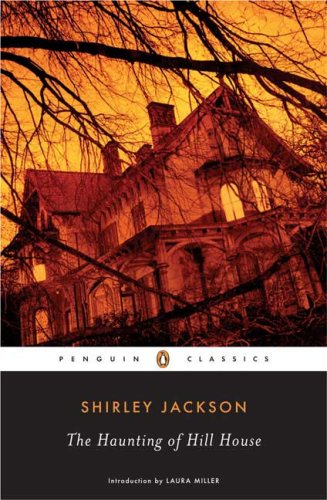

Shirley Jackson’s 1959 novel, The Haunting of Hill House, updated the ghost story, and used its various tropes to create a new kind of character study. (Forget those douchetastic ghosthunter shows—this team has a suave elegance to their work). It’s mostly the story of Eleanor, a lonely, mousy misfit of a woman who slowly and disturbingly falls in love with the foreboding, architectural monstrosity known as Hill House. Eleanor has an active imagination and never seems quite connected with the mundane world. She comes alive in Hill House, where she is a part of parapyschological research team. And the house, seemingly, seems share her affections. It communicates with her in ways that are scary….and oddly, tender. The reader wants Eleanor to join with her beloved, and escape from it at the same time. Jackson creates marvelous secondary characters—the brash, chic probably lesbian artist Theo, the bratty playboy heir to Hill House Luke, and doddering Professor who heads up the research team. She also adds a kind of mordant humor, such as the dour doomladen housekeeper. Jackson’s prose is written with a delicate beauty that suffuses even the more suspenseful set pieces; neither movies that used the book as source material manage to capture that sensibility. The Haunting of Hill House is novel that stays with reader. It leaves you with deep, lingering horror.
The Carl Brandon Society, an organization that seeks to increase ethnic and racial diversity in Speculative Fiction, announced the 2010 Awards.
Karen Lord won the Carl Brandon Parallax Award for an outstanding work of speculative fiction by a writer of color. Nnedi Okorafor won the Carl Brandon Kindred Award for an outstanding work of speculative fiction dealing with race and ethnicity.
I read both of them two years ago and loved them both, for very different reasons. Digging through my notes, I unearthed mini-reviews of both of them.
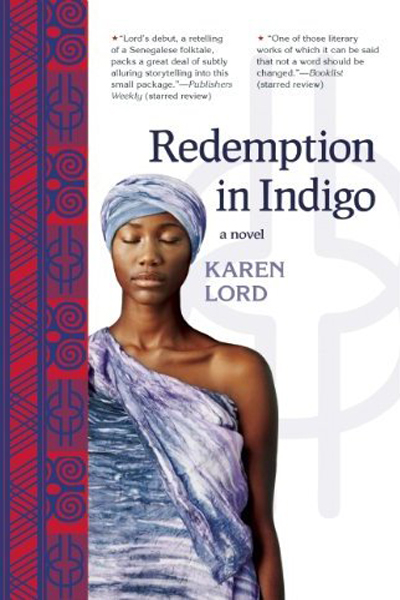
A charming retold Sengalese folktale, very lighthearted and magical. A whiff of Tutu0la, a sprinkle of Okri, a dash of LIKE WATER FOR CHOCOLATE, told in a witty, wise storytellers voice. Tricksters and magic and morality tales abound in this colorful story.
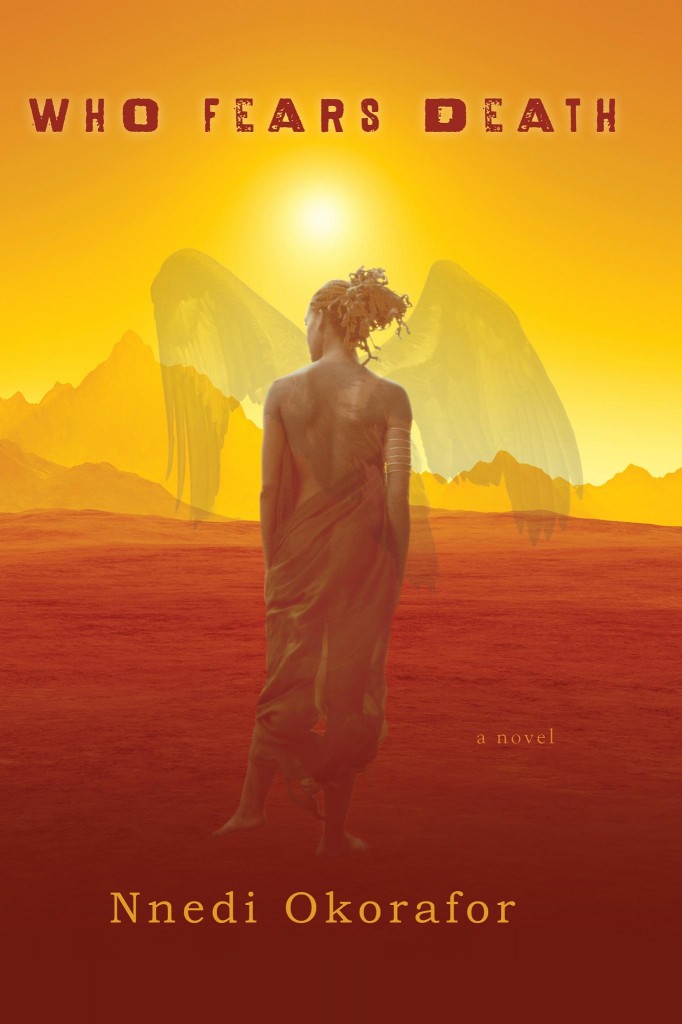
I really wanted to enjoy this book–but I couldn’t. And perhaps that was the point. Okorafor uses the trappings of fantasy–a young sorceress, her training, a prophetic quest–to discuss dark subject matters, particularly, the matter of sub-Saharan Africa. So it’s an oddly compelling mash-up of Chinua Achebe and a J.K. Rowling coming of age novel. Issues, like weaponized rape, genocide, slavery, color-caste racism, genital mutilation, and sexism exist along side casual magic (shape-shifting, teleportation, and other dimensions). The characters do go through hell, but the author does manage to inject warmth and humor into the tale. While the first person narrative is engaging, the reader (or this reader) noticed that the text was in conversation with other texts, both literary and political. It made for a richer read, but I fear that other readers might miss the significance and be left in the dark. In short, this is not escapist fantasy literature, though the magic here will transport you to another world. Allegory enrobes this story.
Who Fears Death reminds one of The Unconquered Country, by Geoff Ryman and Ben Okri’s tales of Azarro the Spirit Child. This is a brave book, full of some horrific images.
Congratulations to both authors!


 Craig Laurance Gidney
You must be logged in to post a comment.