Happy Book Birthday to “Storyteller: A Tanith Lee Tribute Anthology”

Storyteller: A Tanith Lee Tribute Anthology, which I co-edited with Julie C Day (publisher and main editor), Carina Bissett, and Julia DeRidder (who did lots of editorial work even though she’s not on the cover) released this week. It features work by Martha Wells, Alaya Dawn Johnson, Andy Duncan, and Nisi Shawl among other authors. It’s a diverse group in several ways. Science fiction, horror, fantasy (contemporary, humorous and dark)  stories are in the book, as well as authors from a variety of genders, ethnic/racial backgrounds and geographical locations. Rather than speak about the stories, which are uniformly excellent and award-worthy) I will focus why Tanith Lee was so important to me.

I first became aware of Lee’s work when the Washington Post Book World section did an article on her mid-career retrospective Dreams of Dark and Light. The critic, author Michael Swanwick, spoke of “the marvelous joinery of her sentences” and described her Neo-decadence themes of Death and Sex that wove through her work like veins of silver. I couldn’t find that book, so I picked up Delirium’s Mistress instead. The lush fairytale language and blatant homoeroticism stunned me. Then, my obsession with finding everything she published began. I still haven’t finished reading all of her enormous oeuvre. 

Tanith ignored the dictates of the market, and wrote things that defied easy categorization—often creating new genres. Her 1990 novel A Heroine of the World, for instance, is Romantasy, written years before the portmanteau term was coined. Her secondary world vampire novels, Vivia and The Blood of Roses, would probably be marketed as grim-dark today. Much of her short fiction fits in the Weird tale microgenre; she published many pieces in Weird Tales Magazine in the 90s. As a result, Tanith became a touchstone author for many authors of genre fiction. She even wrote a historical novel (The Gods are Thirsty is about the French Revolution), mystery (Death of the Day) and a zombie novella (Zircons May Be Mistaken).

Tanith wrote books that publishers determined were difficult to sell. Her sequence of epic fantasy called Tales of the Flat Earth was one of the first to feature queer characters in the late 70s. (In fact, many mall chainstores refused to carry the titles for their frank sexual themes. The Flat Earth sequence took its cues from Eastern mythology, a change from the Tolkein-derived medieval fantasy that dominated the fantasy boom). The novels and stories in the sequence are part Arabian Nights, part Anais Nin with a dash of Oscar Wilde. The Village Voice dubbed her as “the goddess empress of the hot read.” As a result, she became a bit of a cult author—though one with impressive sales records here and there. 

My friendship with Tanith Lee began when she released her book of channeled lesbian fiction, written under the name Esther Garber. It was a small press book, and the publisher sent a copy of the book to me because I suppose because I was a Superfan. Fatal Women is the title of the book, and it collected the novellas written by French Jewish woman Tanith sent to her via spiritual means. Tanith was adamant that this channeling was real, but she had sense of humor about it, understanding that there were skeptics. The fiction was Gothic with a capital G, often historical with some surreal aspects. Imagine the work of Sarah Waters (Tipping the Velvet) crossed with the fiction of surreal artist Leonora Carrington. Lush, bizarre, erotic, and beautiful. 

I met her in person in 2008 at Eastercon in London, where she was guest of honor (along with Charlie Stross, China Mieville and Neil Gaiman). She told me the plots of stories and novels that were percolating in her head—novels and stories that she never got around to writing. She told me that the world of publishing had changed, became more market-driven, which frustrated her. Our friendship lasted until her passing in 2015, mostly in epistolary form though there was one international phone call (I remember my cat interrupted the conversation by demanding attention, and I tried to express that it was Tanith Lee on the phone but he didn’t care).  She sent me her small press books — she eventually began to be published by the late Storm Constantine’s Immanion Press and I received many Advanced Reader Copies (ARCs) of the books, which included her thematically-connected Colouring Book series. I even wrote an introduction for a collection of her dragon stories, entitled Love In A Time of Dragons. At one point, she even sent me a package of books when I was recovering from a minor surgery. I ended up acquiring a second Esther Garber manuscript called Disturbed By Her Song, which featured work from Garber’s queer brother, Judas for Lethe Press. Judas’ work is even more magical realist, focusing on gay male desire. She blurbed two of my own books, and once sent me a care package when I was recovering from minor surgery. Her husband John sent me an unpublished story by Judas Garber, a lovely vignette of queer desire set in 1920s Paris, when she was seriously ill.  

Tanith won the World Fantasy Award twice, was nominated for a Nebula, and Lambda Literary Award. She was the first woman to win the British Fantasy Award. She also won life time achievement awards—the Bram Stoker and the posthumous Infinity Award from SFWA. It is my hope that Storyteller will introduce and reignite interest in Tanith’s work. She was a groundbreaker in many ways, and it is my belief that she is one of the finest stylists ever to work in genre fiction.

BOOK RECOMMENDATION: The Unbalancing by R.B. Lemberg

The Unbalancing, by R.B. Lemberg is a novel of textures and layers. It’s the type of book that should be absorbed, rather than read at a break-neck, ‘page-turner’ pulse-pounding pace. It’s a short novel filled with intricate details but it’s never dense and confusing. There’s the stress of suspense, but there’s also a leisurely intimacy here that’s uncommon to fantasy-quest novels. Lemberg has created their own genre, one that challenges the constraints of the form. A cozy apocalypse, or a fantasy-based picaresque novel. (It’s also a love story.)

Told in alternating first-person narratives, Lemberg tells the story of an impending ecological disaster on a small archipelago. Ranra Kekeri is the recently installed  Starkeeper, the steward for a traumatized fallen Star that sleeps in the nearby ocean. Erigra Lilún, a poet, also has a bond with the sleeping Star, one that they are ambivalent about. Ranra and Erigra’s connection with the Star sparks a simmering attraction between the two, and they become lovers. Both of them clash and collaborate as the dreaming Star becomes more unstable and chaotic.

Lemberg’s Birdverse is a complex creation, full of mythology and multiple magic systems that draw upon secret names, living Stars, sacred geometry and an all powerful Bird goddess. Additionally, the society of the archipelago recognizes and supports alternative family structures and gender fluidity. The world-building is organic and lived-in,  and never confusing.

Lemberg’s prose is soaked in magic, magic that’s full of space and light and sound. The Unbalancing manages to be both ethereal and earthy. Lemberg juxtaposes otherworldly scenes of magic with awkwardness of new relationships. Some of the best scenes in the novel are the clash between Ranra’s Type-A personality with Erigra’s measured introspection. (Lemberg’s portrayal of Erigra’s neuro-divergence is a highlight of the novel). The Unbalancing isn’t a book that can be adequately summarized. It can only be experienced. 

Book Radar: The Beautiful Ones by Silvia Moreno-Garcia.

I’m in the middle of Silvia Moreno-Garcia’s mannerpunk novel in preparation for an author interview. The Beautiful Ones (St. Martin’s Press), released this week, is quite different from Moreno-Garcia’s contemporary work. I’d describe it as Vanity Fair with telekinesis. Manipulation is the major theme: of objects, and of feelings. The imaginary country the author conjures has elements of the Belle Epoque-era France; you can see the ormolu clocks, rococo architecture and hear the frou-frou rustle of silk. It’s billed as “romantic” but a Machiavellian undercurrent of social climbing runs through the novel. Plus, kudos for the allusion to a Prince song.

Beautiful Ones


BACK COVER COPY:

Antonina Beaulieu is in the glittering city of Loisail for her first Grand Season, where she will attend balls and mingle among high society in hopes of landing a suitable husband. But Antonina is telekinetic, and strange events in her past have made her the subject of malicious gossip and hardly a sought-after bride. Now, under the tutelage of her cousin’s wife, she is finally ready to shed the past and learn the proper ways of society.

But Antonina, who prefers her family’s country home to the glamorous ballrooms of the wealthy, finds it increasingly difficult to conform to society’s ideals for women, especially when she falls under the spell of the dazzling telekinetic performer Hector Auvray. As their romance blossoms, and he teaches her how to hone and control her telekinetic gift, she can’t help but feel a marriage proposal is imminent. Little does Antonina know that Hector and those closest to her are hiding a devastating secret that will crush her world and force her to confront who she really is and what she’s willing to sacrifice.


BOOK REVIEW: The Warrior Who Carried Life by Geoff Ryman. A classic of genderqueer speculative fiction.

The Warrior Who Carried LifeThe Warrior Who Carried Life by Geoff Ryman

My rating: 4 of 5 stars

“Cara’s mother had always said something very strange about dust: that it was the remains of the dead, and should be respected. “The air is full of other people,” she had told Cara. The dust in the sunlight looked like stars.”

The Warrior Who Carried Life is Geoff Ryman’s first novel, which has been reprinted by the Canadian Press Chizine. It’s a darkly mythic novel that combines the Epic of Gilgamesh with dashes of Celtic and Indian mythology.

A young woman whose family has been dishonored by invaders undertakes a vengeance-based quest to oust the evil from her land. To do so, she magically transforms herself into a male warrior who is nearly invincible. Along the way, she discovers the true nature of the invaders and her quest eventually leads her to the land of death. The novel is drenched in magic, not unlike Tanith Lee’s Tales From the Flat Earth series—there are fabulous beasts, wise women, immortality, and miracles. TWWCL engages and subverts mythic tropes left and right, recalling Samuel R. Delany’s classic novel The Einstein Intersection. Despite the magical overlay, this is a brutal story, full of shocking violence.

Many of the tropes and themes that ballast Ryman’s oeuvre are here. The violence and war of the imaginary land shares a tenuous connection with other Ryman works that chronicle and examine the horrors faced by Kampuchea (Cambodia)—e.g., The Unconquered Country & The King’s Last Song. It is also a deeply feminist and genderqueer novel, with a transcendent lesbian love story at its spiritual center.

View all my reviews

BOOK REVIEW: Kill the Dead, by Tanith Lee. Tarot-inspired Gothic fantasy

Kill the DeadKill the Dead by Tanith Lee
My rating: 5 of 5 stars

The 1980 novel KILL THE DEAD is a perfect introduction to Tanith Lee’s writing in the Gothic mode. The short novel has all of her hallmarks: two tortured Byronic anti-heroes, a beautiful witch antagonist and a plot that is full of twists that allude to and subvert literary tropes. The novel concerns the mordantly humored exorcist Parl Dro, and his dealings with a hapless musician and a vengeful female lich (an undead sorceress). The prose is lovely and musical, full of rich imagery that incorporates Tarot symbolism throughout the text. The dialogue is is full of quips and dry humor. Some of Lee’s best work is at the novella length, and KILL THE DEAD, reissued as an ebook by Immanion Press, is an excellent example.

View all my reviews

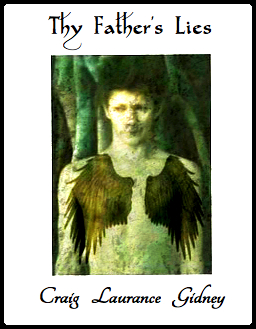
NEW FREE FICTION: Thy Father’s Lies by Craig Laurance Gidney

My story, Thy Father’s Lies, is now up on Wattpad. This is a postcolonial fantasy, a sort of prequel to Shakespeare’s The Tempest, told from the spirit Ariel’s point of view. Ariel is my favorite Shakespearean character, so in a way, this is a piece of fan fiction. Enjoy!


Thy Father's Lies
Thy Father’s Lies

BOOK REVIEW: City of Bones by Martha Wells. Proto-New Weird Fantasy

City of BonesCity of Bones by Martha Wells
My rating: 4 of 5 stars

An earlier entry in the Martha Wells oeuvre, City of Bones nicely balances her intricate, almost mystery-styled plots with her imaginative world-building. It’s admirable how the author manages a certain baroque richness to the prose, while maintaining a fairly action-packed, complex plot. The setting is a sort of post-apocalyptic fantasy world with a rigid caste system and strange rituals. Two outsiders stumble upon a mysterious artifact, and ultimately, a sinister world-threatening plan. The magic is magical and weird, and the suspense “pulse-pounding.” In a way, City of Bones fits into the New Weird aesthetic championed by China Mieville, in that it’s a little bit fantasy, a little bit horror, with a dash of science fiction and mystery thrown in for good measure. Fans of Mieville and Tanith Lee should check this book out.

View all my reviews

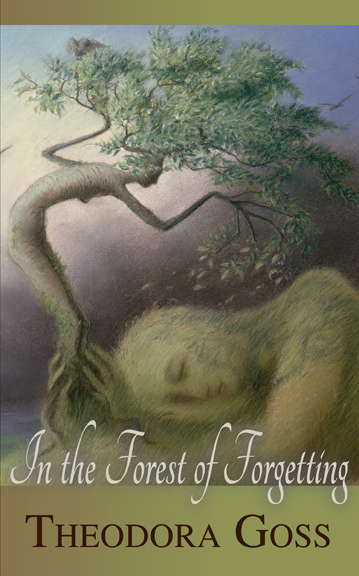
BOOK REVIEW: In The Forest of Forgetting by Theodora Goss. Postmodern Gothic fairytales.

In the Forest of Forgetting-Tangerine-lilac.indd

Since my colleague Theodora Goss announced a new ebook edition of her debut collection, In The Forest of Forgetting, I thought I’d share the review I did when the book was first released.

These delicately crafted, literary fantasies draw from Victorian morality stories and fairytales. The language is spare and considered, the tone dry spiked with mordant humor. Goss discreetly and elegantly updates the Gothic tale for postmodern times. Her “Emily Gray” stories concern a governess who grants children’s deepest wishes, at a terrible price. Three of the Emily Gray tales are here. The title story turns a breast cancer patient’s life into a magical fable. Other stories take place in Budapest, and have a flavor of Central European magical realism (“The Rapid Advance of Sorrow”), while “A Rose in Twelve Petals” fractures Sleeping Beauty into twelve different view points, including that of the spinning wheel that pricks the princess. Goss’s stories have dark themes, but she is too graceful a writer to be considered Gothic in the classic sense. Her painterly, humorous characters come alive, and her fantastical ideas are grounded in her character’s psyches.

BOOK REVIEW: A Stranger in Olondria by Sofia Samatar

All of the reviews I’ve read about A Stranger In Olondria talk about it being about bibliophilia, that is, the love of books. The love of books certainly does run through the novel, but I actually think it’s more about spirituality—with the written word being the locus through which transcendence is achieved.

stranger in olondria cover

The form the novel takes is the bildungsroman: a novel about the initiation of a youth into the wider world. Jevick is the son of a prosperous pepper merchant, a tyrant of a man who has two wives and controls a plantation on a tropical island. When it becomes clear that Jevick’s older brother is unfit for inheritance, Jevick is trained to be his father’s successor. A tutor from the distant, northern land of Olondria is hired, ostensibly to teach young Jevick the language and customs of that land in order to be a competent trader. But the tutor instills in the boy a love of the written word and an obsession with the exotic land.  Jevick eventually travels to Olondria on his first routine trade trip, and—very much against his will—becomes literally haunted by the ghost of Jissavet, a young woman and fellow islander he met on the voyage from the Tea Islands. Ghosts, in a heretical Olondrian religion, are considered angels, and those who communicate with them are living saints. When Jevick’s haunting becomes public knowledge, he is placed under arrest and becomes the unwilling pawn between two religious factions.

In spite of this fairly complex set up, the novel isn’t about politics. The narrative form is that of the memoir, or its even more antiquated cousin, the philosophical romance. Jevick’s narrative meanders, often interrupting the narrative flow to quote poetry or bits of Olondrian philosophy. It’s slow, and richly descriptive—a marked difference  the often breakneck pace of other fantasy novels. At times, the book becomes a travelogue—kind of like the books written by John Berendt (e.g., Midnight in the Garden of Good and Evil). Because of this solemn quality, the magic and the world-building is organic and believable. Other times, it has the elegiac melancholy of Hermann Hesse’s novels (particularly Steppenwolf and Siddhartha). The land of Olondria is a character. The country has a Mediterranean feel, in its fauna and cultures. The imaginary religion borrows from Hinduism and Egyptian mythology with a dash of decadence, resonant of the Greek mysteries.

The novel’s ending is ambiguous; no magic ring is recovered or kingdom conquered. Rather, Jevick, and Olondria itself, are spiritually changed. A Stranger in Olondria is a richly rewarding experience for those who love prose poetry and non-traditional narratives. Sofia Samatar’s debut novel is a fine exemplar of bibliomancy.