Happy Book Birthday to “Storyteller: A Tanith Lee Tribute Anthology”

Storyteller: A Tanith Lee Tribute Anthology, which I co-edited with Julie C Day (publisher and main editor), Carina Bissett, and Julia DeRidder (who did lots of editorial work even though she’s not on the cover) released this week. It features work by Martha Wells, Alaya Dawn Johnson, Andy Duncan, and Nisi Shawl among other authors. It’s a diverse group in several ways. Science fiction, horror, fantasy (contemporary, humorous and dark)  stories are in the book, as well as authors from a variety of genders, ethnic/racial backgrounds and geographical locations. Rather than speak about the stories, which are uniformly excellent and award-worthy) I will focus why Tanith Lee was so important to me.

I first became aware of Lee’s work when the Washington Post Book World section did an article on her mid-career retrospective Dreams of Dark and Light. The critic, author Michael Swanwick, spoke of “the marvelous joinery of her sentences” and described her Neo-decadence themes of Death and Sex that wove through her work like veins of silver. I couldn’t find that book, so I picked up Delirium’s Mistress instead. The lush fairytale language and blatant homoeroticism stunned me. Then, my obsession with finding everything she published began. I still haven’t finished reading all of her enormous oeuvre. 

Tanith ignored the dictates of the market, and wrote things that defied easy categorization—often creating new genres. Her 1990 novel A Heroine of the World, for instance, is Romantasy, written years before the portmanteau term was coined. Her secondary world vampire novels, Vivia and The Blood of Roses, would probably be marketed as grim-dark today. Much of her short fiction fits in the Weird tale microgenre; she published many pieces in Weird Tales Magazine in the 90s. As a result, Tanith became a touchstone author for many authors of genre fiction. She even wrote a historical novel (The Gods are Thirsty is about the French Revolution), mystery (Death of the Day) and a zombie novella (Zircons May Be Mistaken).

Tanith wrote books that publishers determined were difficult to sell. Her sequence of epic fantasy called Tales of the Flat Earth was one of the first to feature queer characters in the late 70s. (In fact, many mall chainstores refused to carry the titles for their frank sexual themes. The Flat Earth sequence took its cues from Eastern mythology, a change from the Tolkein-derived medieval fantasy that dominated the fantasy boom). The novels and stories in the sequence are part Arabian Nights, part Anais Nin with a dash of Oscar Wilde. The Village Voice dubbed her as “the goddess empress of the hot read.” As a result, she became a bit of a cult author—though one with impressive sales records here and there. 

My friendship with Tanith Lee began when she released her book of channeled lesbian fiction, written under the name Esther Garber. It was a small press book, and the publisher sent a copy of the book to me because I suppose because I was a Superfan. Fatal Women is the title of the book, and it collected the novellas written by French Jewish woman Tanith sent to her via spiritual means. Tanith was adamant that this channeling was real, but she had sense of humor about it, understanding that there were skeptics. The fiction was Gothic with a capital G, often historical with some surreal aspects. Imagine the work of Sarah Waters (Tipping the Velvet) crossed with the fiction of surreal artist Leonora Carrington. Lush, bizarre, erotic, and beautiful. 

I met her in person in 2008 at Eastercon in London, where she was guest of honor (along with Charlie Stross, China Mieville and Neil Gaiman). She told me the plots of stories and novels that were percolating in her head—novels and stories that she never got around to writing. She told me that the world of publishing had changed, became more market-driven, which frustrated her. Our friendship lasted until her passing in 2015, mostly in epistolary form though there was one international phone call (I remember my cat interrupted the conversation by demanding attention, and I tried to express that it was Tanith Lee on the phone but he didn’t care).  She sent me her small press books — she eventually began to be published by the late Storm Constantine’s Immanion Press and I received many Advanced Reader Copies (ARCs) of the books, which included her thematically-connected Colouring Book series. I even wrote an introduction for a collection of her dragon stories, entitled Love In A Time of Dragons. At one point, she even sent me a package of books when I was recovering from a minor surgery. I ended up acquiring a second Esther Garber manuscript called Disturbed By Her Song, which featured work from Garber’s queer brother, Judas for Lethe Press. Judas’ work is even more magical realist, focusing on gay male desire. She blurbed two of my own books, and once sent me a care package when I was recovering from minor surgery. Her husband John sent me an unpublished story by Judas Garber, a lovely vignette of queer desire set in 1920s Paris, when she was seriously ill.  

Tanith won the World Fantasy Award twice, was nominated for a Nebula, and Lambda Literary Award. She was the first woman to win the British Fantasy Award. She also won life time achievement awards—the Bram Stoker and the posthumous Infinity Award from SFWA. It is my hope that Storyteller will introduce and reignite interest in Tanith’s work. She was a groundbreaker in many ways, and it is my belief that she is one of the finest stylists ever to work in genre fiction.

Podcast Story: The Magus Club

The Weird Tales Podcast did an audio version of my story The Magus Club in honor of Pride. This story first appeared in the anthology Madder Love: Queer Men and the Precincts of Surrealism (edited by Peter Dubé). This story is inspired by the playwright Joe Orton’s novel Head to Toe and the music of Coil.

Also, there’s a link to support the Black Visions Collective –a Minnesota based Black activist organization.

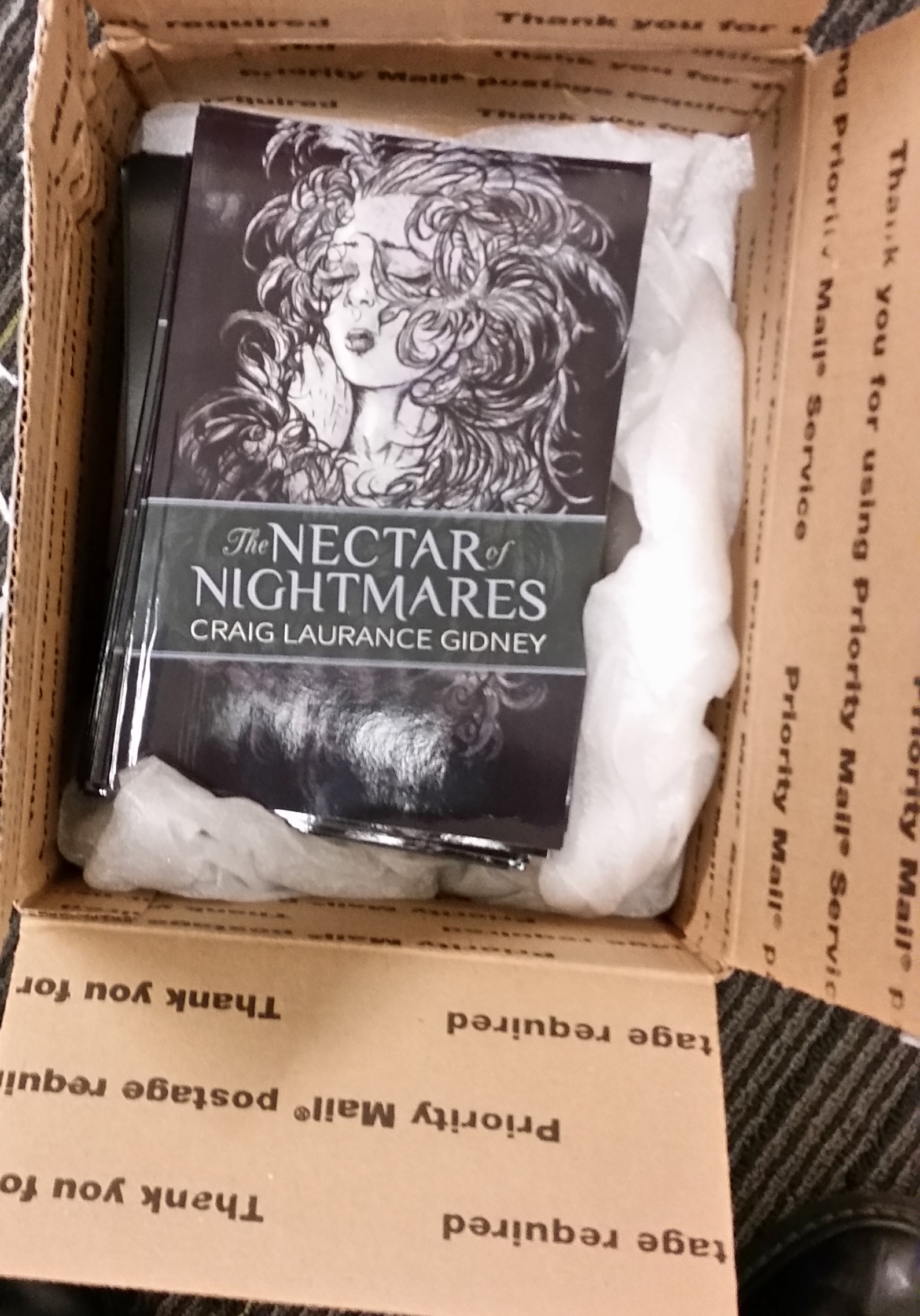
Book Birthday: Welcome THE NECTAR OF NIGHTMARES to the world

What’s it about: A short story about a different type of monster. A kaleidoscopic story, full of dream logic.

It’s also illustrated with Orion Zangara’s beautiful and eerie drawings, and beautiful designed by Dim Shores publisher Sam Cowan.

It’s a limited edition–only 150 copies will be produced.

Where you can get it: Dim Shores Press Webstore

The box of books and prints!

The Nectar of Nightmares is dedicated to Tanith Lee.
The Nectar of Nightmares is dedicated to the late Tanith Lee.

Tanith Lee’s “Ghosteria 2: Zircons May Be Mistaken”: a poignant zombie novel

Ghosteria Volume 2: The Novel: Zircons May Be MistakenGhosteria Volume 2: The Novel: Zircons May Be Mistaken by Tanith Lee

My rating: 4 of 5 stars

The new Tanith Lee novella combines elements ghost story conventions and zombie apocalypse fiction in an truly unique way. The “twist” is clever, but the short novel is more a contemplative character study. The assembled cast are ghosts from a variety of eras that are all haunting a historic Great House in the moorlands of England. They share their histories in monologues that range from tragic to humorous. The faceted narrative mode shifts from contemporary to gothic and even has a smattering of Old English (Anglo-Saxon). Simultaneously, humanity has been plagued with zombies, which do not affect the undead company. The fantastic contrivances, though crucial to the plot, take a back seat to the leisurely character reveals. In this way, the novel reads more like a play. (“The Ghost Monologues” would also be an apt title). Zircons May Be Mistaken might be the only zombie novel full of pathos and an exploration of the “human condition.”

Liberating the Magical Negro: A Mission Statement

Uncle Remus was my first encounter with a Magical Negro. I saw him in the (now banned) Disney movie, Song of the South when I was a child. I remember seeing an elderly black man walking through the fields, so gloriously happy that animated bluebirds swirled around him as he sang. I remember thinking that he was some sort of sorcerer, like Merlin. Like Dr. Doolittle, he could speak to animals, and knew their tales. I barely remember the frame story, which was some treacly affair about a runaway tow-headed tyke who was (rightfully) enchanted by Remus and his store of animal tales. For some reason the (white) adults didn’t care for Remus and forbade little whatshisname from seeing him. (Didn’t they know that he was a great magus?) The kid gets attacked by an angry (real-life) bull and Remus saves the day, which is what honorable wizards do. The frame story was a distraction from the vividly animated exploits of B’rers Rabbit and Fox, but I actually thought Remus was the more interesting character. I couldn’t grasp why he lived in poverty, when he was so obviously  a warlock or whatever. I began to devise adventures about him. Move over, Gandalf, Jeannie and Samantha. Remus is in town! He was the protagonist in my stories. Remus FTW! Years later, I recognized that Uncle Remus was a Magical Negro. That is, a stock figure in fiction (and other narrative media) meant to teach and/or accessorize white protagonists. They have no real life beyond being helpful wise people.

remus

The Magical Negro shows up in a variety of books and movies. The MN has no back story. They are allowed to be sassy comic relief, but primarily, they set up the white protagonist for victory over various odds. Certain black actors have long careers playing versions of the MN. Oda Mae Brown in Ghost is one massively popular example. Oda Mae somewhat subverts the paradigm. She does, for instance, have an extensive backstory (as a petty criminal) and much is made about her being a reluctant supporter of the titular ghost and his living lover. Oda Mae is much more a player in her story than Remus was in SOTS, and her portrayal by Goldberg steals the show. The actual plot of Ghost escapes me, but Oda Mae stays with me. I would watch the hell out of an Oda Mae-based sequel. (A tragically separated couple who make phallic clay vases and like ‘Unchained Melody’ a little too much—not interesting).

I guess what I’m saying is this: I have a complicated relationship with the MN trope. I recognize how its harmful and stereotypical. Can this narrative device be reclaimed, retooled, subverted? The untold stories of Remus: The Real Grand Wizard of the Old South and The Oda Mae Chronicles really ignite my imagination, perhaps more than is healthy.

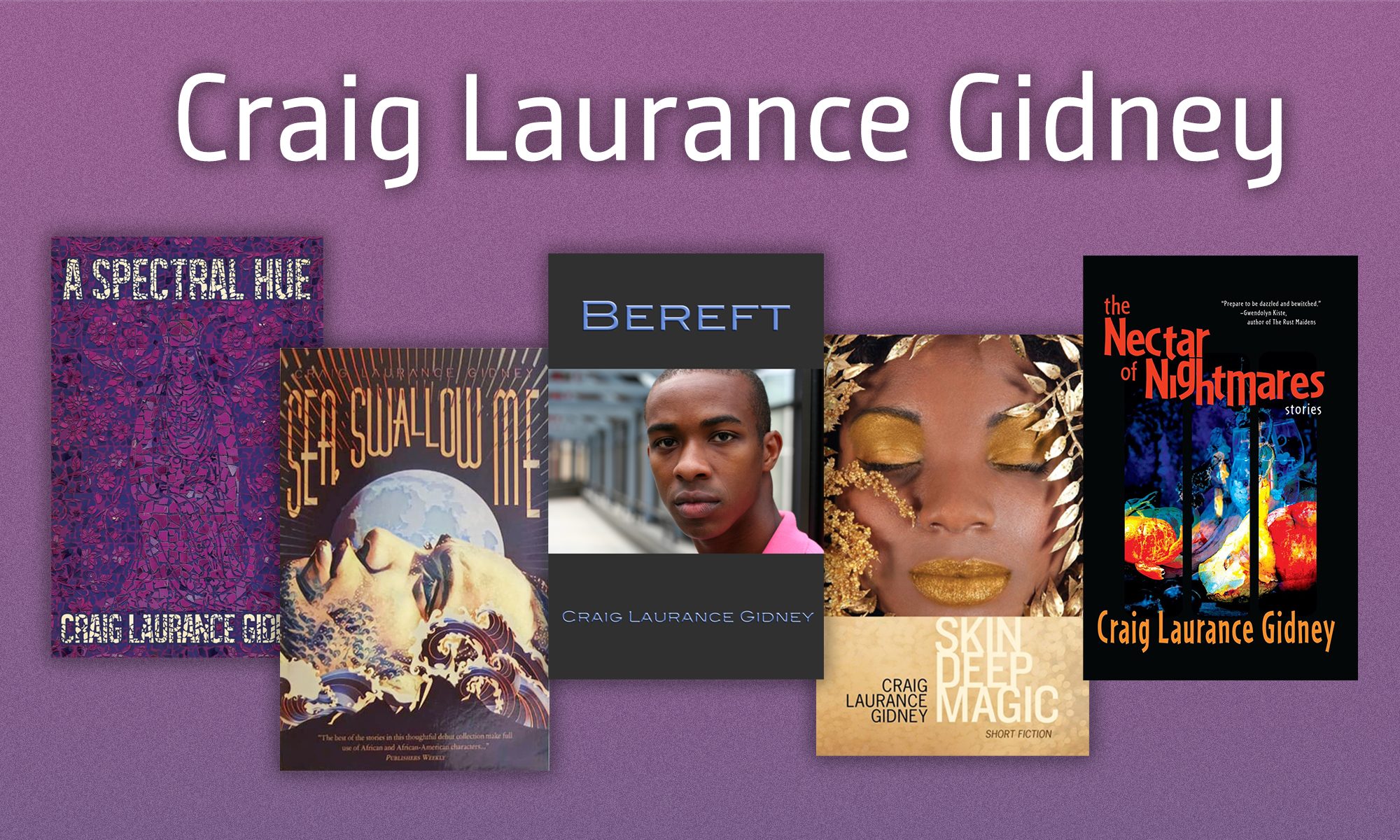
My own fiction deals with race in one way or another; Otherness is a recurrent theme. I use fantasy tropes, both on the literal and allegorical level. After a while, I found that I had amassed a body of magical realist/urban fantasy/weird fiction where people of African descent were the main protagonists. The stories range from satire to horror to whimsy. These ‘magical negroes’ are in the spotlight. So, in a way, Skin Deep Magic is inspired by those ur-Magical Negroes. I’ve given them a voice. The characters are flawed, some of the stories are discomforting. But they have their own voices and histories to share.  I aim to be provocative as well as entertaining. Like Remus, I am a storyteller. But, I’m a liberated one, smashing stereotypes and remixing tropes.

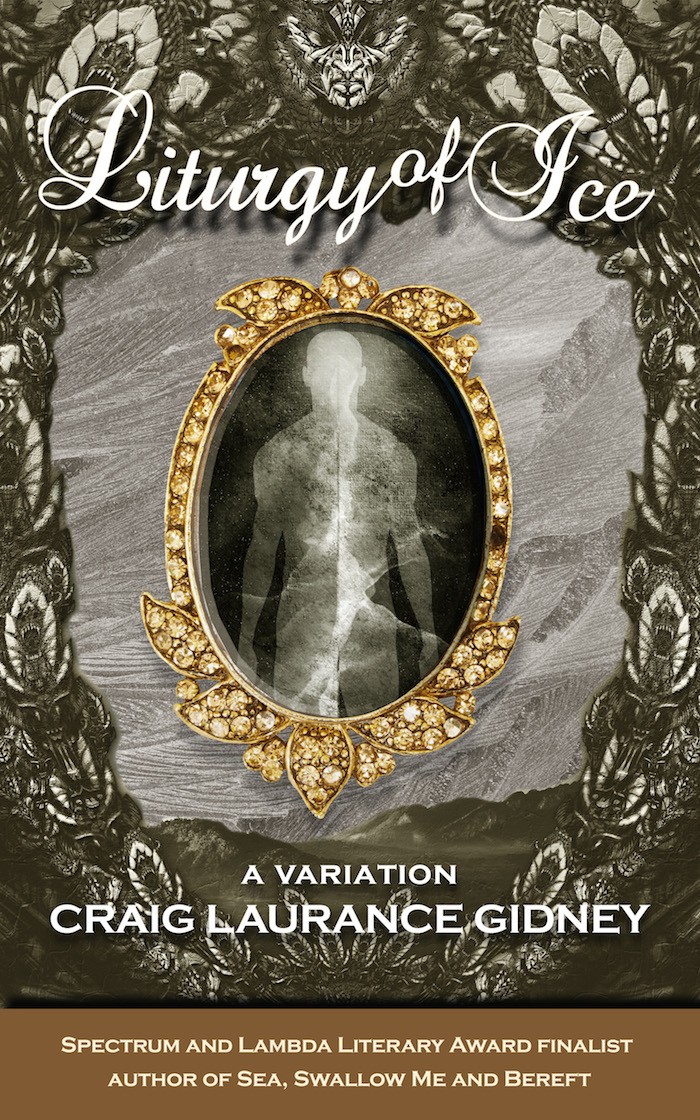
COVER REVEAL: Liturgy of Ice

Liturgy of Ice is the second in my self-pubbed eBook series Variations, which are dark fantasy short stories that play with fairytale tropes. LOI takes its cues from The Snow Queen. It should be out next week at the latest. The cover, like the last Variation, is by Thomas Drymon.

liturgy-smaler


Why Dark Fiction?


I actually don’t think I write horror, as in flesh-eating zombies or vampires or splatter punk. I tend towards dark fantasy or ‘weird’ fiction. But there is a definite darkness in what I write. And the forthcoming collection (not to mention the eBook series, Variations) has at least one piece that could be considered straightforward horror.  Someone always asks me why I write what I write. Why so dark, so pessimistic?

Part of me wants to use the ‘channelling voices’ excuse: that the characters  just sort of use me as a vessel to tell their stories. And I think every writer has a moment when they feel that: Where did that come from? But if I am channelling voices, why are they such sad, and at times, disturbed voices?

Exorcist_steps

A large part of me being drawn to dark fiction is, of course, I grew up on horror. I macerated in it.  I live in DC, where the movie The Exorcist took place, and the true story that inspired it happened in just-across-the-border Mount Rainer. It was a young rite of passage to visit the terrifyingly rickety Exorcist steps in Georgetown. Stephen King burst on the scene in my childhood. I remember, vividly, those lurid covers from the 70s. Cryptozoology was serious business. I used to devour books documenting the existence of Bigfoot, the Yeti, the Jersey Devil, and nearby Maryland’s own ominous Goatman. I even had an aunt who told me her creepily prophetic dreams. Summers we went to Atlantic City where, at the time, there was still a freakshow that featured a fearsome Ape Girl who would escape and bum rush the audience.

Or maybe it’s something more. I learned pretty young that the world is a terrible place, full of disease, torture and worse. I think I write dark fiction and about dark subjects because its cathartic, and helps me work through the fear and anger I have. The ‘voice’ I am channelling is my own subconscious. I contend, in my own fiction, the real world horrors my characters face are often worse than any supernatural demon.