
Storyteller: A Tanith Lee Tribute Anthology, which I co-edited with Julie C Day (publisher and main editor), Carina Bissett, and Julia DeRidder (who did lots of editorial work even though she’s not on the cover) released this week. It features work by Martha Wells, Alaya Dawn Johnson, Andy Duncan, and Nisi Shawl among other authors. It’s a diverse group in several ways. Science fiction, horror, fantasy (contemporary, humorous and dark) stories are in the book, as well as authors from a variety of genders, ethnic/racial backgrounds and geographical locations. Rather than speak about the stories, which are uniformly excellent and award-worthy) I will focus why Tanith Lee was so important to me.
I first became aware of Lee’s work when the Washington Post Book World section did an article on her mid-career retrospective Dreams of Dark and Light. The critic, author Michael Swanwick, spoke of “the marvelous joinery of her sentences” and described her Neo-decadence themes of Death and Sex that wove through her work like veins of silver. I couldn’t find that book, so I picked up Delirium’s Mistress instead. The lush fairytale language and blatant homoeroticism stunned me. Then, my obsession with finding everything she published began. I still haven’t finished reading all of her enormous oeuvre.
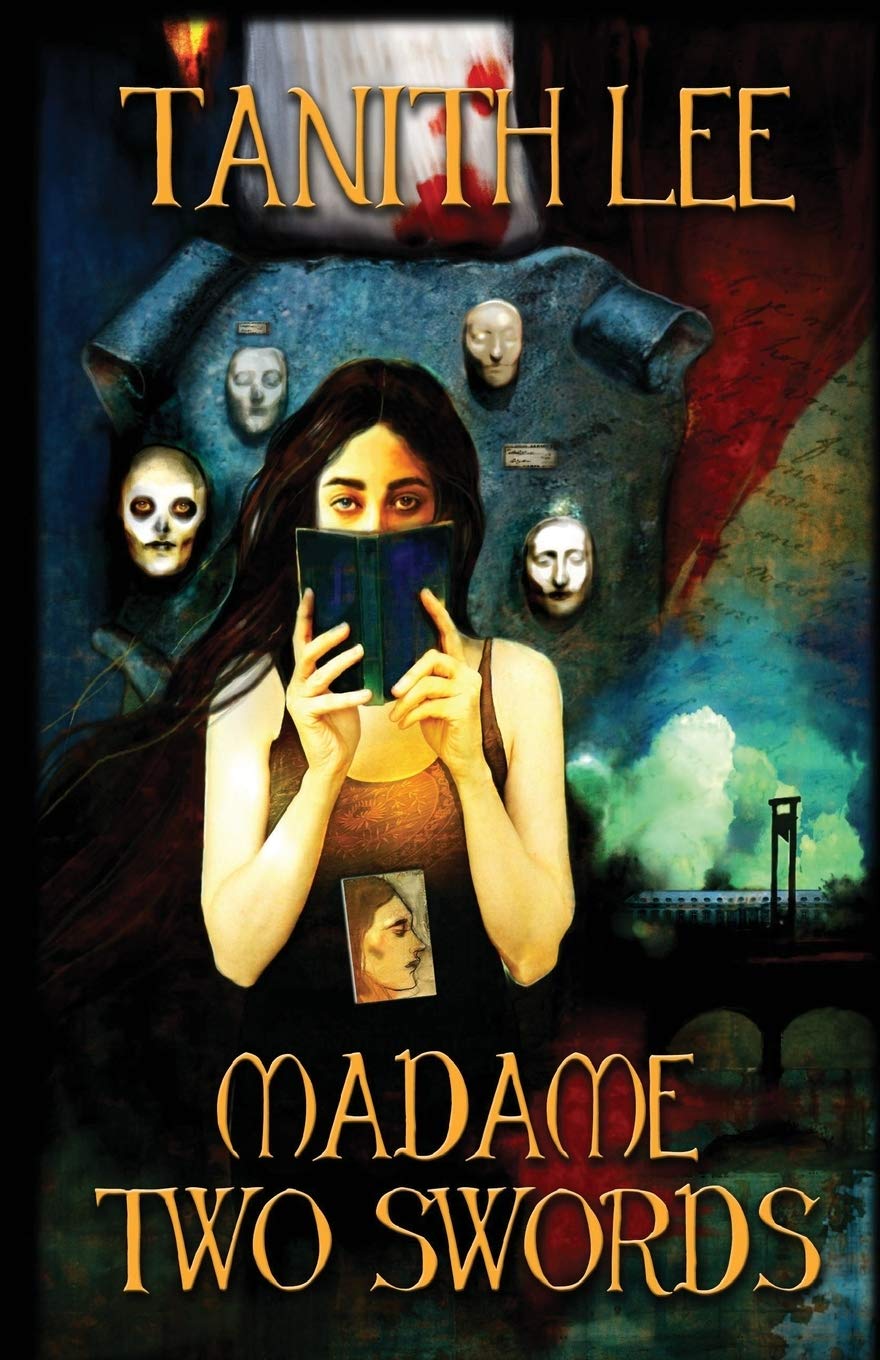
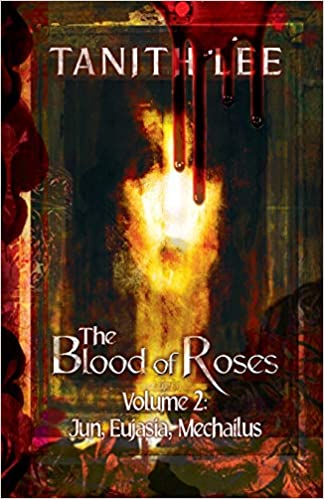
Tanith ignored the dictates of the market, and wrote things that defied easy categorization—often creating new genres. Her 1990 novel A Heroine of the World, for instance, is Romantasy, written years before the portmanteau term was coined. Her secondary world vampire novels, Vivia and The Blood of Roses, would probably be marketed as grim-dark today. Much of her short fiction fits in the Weird tale microgenre; she published many pieces in Weird Tales Magazine in the 90s. As a result, Tanith became a touchstone author for many authors of genre fiction. She even wrote a historical novel (The Gods are Thirsty is about the French Revolution), mystery (Death of the Day) and a zombie novella (Zircons May Be Mistaken).
Tanith wrote books that publishers determined were difficult to sell. Her sequence of epic fantasy called Tales of the Flat Earth was one of the first to feature queer characters in the late 70s. (In fact, many mall chainstores refused to carry the titles for their frank sexual themes. The Flat Earth sequence took its cues from Eastern mythology, a change from the Tolkein-derived medieval fantasy that dominated the fantasy boom). The novels and stories in the sequence are part Arabian Nights, part Anais Nin with a dash of Oscar Wilde. The Village Voice dubbed her as “the goddess empress of the hot read.” As a result, she became a bit of a cult author—though one with impressive sales records here and there.
My friendship with Tanith Lee began when she released her book of channeled lesbian fiction, written under the name Esther Garber. It was a small press book, and the publisher sent a copy of the book to me because I suppose because I was a Superfan. Fatal Women is the title of the book, and it collected the novellas written by French Jewish woman Tanith sent to her via spiritual means. Tanith was adamant that this channeling was real, but she had sense of humor about it, understanding that there were skeptics. The fiction was Gothic with a capital G, often historical with some surreal aspects. Imagine the work of Sarah Waters (Tipping the Velvet) crossed with the fiction of surreal artist Leonora Carrington. Lush, bizarre, erotic, and beautiful.
I met her in person in 2008 at Eastercon in London, where she was guest of honor (along with Charlie Stross, China Mieville and Neil Gaiman). She told me the plots of stories and novels that were percolating in her head—novels and stories that she never got around to writing. She told me that the world of publishing had changed, became more market-driven, which frustrated her. Our friendship lasted until her passing in 2015, mostly in epistolary form though there was one international phone call (I remember my cat interrupted the conversation by demanding attention, and I tried to express that it was Tanith Lee on the phone but he didn’t care). She sent me her small press books — she eventually began to be published by the late Storm Constantine’s Immanion Press and I received many Advanced Reader Copies (ARCs) of the books, which included her thematically-connected Colouring Book series. I even wrote an introduction for a collection of her dragon stories, entitled Love In A Time of Dragons. At one point, she even sent me a package of books when I was recovering from a minor surgery. I ended up acquiring a second Esther Garber manuscript called Disturbed By Her Song, which featured work from Garber’s queer brother, Judas for Lethe Press. Judas’ work is even more magical realist, focusing on gay male desire. She blurbed two of my own books, and once sent me a care package when I was recovering from minor surgery. Her husband John sent me an unpublished story by Judas Garber, a lovely vignette of queer desire set in 1920s Paris, when she was seriously ill.
Tanith won the World Fantasy Award twice, was nominated for a Nebula, and Lambda Literary Award. She was the first woman to win the British Fantasy Award. She also won life time achievement awards—the Bram Stoker and the posthumous Infinity Award from SFWA. It is my hope that Storyteller will introduce and reignite interest in Tanith’s work. She was a groundbreaker in many ways, and it is my belief that she is one of the finest stylists ever to work in genre fiction.






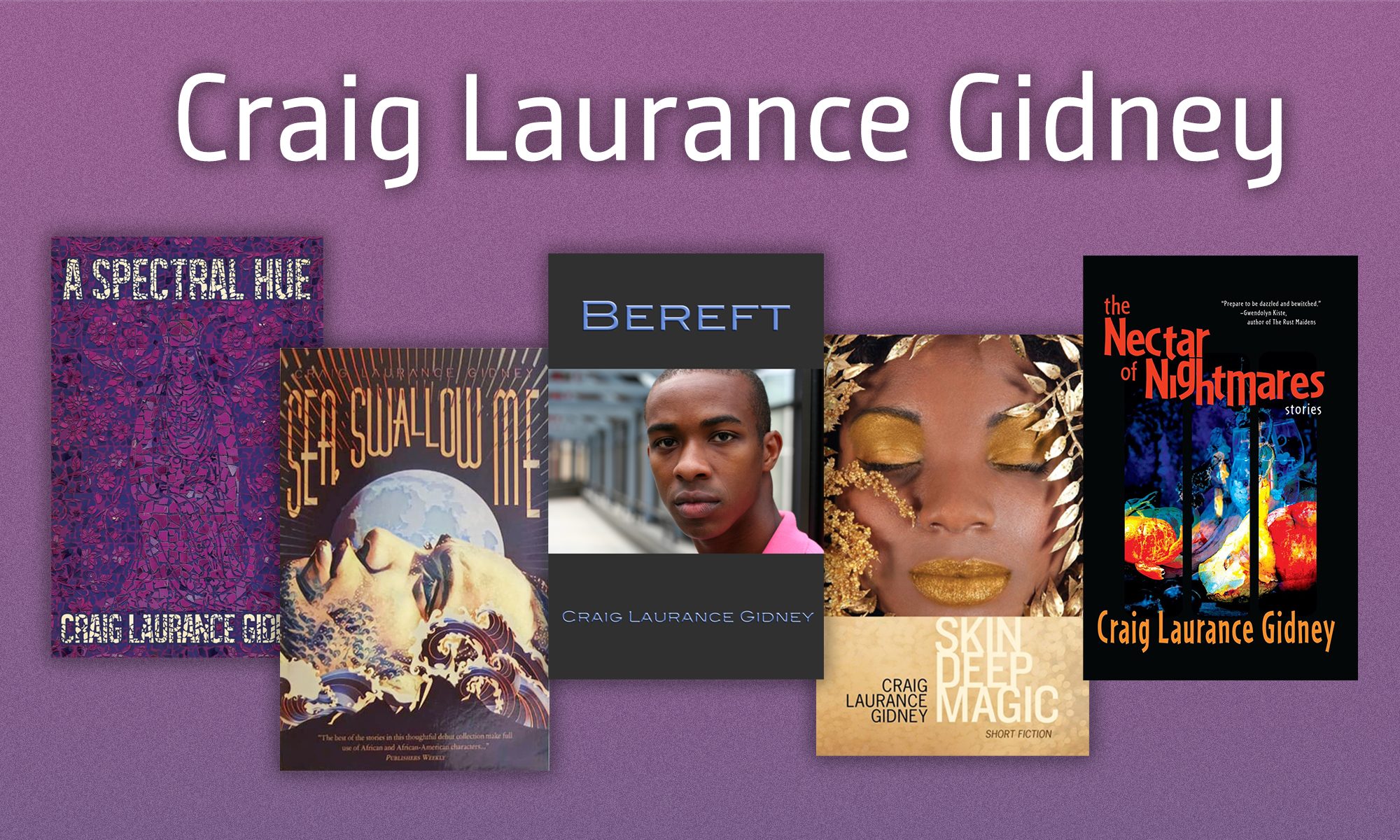
 Craig Laurance Gidney
You must be logged in to post a comment.