On Meghan McCarron’s “Swift, Brutal Retaliation”

Swift, Brutal RetaliationSwift, Brutal Retaliation by Meghan McCarron
My rating: 5 of 5 stars

This is a ghost story, but done as a realistic family drama. Think Cheever or Franzen rather than Shirley Jackson or Stephen King. The ‘horror’ is the disintraging relationships. The emotional brutality and unrelenting prose probably what placed this story on this year’s World Fantasy Award ballot.

View all my reviews

MUSIC REVIEW: Azam Ali & Loga R. Torkian, Lamentation of Swans.

Azam Ali & Loga Ramin Torkian - Lamentation of Swans: A Journey Towards Silence

Haunting Glossolalia & Hypnotic Music

Azam Ali and Loga R Torkian have created a beautiful tapestry of atmospheric sounds that meld together electronic, world and ethereal music seamlessly. Ali opts to sing wordlessly on this release, which unleashes her awesome range. My favorite piece is “Winter Forest,” which blends Indian-style chants with Bulgarian-style singing. Torkian’s music is richly immersive and dynamic. Strings and ouds stand out in a sea of ambient soundworlds. Percolating rhythms simmer beneath the minor key melodies. It is a masterpiece.
Give this a listen if you like the work of Dead Can Dance.
(Crossposted from Rate Your Music)

Dream Paralysis or the residue of nightmares

For the past month or so, I have had some vividly disturbing dreams, mostly due to a prescription drug that I am taking. The nightmarish atmosphere of this dreams appeals to my taste. One dream was about a movie starring Meryl Streep and Sally Field, who are ghosts watching over their husbands. Streep and Field both fall in love with each other. That is one of the more coherent dreams. Mostly, the dreams are collections of images that star people from my life, and are set in bizarre landscapes, such as a city of subterranean canals, or an Arctic tundra. It is a treat, to enter a world as rich and surreal as any film by Bunuel, Lynch or Peter Greenaway.

The Sleeping Gypsy, by Henri Rousseau

But there is a downside. These dreams are often full of suspense. Either something is chasing me (or my avatars), or there is a fight—mostly verbal, sometimes physical. At such junctures, I become acutely aware that I am dreaming, but I can’t wake up. It’s a kind of dream paralysis. The line between real and illusion is blurred. One time, I woke up and saw a boy-shaped shadow run right past my bed. Another time, the alien person I’d been watching turned to me and revealed his true, awesome appearance. He told me that he knew that I was watching him, and that I would never wake up. I did wake up, saying, “You’re real! You’re real!”

I will discuss this with my doctor. However, I must admit that I will be slightly disappointed if I have to discontinue the prescription.

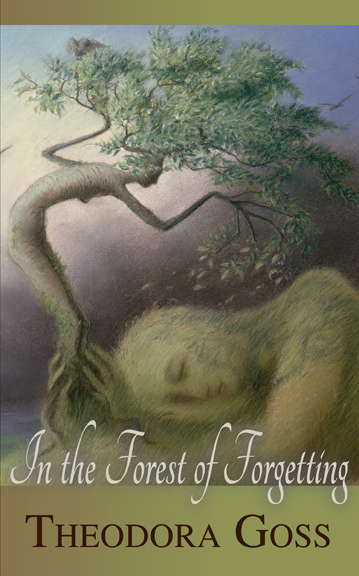
BOOK REVIEW: In The Forest of Forgetting by Theodora Goss. Postmodern Gothic fairytales.

In the Forest of Forgetting-Tangerine-lilac.indd

Since my colleague Theodora Goss announced a new ebook edition of her debut collection, In The Forest of Forgetting, I thought I’d share the review I did when the book was first released.

These delicately crafted, literary fantasies draw from Victorian morality stories and fairytales. The language is spare and considered, the tone dry spiked with mordant humor. Goss discreetly and elegantly updates the Gothic tale for postmodern times. Her “Emily Gray” stories concern a governess who grants children’s deepest wishes, at a terrible price. Three of the Emily Gray tales are here. The title story turns a breast cancer patient’s life into a magical fable. Other stories take place in Budapest, and have a flavor of Central European magical realism (“The Rapid Advance of Sorrow”), while “A Rose in Twelve Petals” fractures Sleeping Beauty into twelve different view points, including that of the spinning wheel that pricks the princess. Goss’s stories have dark themes, but she is too graceful a writer to be considered Gothic in the classic sense. Her painterly, humorous characters come alive, and her fantastical ideas are grounded in her character’s psyches.

Craig’s Adventures at the OutWrite Book Festival 2013

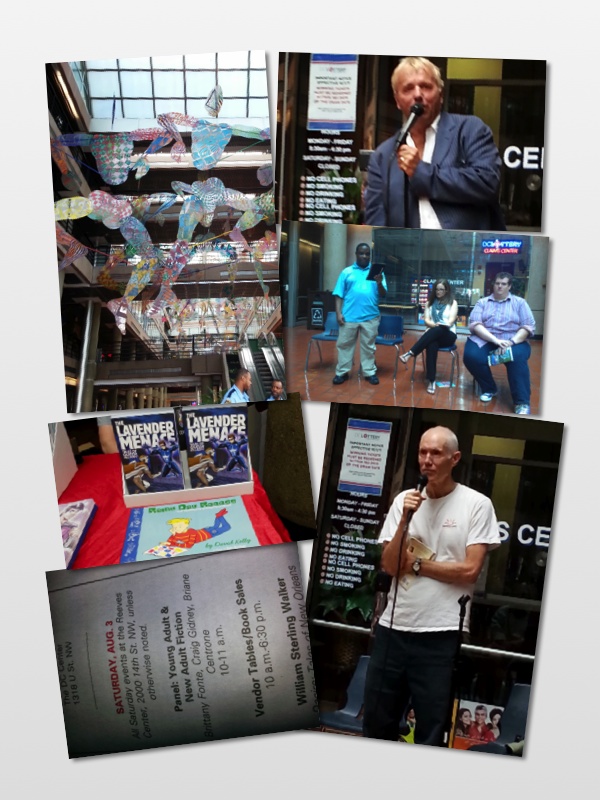
OutWrite BookFest 13

I had a wonderful time at the OutWrite Book Festival this year. The festival took place in the Reeves Center at 14th and U Streets. I took a picture of the beautiful mobiles that hang over the main hall. I was on the Young Adult/New Adult panel with two other authors–Brian Centrone (pictured) and Brittany Fonte (pictured). I stuck around afterwards to listen to various readings and panels, and I bought a copy of Tom Cardamone’s new anthology, The Lavender Menace: Tales of Queer Villany (pictured). I got to meet author Richard McCann (pictured) and legendary Violet Quill author Andrew Holleran(pictured).

The best part? My 82-year old mother came to hear me read! How cool is that?


BOOK REVIEW: Ice by Anna Kavan. Interior landscapes cast in ice.

IceIce by Anna Kavan
My rating: 5 of 5 stars

Kafka cavorts with Plath in this post-apocalyptic novel by the late Anna Kavan. A thermonuclear device has been detonated, and the world slowly awaits its fate as the planet freezes. In this new Ice Age, a nameless narrator searches for the girl he loves. But this isn’t just another version of love among the ruins. The imminent destruction of the world has set in motion the erosion of civilization. Random acts of violence and mass hysteria take over the cities, as the icebergs creep closer. The tragicomic game of political conquest takes place, starting in Scandinavia, led by the vainglorious character called the Warden. The narrator must vie with the Warden for possession of the girl, whom the Warden has abducted. The relationship between the narrator and the girl is not healthy in the least. He views her contemptuously, as a born victim, and believes that only he has a right to brutalize her. The girl herself–with her white-blonde hair and fragility, is a study in passive-aggression. She can be downright cruel. Several times during the novel, the anti-hero leaves her, only to take up the search again. The two men fight over the girl, without actual care for her; she is merely a pretty prop on which hang their aggressions and neuroses. It mirrors the futility of the political games, where the various powers vie to gain power over a dying world. There is a Kafkaesque sense of absurdity, along with that author’s existential despair of humankind’s folly.

These psychodramas take place amid a surrealistic, nightmare landscape. Kavan’s images of the encroaching ice are beautiful and deadly. It’s reminiscent (and perhaps even inspired) the arctic cover art of Radiohead’s ‘Kid A.’ The hallucinatory intensity might be due to Kavan’s drug use. Born Helen Ferguson, Kavan legally changed her name to a
character in one of her novels. She suffered severe depression and self-medicated with heroin, eventually becoming an addict. Like Plath or Sexton, Kavan uses bouts of depression to create brutal, enigmatic images. Her characters in this book are forces of nature themselves. The eternal war between the sexes is illuminated unsparingly–at odds with her delicate, mannered prose. ICE appears to document Kavan’s
brilliant, if unsettling interior landscape.

View all my reviews