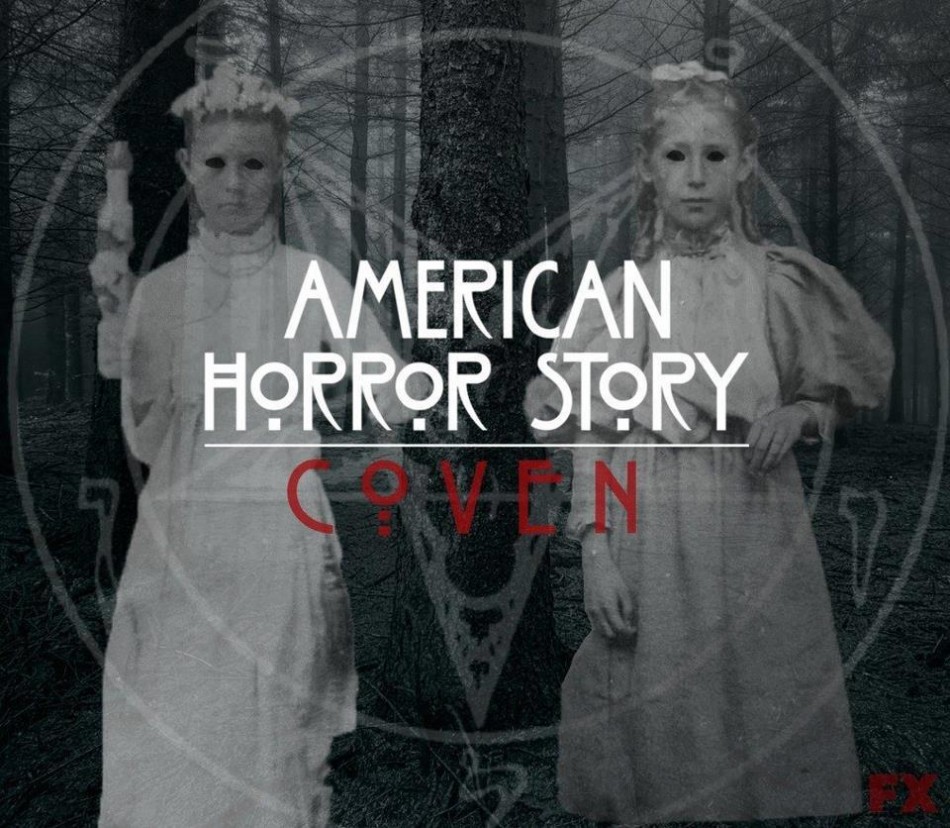
American Horror Story: Coven, Ep. 1; Grand Guignol, High Camp and the Spectacle of Black Suffering

I loved American Horror Story: Asylum. It was an excessive mess of Grand Guignol horror and over the top campyness. The new season, subtitled Coven, debuted last night. True to form,It was luridly disturbing. Race and rape and gendered tropes abounded; it is unclear whether the story is subversive or not. Catfights, and scenery-chewing competed with some really dark material. I had more than a touch of Post Traumatic Slave Syndrome watching the Madame LaLaurie sequence, where the black male body was tortured. Nightmare fuel =  the grindhouse horror of seeing flayed, punctured and surgically modified black flesh. Slave torture combined with high camp gave this opening gambit some serious mood whiplash. I hope that the story does give the enslaved a voice. At its best, horror can be cathartic. I hope that the subversive elements comes in soon. Angela Bassett as Marie Laveau and the rest of the excellent cast is not enough to erase the bitter afterimages of black suffering.

Coven

Othering or 50 Shades of Chocolate. Food as metaphor for skin-tone.

I admit-it often takes me a while to absorb certain concepts and critiques.
I was first made aware of the ways of describing skin tone as food (spices and coffee and chocolate) in a writing workshop. A fellow workshopped found an instance of it in my story. I filed the critique away for future examination. (There was a lot wrong with my story, so there was much to take on-board). The idea that describing people of color using food imagery didn’t bother me before. But since I was alerted to it, I began noticing it all the time.
•    My niece and nephew are biracial; they are often called “Cafe Au Lait” or cinnamon.
•    Personal ads often use various these descriptors. Mocha skin. Chocolate Princess. Honey.
•    And Urban Fiction and Blacksplotation Films are full of titles using those conventions: Chocolate Revenge. Coffee. etc.

A sexy cacao pod
A sexy cacao pod

Because it’s so ingrained, it doesn’t bother me enough to throw me out of the story. For instance, how many white protagonists are described as being rosy-cheeked, or apple-cheeked or with skin as white as cream/milk?  Tales of Snow White (and her occasional pal, Rose Red) depend on these surface descriptors.

Years after that critique, I began to see the point. Describing skin tone as food is kind of lazy. It belongs in the purple prose hall of shame, right along with “russet-maned,” and “chestnut tresses.” (Or “man root” and “secret flower” in describing genitalia). And it does bother me now in erotica (or porn).

Since objectification is one of the purposes of erotica/porn, it strips away all the obfuscation in other texts. It is clear that you are meant to (sexually) consume the Chocolate Mandigo; the Onyx Thug is supposed to dominate you, and his very blackness is part of what is supposed to make you feel dominated.

Food as skin-tone serves as a euphemism for othering.

Some texts are “grandfathered” in such uses.  (E.G., If an author is being deliberately archaic or in some cases, viewing a character through the lens of another character). But from now on, there will be no more Cocoa-Mocha-Coffee-Tea-Milk-Cinnamon beauties or hunks in my fiction. (Exceptions made for parodies and satires).

October 2013: New POC YA Release

Check out these new YA releases (October 2013). Curated by the librarian Edith Campbell.

Edith's avatarCotton Quilts Edi

I searched and searched until I could search no more! 7 days late, I had to get this up. So, please!! let me know what I’ve missed!

The other side of free by Krista Russell; Peatree Press 1 Oct  It is 1739. Young Jem has been rescued from slavery and finds himself at Fort Mose, a settlement in Florida run by the Spanish. He is in the custody of an ornery and damaged woman named Phaedra, who dictates his every move. When Jem sets out to break free of her will, an adventure begins in which Jem saves a baby owl, a pair of runaway slaves, and, eventually, maybe all the residents of Fort Mose.

While Jem and the other characters are fictitious, the story is based on historical record. Fort Mose was the first legally sanctioned free African settlement in what is now the United States. In 1994 the…

View original post 867 more words

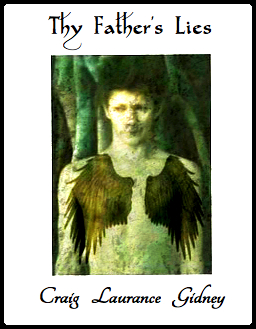
NEW FREE FICTION: Thy Father’s Lies by Craig Laurance Gidney

My story, Thy Father’s Lies, is now up on Wattpad. This is a postcolonial fantasy, a sort of prequel to Shakespeare’s The Tempest, told from the spirit Ariel’s point of view. Ariel is my favorite Shakespearean character, so in a way, this is a piece of fan fiction. Enjoy!


Thy Father's Lies
Thy Father’s Lies

MUSES: Danielle Dax, the Silver-Tongued Sibyl

“Up in the Big House, they’re branding niggers!” Danielle Dax gleefully warbles in her song, “Evil Honky Stomp.” A tape-loop of a sinister trumpet plods along with a collage of strummed and plinked sound effects. “Ugly boys with pious mouths,” she coos. The matter of race and the master narrative is skewered and laid bare in this song. Though, “song,” perhaps, is not really accurate. Dax’s first two albums are free-form assemblages of found sound, performance art, and dark parody. Her voice alternates between a high, piercing Kate Bush-like soprano and deep, dark Siouxsie-like contralto. Dax addresses a variety of subjects and issues with her bizarre surrealistic imagery. “Pariah,” a stark synthesizer-driven bit of cold-wave, addresses the racism faced by West Indian immigrants in London, and subsequent work addressed sexism, animal rights, and female genital mutilation. But Dax never took the role of scold. Rather, she was a silver-tongued sibyl, using allegory and arcane allusion.  Her first two albums, Pop-Eyes and Jesus Egg That Wept were all written, produced and performed by Dax by herself. They are a mash-up of various forms of music, ranging from Bollywood pop, madrigals, funk, synth pop and other hybrids. Dax plays, with varying levels of skill, saxophone, flute, sitar, banjo and toy instruments. Later work was more sophisticated, adding psychedelia and electronica to the mix. Her song about the Thatcher years, “Bad Miss M,” is a bouncy country-flavored tune.
Jesus Egg

Dax left the music scene after a bid to become more mainstream failed to take off.  Marketing was probably an issue. Dax had all the makings of an alternative pop star, with her appealing voice and stunning good looks. But her vision was too wacky and uncategorizable. Was she Goth? New Wave? Pop? World Music? Would Siouxsie fans find her too pop? Would Laurie Anderson fans find her too dark? Ultimately, a long bout with illness effectively ended her music career. Today, Danielle Dax (nee, Gardner) is a landscape architect who dabbles in music.