REMINDER: I’ll be reading at the Lambda Literary Finalists Showcase this Friday

Join finalists of the 27th Annual Lambda Literary Awards for readings of their nominated works at the Leslie-Lohman Museum of Gay and Lesbian Art . All readings are free and open to the public.

Confirmed readers: Timothy Liu, Michael Carroll, Ellen Bass, Dia Felix, Jameson Currier, Craig L. Gidney, Michael Broder, David Swatling, Ron Suresha, Rafe Haze, Kelly Cogswell, Susan Kuklin, Sean Strub, Vinton McCabe, Bob Hofler, Rob Smith, Shelly Oria, Dominic Ambrose, Sheela Lambert, Philip Gefter, Ann Herendeen, Stephen Morrison, Alexis De Veaux, Tim Federle, Heru khuti, Andi Marquette, R.G. Emanuelle

The reading starts at 6:30pm

The place is: Leslie-Lohman Museum of Gay and Lesbian Art 26 Wooster St, New York, New York 10013

Hope to see you there!

The Elephant in the Room: On the Hugo Awards

Screen Shot 2015-04-13 at 9.02.14 AM

Much has been written about the current unpleasantness in the Science Fiction and Fantasy fan community. The TL;DR version is that two groups of right wing blowhards ballot stuffed the Hugo Awards. The first group uses dogwhistle language—they are against “Affirmative Action Fiction” (works that feature trans or gay or ethnic minorities characters, and believe that women should be a hero’s reward). The other group is not subtle about about their contempt. They include a White Supremacist editor and an author known more for his unhinged homophobic rants is nominated six times(!) The message they are sending is quite clear.

Other people have written about this issue—including George R.R. Martin and John Scalzi and Mary Robinette Kowal. I agree and support their efforts and suggestions.

But here’s the thing for me. and frankly, the elephant in the room.

I don’t feel safe. I’ve been called the n-word and the f-word in public more times than I can count. And where I live is perhaps the bluest of blue cities—Washington DC. I have no desire to pay my hard earned money for the pleasure of being insulted by a bunch of people who despise my very existence.  Elimination rhetoric is only a hairsbreadth away from violence. I’ve seen it way too many times. I don’t think I’m the only one who feels this way. I’ve got to wonder about how many gay people, or fans of color will actually show up to Worldcon, and frankly, any other con as long as these toxic people are going to attend.

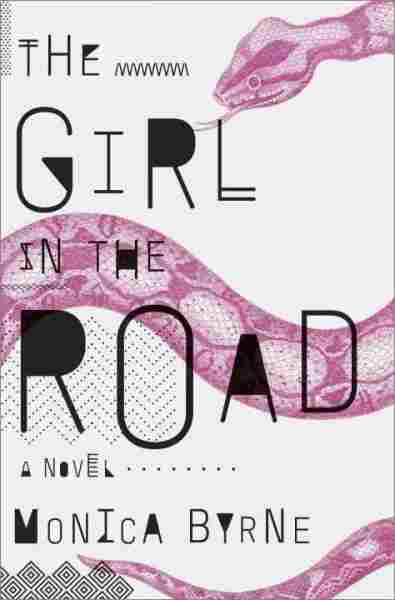
BOOK REVIEW: The Girl in the Road by Monica Byrne. This visionary novel’s Tiptree Award honor is well-deserved!

9780804138840_custom-2db3dd196e9404af7d78ed7129bbccff56252bf3-s1200-c15

A snake bite opens The Girl in the Road, a novel that seems to have all of the hallmarks of a thriller. The book is set in the near-future, a time where the West’s power has waned and India and Ethiopia have become world powers. Technological wonders, such as sub dermal implants and new energy sources, abound. Political turmoil still exists, and the heroine Meena believes that the death of her lover and the poisonous snake found in her bed are connected to a terrorist organization. Meena inexpertly treats her wounds, and starts running. She is being followed by a young barefoot woman; she sees the young woman in crowds, staring at her, relentlessly on her trail. The narrative pace is quick and full of feverish imagery. Told in first person, present tense, Meena’s story manages to mix, in near perfect equilibrium, her suspenseful flight, the world she lives in (minus the dreaded InfoDump technique sometimes employed by Science Fiction writers), and her character. We learn that Meena has been raised by her grandparents, due to the fact that her own parents died in mysterious circumstances that may or may not have to do with the terrorist organization that is pursuing her. We also learn that Meena is polyamorous, with a broken trail of lovers of both genders, and her one true love is a transgender/genderqueer woman. The breathless narrative of the first part ends with a stunning cliffhanger.

Then we are thrown into the first person narrative of another woman named Mariama. Her narrative takes the form of a long, incantatory letter to another woman, named Yemaya. Mariama recounts her first few memories. She was born the daughter of a sex slave, in extreme poverty in India. Upon the death of her mother at the hands of the slaveowner, she runs away. She eventually becomes a stowaway on a truck traveling to Addis Ababa. Before then, she has her own experience with a snake. Mariama eats a piece of sea snake which gets lodged in her chest, and bothers Mariama during times of fear and stress. She imagines the fragment of sea snake as a living entity within, which she calls the kreen.

The rest of the novel alternates between the two narratives. Meena, the woman of the future, eventually heads toward Ethiopia, in hopes of finding out why her parents were murdered. As she travels on the Trail, a kind of high tech ocean-based energy source, Meena loses her grip on her sanity. Mariama, who exists in some earlier but undefined time, begins her own trip to Ethiopia, where she meets the mysterious Yemaya, a beautiful fugitive who has her own agenda. The relationship between the two women, separated by the span of years, slowly becomes apparent.

But, in spite of all the trappings of a speculative thriller, The Girl in the Road is not a plot-driven novel. It belongs to a micro-genre of Visionary Fiction, the sort of work championed by Steve Erickson, Helen Oyeyemi, or Angela Carter. The subtext of the novel is as intricately crafted as the foreground. It is a novel that uses the conventions of genre fiction without being bound to them. The novel is allusive and illusory, full of dream logic, and references to mythology. The images of roads and serpents flow through both women’s stories. Meena, for instance, chooses the name Durga (an avatar of an Indian goddess) as an alias, and Mariama interacts with a woman whose name is Yemaya (an orisha, or pan-African goddess of the sea).

Byrne’s prose is rich, poetic, and musical. Many sections deserve to be read aloud. Readers should also know that this a very adult novel—both Meena and Mariama’s sexuality play an important part in the story and define their characters. The world Byrne creates is marvelous, and like the best speculative fiction, it manages to both have a sense-of-wonder and also serve an as allegory. The interplay of the personal and the political, myth and technology is woven throughout this novel.

Other reference points: Toni Morrison’s magical realism and Afro-Canadian Caribbean fantasist Nalo Hopkinson’s novel The Salt Roads, and Joanna Russ’ The Female Man. The Girl in the Road is a mythic quest novel masquerading as a futuristic SF novel.

My author interview with Ms. Byrne is forthcoming.
BOOK BIRTHDAY: “The End of the End of Everything” by Dale Bailey

endofend_cover_web-205x300

Happy Book Birthday to my colleague (we did a workshop together) Dale Bailey’s new collection of speculative fiction, The End of the End of Everything. His work is filled with poetic, Bradburyesque prose, keenly observed characters and inventive plots that range from time travel stories to alternate history to apocalyptic horror.

My author interview with Bailey will appear sometime soon.

My interview with Forrest Aguirre, author of “Heraclix & Pomp”

A1ppOpWTzSL._SL1500_

The Washington Independent Review of Books posted my interview with Forrest Aguirre, whose excellent historical fantasy novel, Heraclix and Pomp: A novel of the Fabricated and the Fey deftly weaves a tale of esoteric magic, horror, whimsy and romance against the backdrop of the late days of the Holy Roman Empire.

You can read the interview here.

The Wiz is coming to TV as a live broadcast play!

NBC will be doing a live broadcast of The Wiz in December. I loved the play and the movie (which was a huge flop). The movie introduced me to the legend that was Lena Horne, who bought the house down with her rendition of “Home.” Lena as Glinda the Good Witch features in my coming out/ diva worship fable, “Circus Boy Without A Safety Net.” Here’s hoping that NBC doesn’t make a mess of the show as they did with Peter Pan!

Screen Shot 2015-03-30 at 7.16.58 PM


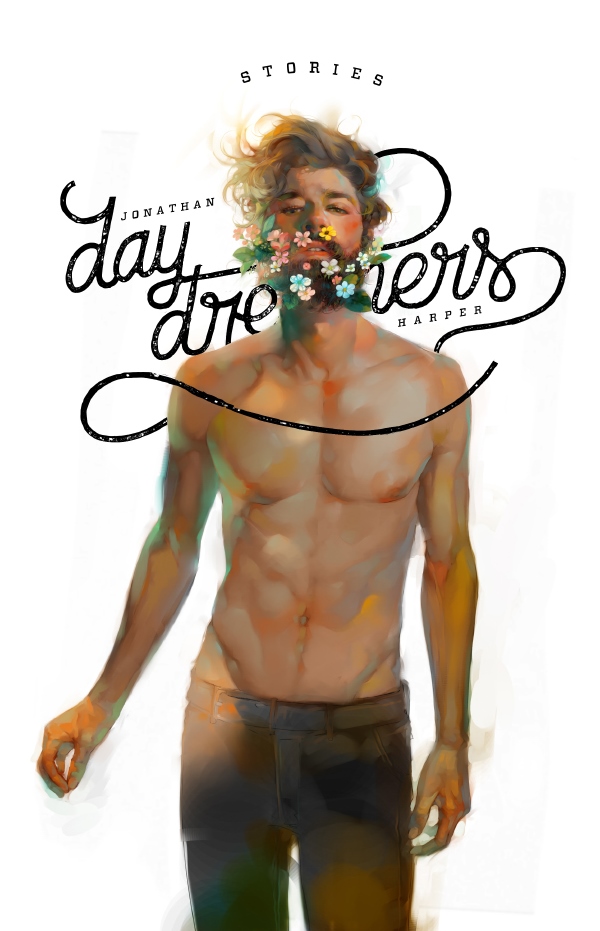
Book Birthday: “Daydreamers” by Jonathan Harper

Happy Birthday to my friend, colleague Jonathan Harper’s debut collection, “Daydreamers.” It’s been getting some great buzz. Harper and I not only share publishers (Lethe Press), we also live relatively near each other (DC Authors represent!). I’ve heard him read from the collection and can assure you that his fiction is full of humor, and excellent characterization.

Daydreamers_Cover


EVENT: Lambda Literary Awards Finalist Reading in NYC (April 24)

I am participating in a group reading of Lambda Literary Finalists on April 24th in New York City.

WHERE: Leslie-Lohman Museum of Gay and Lesbian Art 26 Wooster St, New York, New York 10013

WHEN: 6:30 PM

Confirmed readers: Timothy Liu, Michael Carroll, Ellen Bass, Dia Felix, Jameson Currier, Craig L. Gidney, Michael Broder, Thomas McBee, David Swatling, Ron Suresha, Rafe Haze, Kelly Cogswell, Susan Kuklin, Sean Strub, Vinton McCabe, Bob Hofler, Rob Smith, Shelly Oria, Dominic Ambrose, Sheela Lambert, Philip Gefter, Ann Herendeen, Stephen Morrison, Alexis De Veaux, Tim Federle


GoodReads List for Speculative Authors of Color

Pagan Poetry: Story Notes for “Inscribed”

When I was in fifth grade, we studied Greek Mythology . The text we used was Edith Hamilton’s Mythology. I think the teacher cleaned-up the myths up,  taking out all the naughty bits, but she sparked my interest in mythology in general. Because of this interest, I got another, more comprehensive salacious book at a yard sale for 25 cents.  That was the birth of my obsession.

What cemented my obsession, though, is an obscure children’s novel, called The Gods in Winter by Patricia Miles. The teacher read the novel aloud to us a couple of times a week. It’s set in 1950s Britain and retells the story of Persephone and Demeter. The POV characters are kids, after their parents hire a mysterious nanny who always seems to be looking for her lost daughter. The mythic echoes in the story are full of wonder and terror, I remember being haunted by expertly invoked angst of the nanny (who, of course is Demeter/Ceres in disguise).

“Inscribed” is a kind of skewed homage to that book. It’s set in the present-day, and concerns the esoteric research of Byron Davies, a kind of Robert Graves-styled academic, and the legacy he leaves for his son, Simon, who isn’t interested. It’s a kind of Oedipal tale about fathers and sons, betrayal and alchemy. The figure of Hermes—as psychopomp, magician and trickster—is woven throughout the story.

The Gods In Winter by Patricia Miles