Author of "Sea, Swallow Me & Other Stories" (2008 Lambda Literary Finalist); "Skin Deep Magic" (2014 Lambda Literary Finalist); "Bereft" (2013 Bronze Moonbeam Award and 2014 Independent Publishers' Award) "The Nectar of Nightmares" (Dim Shores Chapbook) and A Spectral Hue (2019)
This year, I am sending out a Holiday Card that has a free holiday-themed story. I am sending this off via snail-mail. If you would like to be on the mailing list for this story/card hybrid, please send a message to clgidney@gmail.com with your postal address and the words: Holiday Story in the subject line by December 15 at the latest.
This year, I am sending out a Holiday Card that has a free holiday-themed story. I am sending this off via snail-mail. If you would like to be on the mailing list for this story/card hybrid, please send a message to clgidney@gmail.com with your postal address and the words: Holiday Story in the subject line by December 15 at the latest.
I want to like the films of Lars Von Trier more than I do. I admire that he has a singular vision, and that he has the audacity to disturb his audience. His work is difficult and he explores the darkest reaches of the human experience. But there is always something about his work that irritates me, that stops me from fully embracing his work.
I saw MELANCHOLIA last night. It’s an intensely personal meditation on Depression and self destruction. Justine’s descent into a depression is beautifully realized, and I would tell anyone who doesn’t believe Depression is a genuine medical condition to look at the first part of the film. The actress Kirsten Dunst portrays Justine’s pain as physical (which Depression can be) as well as mental. Her face mimics joy, but she’s really a husk inside, a tangle of psychic scars. The second part of the movie, about the destruction of the earth, isn’t as strong. Firstly, because the narrative shifts its focus from Justine to her sister Claire. The scenes that show Justine’s reactions are more powerful. She seems to embrace the end of the world. There’s a scene where she bathes naked in the spectral blue glow of the planet Melancholia that is just gorgeous.
The second part of the movie also has all of the features that annoy me about Von Trier’s work. His characters act in ways that don’t make sense. When Kiefer Sutherland’s character kills himself, it comes out of left-field. This sudden out of character behavior is a hallmark of his films. In DANCER IN THE DARK, Selma murders a man—out of left field. In DOGVILLE, Nicole Kidman’s character goes from being unbelievably passive (getting raped by an entire village!!!!) to committing genocide. The writer in me sees that as lazy, if not bad writing. Mood whiplash is one thing. Character arc whiplash is another.
To me, MELANCHOLIA is half of a masterpiece. He should really hire a script doctor (me!) for his next outing.
My YA novel, Bereft, has been nominated for an 2014 NAACP Image Award in the Outstanding Literary Work: Youth/Teen category. It’s a great honor, both for me and my publisher, Tiny Satchel Press. Keep your fingers crossed for me!
Over-the-ear headphones plugged into my computer, listening to a White Noise generating program. I used to listen to ambient music (and sometimes, I still do), but I often found that even instrumental music could be distracting. I use Scrivener as a word processor, with the full screen option on. After the session is finished, I turn on the Speak Aloud function to figure out the rhythms of the prose.
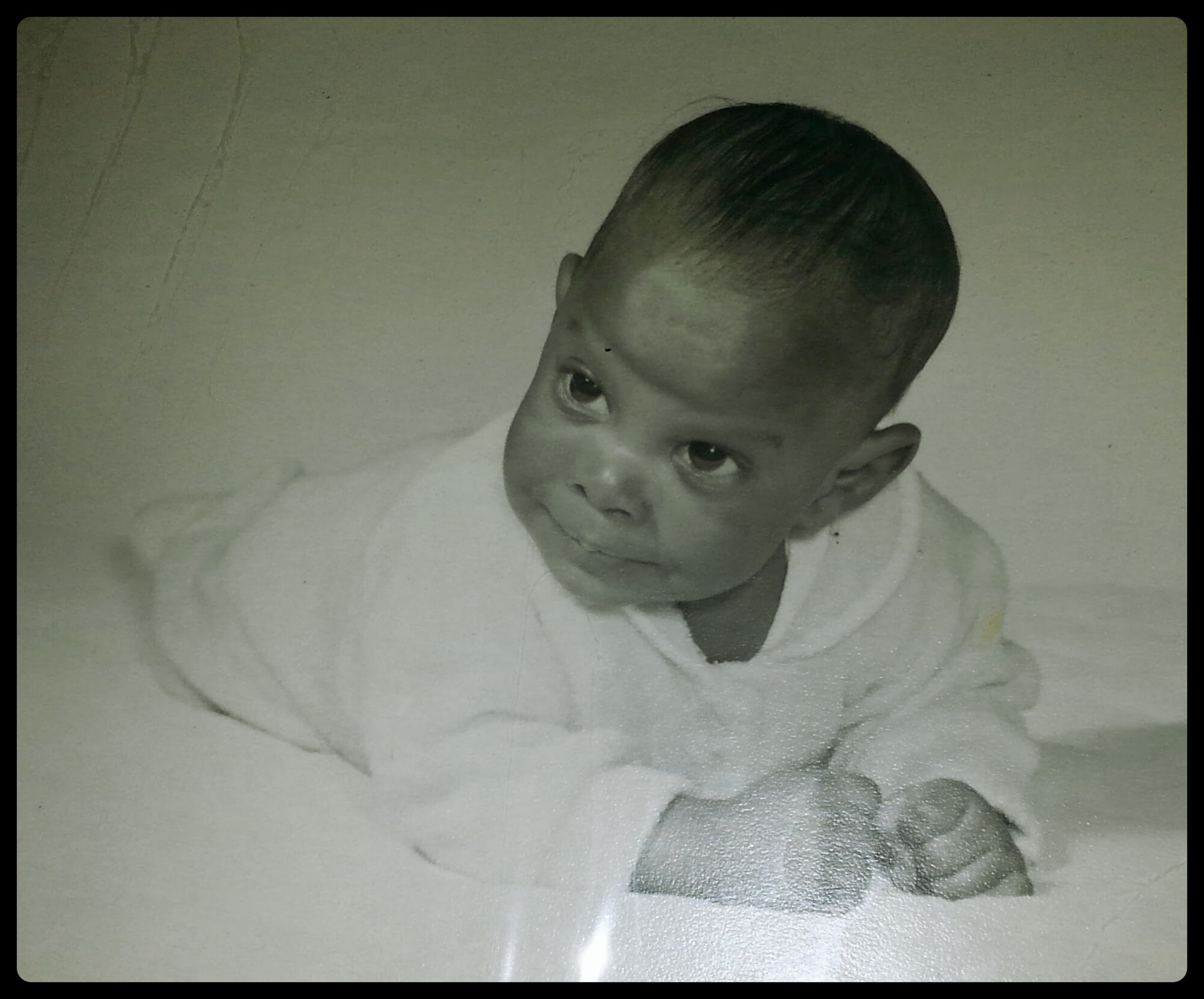
I found this alarming picture of me, aged 4, when I was going through old photo albums. In one context, it could be considered quaintly racist: a young black boy performing for some random white people.
Here’s the story (which I don’t remember). The time is the early 70s (check out the pianist’s beehive hairdo!). The place is Florida, during a family vacation. Apparently, there was some dance contest. According to my mother, I spontaneously jumped up out of the audience and started dancing. I won an award of some kind, a loving cup that has been long lost. Little me is full of pride and joy at winning award. I miss that little boy’s sense of excitement.
When I was in Junior High, I interned one afternoon a week at the Chesire Cat Children’s Bookstore. Located in upper Chevy Chase, on the DC side, it was like heaven for a nascent bibliophile like me. (Side note: my version/vision of Heaven would be an endless library of books). The highlight of my time there was when one of the favorite authors did a reading. I was “off the clock” at the time, and to me, writers are rock stars. I was nervous as I presented my copy of her then new book, gushed how much I loved her writing. Then she said something that kind of disappointed me. (And I learned that all idols have feet of clay). She remarked that it was interesting that I was even buying her current book, because it was written for girls.
I remember walking away from that meeting feeling a mixture of “So what?” and a feeling of shame. Junior High is a caste system, where gender roles are rigidly proscribed. I already had been the victim of bullies and if I wasn’t called “faggot” then, it was only because the kids didn’t know the word. Fortunately, I went with the first feeling, and read the “girly” book. And was quite pleased that I had. The novel was one of the author’s best and I heartily recommend it to anyone of any gender for insight into sibling rivalry.
The issue of gender and reading is something that comes up constantly. Every now and then, some (g)as(s)bag will make a fatuous pronouncement about women authors, or claim that they can tell the difference between men and women’s writing. I can’t. I have read slush for both fiction markets and for admissions committees for writing programs, and when you strip away the name, I can not tell. Some of the most “flowery” descriptive language comes from men, and some of the most “cold” and cynical writing comes from women. This goes across genre. In my experience, the reason that people “gender” writing is because they find one gender’s writing inferior and use such words as “sentimental” and “relationship-oriented” to steer “serious” or male readers away.
This is a terrible idea, and boys will miss out on some great literature. If I had followed reading along “appropriate” gender lines, I would have missed books by LeGuin, Joan Didion,Flannery O’Connor, and Alice Walker. Toni Morrison’s underrated novel Tar Baby was, at one point, marketed as Women’s Fiction, since it featured a love story. If I had paid attention to that, I would have missed the rich, mythopoetic subtexts in the novel.
As I grew, I read everything that interested me, whether or not it was written for boys or for girls. One of my favorite books was The Forgotten Beasts of Eld, by Patricia McKillip. When I was researching the author in the library (to write a fan letter), I came across a bit of criticism about the novel being ‘girly.’ It was ‘girly,’ presumably, because the main character is a powerful female wizard who isn’t an ass-kicking action girl. “So what,” I said to myself, thinking that the critic was afraid of girl-cooties and therefore had missed the point of the story.
If women authors have girl cooties, I want to collect said cooties.
The cover of the new Glasser release, Interiors, shows frontwoman/conceptualist Cameron Meslrow dancing in a reflective sea of liquid metal. She appears to be molding it into a shape, even as she is being distorted. It’s an appropriate image for the music within. The music is meticulously crafted on computers, full of sound effects that beep, whir, burble, and whoosh; it embraces its artificiality. Meslrow sings the body electric over these dynamic mechanical compositions with a high, girlish voice that somehow manages to be detached and vulnerable at the same time. Song titles center around processes or shapes: “Dissect,” “Divide,” “Window,” “Forge,” “Landscape.” It sounds like a catalog for a minimalist art installation. The lyrics deal with abstract concepts, like isolation and the act of creating art. While there is a Laurie Anderson aspect to Meslrow’s delivery (the icy detachment) her melodies and the rhythms are catchy. Interiors bridges the gulf between high concept art and ear candy. Glasser makes art pop that’s actually fun.
If the American spirit were to be personified, she wouldn’t look like Lady Liberty. She would be a woman of color with scars on her flesh, calligraphic tattoos of pain and suffering. All of the progress and expansion of the U.S. has been gained through the genocide of the indigenous population and slavery. (Not to mention the initial hazing period that many immigrants still go through). This sordid history is sometimes hidden or romanticized. When I was a student at a mostly white high school, I distinctly remember my 10th grade history teacher made a point that some masters loved their slaves and treated them like family. Mind you, I was not militant back then. Far from it. But I knew that I was being feed a line. I recall thinking to myself, why does she want to believe that so damn much? This desire to turn the matter of slavery into a Gone With the Wind fantasy of crinoline hoop skirts, palatial mansions and sassy, loyal mammies most recently surfaced during the Paula Deen affair.
Yesterday, I saw Twelve Years a Slave with my mother. That movie should be required viewing for all Americans. The scenes of torture are beyond horrifying. They are soul-destroying. I found myself wishing that the black characters would all commit mass suicide. The movie goes beyond the whippings and dehumanization. It illustrates the mindset and the methods to bolster the Peculiar Institution. The enslaved had to be constantly terrorized and believe that their lives were expendable in order to maintain the status quo. The beatings in this film are relentless and graphic. Solomon Northup encounters two masters during his enslavement. The ‘kind’ master simply lets his overseers do his dirty work. In the end, Northup is sold to the ‘bad’ master, who has a more hands-on approach. Both masters are nominally Christian, with the second one given to bouts of religious mania, even as he abuses his ‘property.’ The mistress of the house wears outfits to rival Scarlett O’Hara’s, sumptuous gowns of silk, velvet and lace. But beneath the surface trappings of grace, she has a sadistic streak. Black people were things, beasts of burden to these ‘people.’










 Craig Laurance Gidney
You must be logged in to post a comment.