On Lisa Germano’s “Cry Wolf.” (Haunting Music)

Her voice is a bruised, angry little thing, wispy and gravelly at once. It isn’t a pretty voice by a long shot, one that can’t sustain a note for a long time. Her lyrics are stream-of-conscious ramblings, perhaps written at the behest of a therapist, full of self-deprecation and caustic wit. The music is the same, vague, desultory quality, full of reverb and tremolo, with stray bits of violins colliding over simple guitar riffs. Lisa Germano’s music is an acquired taste. It’s uncomfortable and confessional. There are no real hooks per se; it reveals its charms gradually. My favorite song of hers is ‘Cry Wolf.’ It’s written from the point of view of a date-rape victim. The central theme is in a minor, eerie key and very hypnotic. Blurry background voices ooo over the rippling guitar as Germano in lays bare the rhetoric of date rape: Girl who wants it but has no clue/ She’s says she’ll give it, cry, cry wolf/A change of mind in a back seat or that dirty room /They say she got just what she wanted. It’s the center piece song on her concept album, Geek the Girl, about an awkward girl’s misadventures in love.

BOOK REVIEW: The Indigo Pheasant by Daniel A. Rabuzzi. Visionary feminist fantasy.

The Indigo Pheasant (Longing for Yount #2)The Indigo Pheasant by Daniel A. Rabuzzi

My rating: 3 of 5 stars

The Indigo Pheasant is the second and final volume of the visionary fantasy Longing for Yount sequence. It’s a very different book than the preceding volume, mostly because it much more an alternate or ‘hidden’ history novel than the relatively straight forward portal fantasy of The Choir Boats. The book takes place in the London of 1817, and concerns the aftermath of the trip to the otherworldly Yount. The main narrative thrust concerns the building of a new ‘choir boat,’ the titular Indigo Pheasant.

It’s a whirling kaleidoscopic narrative, that includes excerpts of letters and other documents, in addition to more traditional third-person exposition. In this way, the work alludes to 18-Century narrative tropes. First, the bad news: it doesn’t always come together and there are significant pacing issues. Several subplots pop up that are given the short shift. It’s a mash-up of several types of fiction at once. Romantic melodrama, financial woes, and metaphysical dark fantasy all vie for attention. It’s overstuffed, multilayered and confusing. Mood whiplash abounds, as it moves from a romantically tragic, Thomas Hardy-like subplot (think Tess of the D’ubervilles) to a postcolonial revisionist treatise on the treatment of women and minorities (think A.S. Byatt or John Fowles) to a pseudo-religious allegory, a la C.S. Lewis. It’s an ambitious, high-wire act of a novel.

The ex-charwoman Maggie is the novel’s focal point; she’s an African-American mathematical genius who finds her way in the fold of the McDoon family, the stars of the previous novel. She is, in fact, a distant relative. Maggie is a headstrong woman who faces her problems head-on, whether they be racism, sexism or facing the Big Bad—the fallen angel Strix. Whenever Maggie is ‘onscreen,’ the novel comes alive. The same goes for the appearance of Strix, who shape-changes into a demonic owl. The fallen angel, in the way of most incarnations of the Devil, gets the best lines. At one point, he says to Maggie:

“No one has heard of you, except in a backhanded way; they view you (to the extent they see you at all) as a freak, a ‘Calibanna’ who has learned a few tricks for the parlour.”

Unfortunately, the adventures of the rest of the McDoon, particularly the heroine Sally, tend to be overshadowed. Sally, who was stronger in The Choir Boats, becomes mired in tragedy, and becomes a second fiddle to Maggie, as do the rest of the rather large cast.

Rabuzzi’s language is evocative, but at times, overwhelms with its erudition and gives way to full-on purple passages:

Luminescent shadows piled—oozed—into Sally’s attic-room. Grey dimmed to rust- and umber-mottled colors of the cricket’s carapace, with an under-tint of jade, forming and reforming in the corners of the chamber.”

This kind of exalted, high style language works during the scenes of sorcery, which are chilling. Elsewhere, it is overly fussy and stalls the narrative pace. This is a book for word-lovers; Rabuzzi seasons his sentences with swarms of underused and obscure words. But to other readers, the word choice becomes confusing and over-decorous.

At its best, The Indigo Pheasant and the Longing for Yount sequence is one of the most original fantasies in recent years. The magic system–based on mathematics and music theory, is a marvel of an invention. The feminist subtext is infused throughout, from the ‘real’ world scenes to the trippy Gnostic/ Blakean cosmology that under grids the narrative.

View all my reviews
The specter of Gratuitous Diversity and other fictions

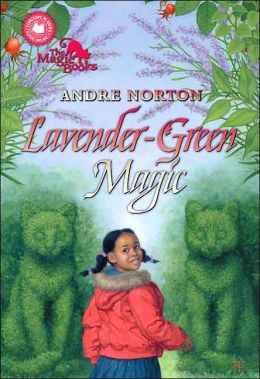
When I was 3 apples high, I went to my mostly white school’s library, and chanced upon a book with a title that intrigued me, Andre Norton’s Lavender-Green Magic. I read it in 2 gulps, not only because it had witches (a perennial favorite subject of mine), but because it featured African-American (or in the parlance of 70s, Afro-American) kids living in a mostly white town. My mind: blown. Up until then, all the fantasy book I’d read either had pseudo European characters or talking animals. I loved the idea that someone who had an experience similar to mine could have magical adventures like those kids in Edward Eager books or the Narnian adventures.

lavender-green magic

A few years later, in the full swing of adolescent angst, I can upon my older brother’s copy of Dhalgren, by Samuel R. Delany. (The iconic paperback version, the one with the engorged sun showing through a destroyed cityscape). Thumbing through it, I read about characters who had unique and somewhat underground sexual appetites—and their sexual identities were integral parts of themselves. Again, my mind was blown. Gays and other sexual minorities were just people….in a science fiction novel!

I bring these examples up not only to talk about the importance of diversity in speculative fiction, and also, to challenge a common strawman argument against it. A little background: the author Alex Dally MacFarlane wrote a provocative article entitled Post-Binary Gender in SF:Introduction on Tor.com, an inaugural post of a series which promises to examine SF that studies that issue. I read the piece, enjoyed it, and moved on. Then I saw, much later (via Jim C. Hines’ blog), that MacFarlane’s article (predictably) rattled the nerves of certain quarters of the SF community.

The chief complaint (once you wade through the de rigueur cries of PC Fascists/ GroupThink/Thought Police) is the concern about Gratuitous Diversity.

It’s the idea that having a cast of characters that reflects the diversity of humanity will automatically result in Aesop fiction full of Sally (or Simon) Soapboxes. I have yet to read a piece of fiction where giving a character an idiosyncratic and unique background (ethnic or sexual orientation or, in MacFarlane’s essay, a non-binary gender orientation) actually destroys the work. Including ‘popcorn’ fiction. One of my Clarion instructors, Pat Cadigan, stressed the importance avoiding ‘default’ mode protagonists: Joe/Jane Q. Public and his/her various incarnations as Mary Sue or Gary Stu. (It wasn’t a commandment, either—rather, Cadigan meant it as one more tool in the authorial kit). If a character is a Sally (or Simon) Soapbox, and the fiction has the quality of an Afterschool Special, that’s a failure of execution. The spectre of Gratiuitous Diversity is mostly just a strawman. (I’d love to see examples of a work of fiction that’s improved by flat characters). I say “mostly,” because I think that certain tropes and stock characters—the Noble Savage, the Magical Negro, for instance–arise from deformed Aesops and well-intentioned fiction. And there’s the case of a certain wizard (we’ll call him ‘Rumblesnore’) in famous series posthumously (and post-serialization) outed as gay, which was arguably shoehorned in. (I remember the articles/blog posts amongst a certain cohort that claimed the author was courting the politically correct crowd). But even then, Rumblesnore being off-screen gay doesn’t hurt the his character or the story; it was the execution that was lacking.

There is no such thing as Gratuitous Diversity. There’s just poorly executed fiction.

BOOK REVIEW: The Fountains of Neptune by Rikki Ducornet. A criminally unknown author of literary fantasy

The Fountains of NeptuneThe Fountains of Neptune by Rikki Ducornet
My rating: 5 of 5 stars

“The Fountains of Neptune” is a dream-like, dense anti-novel that uses dreams and myths to discuss the perception of history, memory, and loss. Like the novels of Jeanette Winterson, “Neptune” does not rely on standard plot structure. The basic story is two-fold: young Nicholas grows up in preWWI France, a precocious nine year old living a town of eccentric storytellers. A traumatic event causes him to go into a coma. He wakes up 50 years later, after both World Wars, having spent his life in dreams. The second part of the story concerns his relationship with his therapist, Dr. K, and her attempts to rebuild his memories. But it is Ducornet’s unlimited imagination and gift for fabulation that is the true star here. Her images are sharp, eerie, humorous — and always haunted. Ducornet leads us into the labyrinth of the subconsious — complete with its demons, half-heard conversations, and golden memories — but leaves no trail of twine or breadcrumbs to find our way out. Phantom ships, enchanted seascapes combined with idyllic countrysides and the philosophical world the Spa where Nicholas and Dr. K have their metaphysical relationship make this one labyrinth you won’t want to leave — Minotaurs or not.

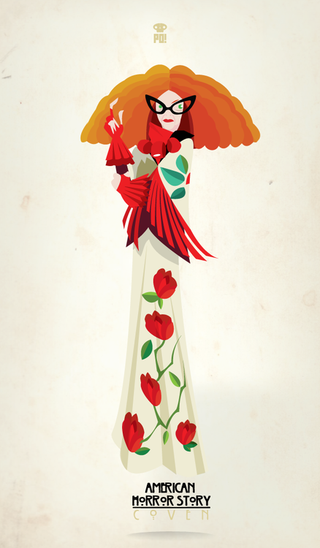
American Horror Story:Coven’s lasting contribution to TV History–the odd bird Myrtle Snow

American Horror Story:Coven comes to an end tonight. It was a hot mess of season that just cohered into a bigger hot mess. Marie Laveau! The Axe Man! Madame LaLaurie! Stevie Nicks! It had bitchy catfights, necromancy and scenery-chewing turns by most of the actors involved. It played, inexpertly and ineptly, with issues of racism and misogyny, with provocative imagery that lead nowhere. The world-building was weak-sauce (is the Axe Man a ghost or not? Why is Voodoo different from witchcraft?). Characters were under utilized or disappeared entirely for no apparent reason. In short, the show suffered from lazy writing.

But.

It was addictive. The characters–completely over-the-top–were wonderfully created. And AHS:Coven is certainly will go down as  one of the most campy programs on television. It had some amazing dialogue and one-liners, mostly delivered by the actor Frances Conroy, whose role as the eccentric Myrtle Snow was the secret weapon that barely held the show together.

Myrtle Snow is a character that will launch a thousand drag queens.

The eccentric Myrtle Snow.

Tokens or Intruders: The issue of Diversity at SF Conventions

The talented and provocative Jim C. Hines posted a thread on his Facebook about increasing diversity at SFcons. The responses to that thread were for the most part positive about the issue, but, predictably, there were a few ‘trolls’ who raised the de rigueur whining about quotas, political correctness, and, most egregiously, the notion that ‘urban blacks’ don’t read, most of all, speculative fiction.

To that last claim: I live in a largely black city (Washington, DC) and I take public transportation. I can assure you: ‘urban blacks’ read. On buses and subways, a book-reading black person isn’t a Unicorn who only comes out during nights when the moon is blue. If someone is reading something I’ve read—and they aren’t completely tuned out to the world—I will say something to them. “Great book!” or “Have you read <insert name of author>?”

a unicorn who only comes out during nights when the moon is blue

Anyway, I don’t know what strategy would work to get a more diverse demographic to attend. (But I have some ideas—more about that in a later post). But I do know what will drive ethnic and sexual minorities away.

It’s not that cons are whites-only spaces, per se. Rather, they give off the vibe of Stuff White People Like. Stuff White People Like, in case you didn’t know, is (or was) a popular website that snarkily/ironically listed things that ‘code’ as White. Such as, “White people like paninis!” or nonprofit organizations or organic markets. I freely admit, the hipster-modulated joke that website is predicated on is lost to me. Again, I live in a largely black city (though the population dynamic is changing). Seeing black people eating paninis or working for nonprofit organizations or shopping at Whole Foods is just banal. But that isn’t enough to drive people away, in my opinion. A nuisance? Yes. But I and my fellow PoC are made of sterner stuff. That vibe, in my opinion, provides a fertile ground for both macro- and microagressions. It’s the subtle message ‘one of them is here?!!?’ that cause reactions that range from the overly enthusiastic to the downright hostile.

I’ll give some examples.

I was at a con a few years ago (which I won’t name) where my hair was touched and complimented on. The person who did it meant well, but you can’t but help feel like the Hottentot Venus when that happens. I believe the person came from the overly earnest school of liberalism where Othering, rather than meanness, is the form racial microagression takes.

More recently, at Arisia, there were reports of a white male walking into a party hosted by the Carl Brandon Society and informing the group there that slavery wasn’t all that bad. This, of course, is open hostility.

Both examples are unpleasant things that would make most people wonder about the value of spending an expensive weekend where you’re considered either a Token or an Intruder. I love Game of Thrones and China Mieville and Ursula LeGuin, but there are limits.

And here’s another thing. When a ‘troll’ shows up on a message board forum (or Facebook thread) and spews ignorant/hostile/covertly hostile garbage, the Abstract People of Color hordes they’re talking about? They use the Internet, too. They even read entire websites dedicated to Science Fiction/Fantasy/Horror. A 15 year-old me, reading stuff like ‘urban blacks don’t read SF’ would sooner go to a Daughters of the Confederacy cotillion than a SF convention. (The food would probably be better there, too.) Whitesplaining is another form of micro-aggression that will push someone away. There is a long and storied history of racism in the SF community that whitesplainers ignore or pretend doesn’t exist.

I am ending my temporary exile from convention-land by attending the 2014 World Fantasy Convention that will be in my own backyard—in DC. I want to bring my younger cousin to it, as well, since he has firm geek credentials. Maybe our presence will make other PoC feel less alone.

STORY REVIEW: The Water That Falls on You from Nowhere by John Chu. A magical realist comedy-of-manners

The Water That Falls on You from NowhereThe Water That Falls on You from Nowhere by John Chu

My rating: 4 of 5 stars

This short story could be in the New Yorker. The fantasy element is slight and serves to underscore this comedy-of-manners family saga. The story is grounded in reality and comes alive in the tensions between the siblings. Reminds me of the “mundane” magical realism of Jonathan Lethem, Jonathan Carroll or Karen Joy Fowler.

View all my reviews

Quintessential Existentialism in Ellison’s ‘Invisible Man’

One of my pet peeves about literature is how the Universal Everyperson is always defaulted to white and male. Sartre and Camus are heralded as writers of the Existential Angst of Modern Man, while Ralph Ellison’s masterpiece Invisible Man is simplistically (imho) considered to just be about the Black Experience. I think that Invisible Man can be considered as much about Existentialism and anomie as much as The Stranger or Nausea.

I read Invisible Man in my late twenties and was struck at how it mirrored my own life. Like the nameless narrator, I was cast in the Exceptional Negro role, being a member of the Talented Tenth. I did not go to a HBCU, instead opting for a small college specializing in the Liberal Arts, where I was often the Face of Diversity. Like the narrator, I flirted with Marxism and dealt with Black Nationalism until I found a way to define myself away from any rigid ideology. I had to go underground—away from other people or influences—to finally figure who I was, and what my own idiosyncratic philosophy of life was.

Manuscript of the first page of 'Invisible Man.'
Manuscript of the first page of ‘Invisible Man.’

The Black Experience in America is, in many ways, an existential quest, with the matter of race serving as the Absurdism of life.

STORY REVIEW: Love among the Avatars in ‘Super Bass’ by Kai Ashante Wilson

Super Bass: A Tor.Com OriginalSuper Bass: A Tor.Com Original by Kai Ashante Wilson

My rating: 4 of 5 stars

Super Bass is a dense, ‘slice-of-life’ piece of fantasy fiction that’s also a love story. The prose is rich, sensual and deeply interior. It reminds of me of early Samuel R Delany, when he just throws you into an alien landscape and then challenges you to fill in the dots. The milleu has a vague Candomble feel, a lush tropical world where the gods inhabit/”possess” their chosen vessels, transforming them into supernatural healers. The story is about a consort to one of these god-vessels. Polyamory and same-gender relationships are the norm. The use of language reminds of me Kiini Ibura Salaam’s work.

“Love doesn’t take the burdens away, only makes them worth bearing.”

View all my reviews