
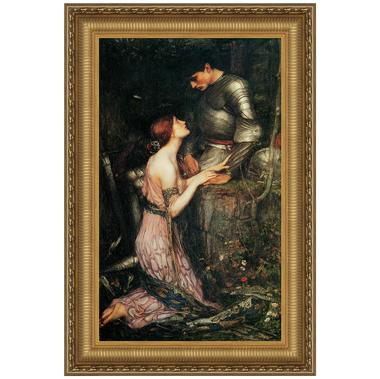
Lamia's Lament – Page 1 – Wattpad.
Today’s piece of Flash Fiction is inspired by M. John Harrison, who introduced me to the myth of the Lamia, is dedicated to my brother Calivin Leroy Gidney III, who introduced me to Greek Mythology.
Lamia's Lament – Page 1 – Wattpad.
Today’s piece of Flash Fiction is inspired by M. John Harrison, who introduced me to the myth of the Lamia, is dedicated to my brother Calivin Leroy Gidney III, who introduced me to Greek Mythology.

Haunting Glossolalia & Hypnotic Music
Azam Ali and Loga R Torkian have created a beautiful tapestry of atmospheric sounds that meld together electronic, world and ethereal music seamlessly. Ali opts to sing wordlessly on this release, which unleashes her awesome range. My favorite piece is “Winter Forest,” which blends Indian-style chants with Bulgarian-style singing. Torkian’s music is richly immersive and dynamic. Strings and ouds stand out in a sea of ambient soundworlds. Percolating rhythms simmer beneath the minor key melodies. It is a masterpiece.
Give this a listen if you like the work of Dead Can Dance.
(Crossposted from Rate Your Music)
For the past month or so, I have had some vividly disturbing dreams, mostly due to a prescription drug that I am taking. The nightmarish atmosphere of this dreams appeals to my taste. One dream was about a movie starring Meryl Streep and Sally Field, who are ghosts watching over their husbands. Streep and Field both fall in love with each other. That is one of the more coherent dreams. Mostly, the dreams are collections of images that star people from my life, and are set in bizarre landscapes, such as a city of subterranean canals, or an Arctic tundra. It is a treat, to enter a world as rich and surreal as any film by Bunuel, Lynch or Peter Greenaway.

But there is a downside. These dreams are often full of suspense. Either something is chasing me (or my avatars), or there is a fight—mostly verbal, sometimes physical. At such junctures, I become acutely aware that I am dreaming, but I can’t wake up. It’s a kind of dream paralysis. The line between real and illusion is blurred. One time, I woke up and saw a boy-shaped shadow run right past my bed. Another time, the alien person I’d been watching turned to me and revealed his true, awesome appearance. He told me that he knew that I was watching him, and that I would never wake up. I did wake up, saying, “You’re real! You’re real!”
I will discuss this with my doctor. However, I must admit that I will be slightly disappointed if I have to discontinue the prescription.
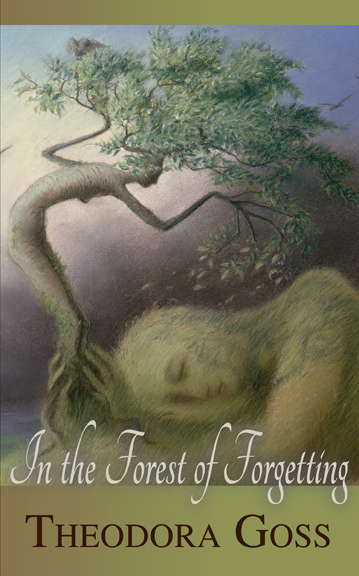
Since my colleague Theodora Goss announced a new ebook edition of her debut collection, In The Forest of Forgetting, I thought I’d share the review I did when the book was first released.
These delicately crafted, literary fantasies draw from Victorian morality stories and fairytales. The language is spare and considered, the tone dry spiked with mordant humor. Goss discreetly and elegantly updates the Gothic tale for postmodern times. Her “Emily Gray” stories concern a governess who grants children’s deepest wishes, at a terrible price. Three of the Emily Gray tales are here. The title story turns a breast cancer patient’s life into a magical fable. Other stories take place in Budapest, and have a flavor of Central European magical realism (“The Rapid Advance of Sorrow”), while “A Rose in Twelve Petals” fractures Sleeping Beauty into twelve different view points, including that of the spinning wheel that pricks the princess. Goss’s stories have dark themes, but she is too graceful a writer to be considered Gothic in the classic sense. Her painterly, humorous characters come alive, and her fantastical ideas are grounded in her character’s psyches.
 Ice by Anna Kavan
My rating: 5 of 5 stars
Kafka cavorts with Plath in this post-apocalyptic novel by the late Anna Kavan. A thermonuclear device has been detonated, and the world slowly awaits its fate as the planet freezes. In this new Ice Age, a nameless narrator searches for the girl he loves. But this isn’t just another version of love among the ruins. The imminent destruction of the world has set in motion the erosion of civilization. Random acts of violence and mass hysteria take over the cities, as the icebergs creep closer. The tragicomic game of political conquest takes place, starting in Scandinavia, led by the vainglorious character called the Warden. The narrator must vie with the Warden for possession of the girl, whom the Warden has abducted. The relationship between the narrator and the girl is not healthy in the least. He views her contemptuously, as a born victim, and believes that only he has a right to brutalize her. The girl herself–with her white-blonde hair and fragility, is a study in passive-aggression. She can be downright cruel. Several times during the novel, the anti-hero leaves her, only to take up the search again. The two men fight over the girl, without actual care for her; she is merely a pretty prop on which hang their aggressions and neuroses. It mirrors the futility of the political games, where the various powers vie to gain power over a dying world. There is a Kafkaesque sense of absurdity, along with that author’s existential despair of humankind’s folly.
These psychodramas take place amid a surrealistic, nightmare landscape. Kavan’s images of the encroaching ice are beautiful and deadly. It’s reminiscent (and perhaps even inspired) the arctic cover art of Radiohead’s ‘Kid A.’ The hallucinatory intensity might be due to Kavan’s drug use. Born Helen Ferguson, Kavan legally changed her name to a
character in one of her novels. She suffered severe depression and self-medicated with heroin, eventually becoming an addict. Like Plath or Sexton, Kavan uses bouts of depression to create brutal, enigmatic images. Her characters in this book are forces of nature themselves. The eternal war between the sexes is illuminated unsparingly–at odds with her delicate, mannered prose. ICE appears to document Kavan’s
brilliant, if unsettling interior landscape.
 Distortion by Stephen Beachy
My rating: 5 of 5 stars
The second novel by Stephen Beachy is a paradox: it’s a difficult novel that’s easy to read. A loosely structured, Altman-esque book, it follows the adventures of Reggie, a young, biracial, speed-addicted hustler, and the demimonde surrounding him. The novel follows him from L.A., where he becomes a huge MTV star-cipher, to Florida. Along the way, we drop into the lives of his friends and families, perennial flies on the wall. Most of the characters are disenfranchised in one way or another–gay, poor, or ethnic minorities; they are not the usual denizens of complex, experimental novels.
In this way, it recalls Samuel Delany’s epic novel Dhalgren. The quirky characters, which include a wandering punk-rock poet, a video-producer dying of AIDS, a woman who works with abandoned kids among others, are sharply delineated. The shifts in locale and points-of-view is often dizzying; it resembles both the frantic editing of a music video, and more encyclopedic activity of hypertext links. Woven into these densely interior vignettes are hallucinations and dreams sequences of the various narrators. At times, it’s impossible to see where the “real” fictive world end and thedrug-and-dream-induced imagined parts begin. Part ofit has to do with Beachy’s trademark drunken wordplay. The man is incapable of producing an uninteresting sentence. The imagery is always startling, the syntax and rhythms seductive. It is his verbal facility, more than anything, which provides the novel what structure it has. Somehow Beachy is able to create intense character-driven fiction, and rich phantasmorgia simultaneously. His authorial voices–at once hip, goofy, and scary–waxes philosophically about love, family, film and video theory, sexual abuse and race. This novel is not for everyone–the barrage of images can lean toward the extremely sexual and the disturbing. But those who opt to follow Reggie and his friends on their journeys will be moved. Imagine the trenchant social-realist fiction of Susan Straight or Jess Mowry thrown into a blender with the elegiac, drug-fueled fabulations of Philip K. Dick, and Distortion might be the product.
 The Daylight Gate by Jeanette Winterson
My rating: 5 of 5 stars
The Daylight Gate exists at a crossroads, between fact and fiction, reality and fantasy, and prose and poetry. Jeanette Winterson uses History to spin a mediation on persecution, feminism, polyamory, power, religion and abuse.
The history she uses this time is that of the Pendle witch trials in the 1600s Britain. A group of women and men were hanged for witchcraft, and using everything from flights of fantasy to ribald humor to Grand Guignol horror, Winterson tells their tales. The main protagonist is Alice Nutter, a wealthy and independent woman who gained her wealth by creating a a unique magenta dye. She is at the center of several circles. She owns the land where the accused witches live. She also is the lover of a banished Catholic who (allegedly) tried to assassinate King James. In the past, she worked with Queen Elizabeth’s court mathematician/magician John Dee, and through him, met her other lover, the beautiful Elizabeth Device—who is the matriarch of the accused Pendle witches. Nutter is the central piece of the kaleidoscopic text, which includes the priggish chief lawyer Thomas Potts, a cameo by Shakespeare and the points of view of the other accused people.
The real star, though, is Winterson’s marvelous prose. Each sentence sparkles with invention. Her imagery is magical, brutal, funny and terrifying—often at the same time. The story is multilayered and full of symbolism, but it is also fun. The Daylight Gate could be read as a dark gothic fantasy, a feminist parable, a lesbian fairytale or a prose poem.
Internet comments on articles are where many ideological battles are fought these days, and in spite of the admonishment, “don’t read the comments,” I keep doing so anyway, out of a morbid curiosity. In the post Zimmerman trial articles, I find one persistent idea put forth, mostly by trolls, but some genuine folks actually believe this idea, as well. It’s the idea that racism is an illusory specter that doggedly haunts black people. In the age of Oprah and Obama, racism shriveled up and black people just have a collective chip on their shoulders. We’ve heard such sentiments phrased in a myriad of ways. They range from accusations of “playing the race card” to “black people are the true racists because they only see race.” This belief occasionally comes from black folks themselves—see Ward Connerly and Clarence Thomas.

The most insidious form of this sentiment comes in the form of gas lighting racism. This is where (mostly) (some) white people will twist themselves into logic pretzels to deny racism, even when it is obvious. The first time I experienced this was when I was in college. I was a part of an anti-discrimination task force made up of students, faculty and staff. The point of the task force was to examine racial issues from our respective spheres, and then report them and make recommendations to the college. As a member of the task force, we were given access to the historical records of the college. I discovered that there had been a cross burning in front of an on-campus house full of black students in the 70s.
I remember relaying this information one time at lunch. One white girl, who was very sweet, began to come up with a series of bizarre reasons why a cross burning couldn’t possibly be racial. One of them was, “Maybe they were pagans.” And it was just coincidental that the burning cross was in front of where a group of black students lived. At the time, I was stunned. Somewhere along the line, I came to realize that to some white people, even overt racism is a thing of the past and black people are just over-sensitive and over-emotional. This attitude—of ‘gas lighting’ racist incidents—was just the first of many that I’ve experienced.
I have come realize that when people say, “I don’t see race,” they mean, “I don’t see racism.” It’s difficult, because often the people who do such ‘gas lighting’ are good, well-intentioned people.
 The Death of the Necromancer by Martha Wells
My rating: 5 of 5 stars
I’d always planned on reading THE DEATH OF THE NECROMANCER but it was out of print by the time I got around to it. Thanks to technology, the novel has a new life. It’s a kind of “gaslight” fantasy, set in an ancient city that has overtones of Belle Epoch Paris and Dickensian London where magic exists alongside steam trains and gas lights. Vienne, with its decadent Great Houses, predatory aristocracy and pockets of ruin, is a character in it’s own right. The master criminal Nicholas Valiardre is the debonair, dashing hero. (I cast Ryan Gosling as Valiardre). The female lead, the actress and amateur sorceress Madeline is a secondary POV–I saw Jennifer Lawrence in this role. The plot of a mix of court intrigue, mystery and penny dreadful. References include Dangerous Liaisons, the works of Dumas and the Gothic fiction of LeFanu or Gaston Leroux.
A old college friend of mine unearthed the long-forgotten following piece from a defunct literary journal. I was 21 at the time, and enamored of the poetry of Aime Cesaire, stream-of-conscious writing and automatic writing. This is the only copy of the piece that survives. Please forgive the wall of text and clumsy metaphors.
a tree some rocks benches but no clouds: had there been clouds this would look just like Charleston in summer where the plaza’s elegant arrangement held hues of euphoria along with various shades of sungold: a jasmine breeze lifted carnival-colored dresses strands of white people’s thin thin hair paper leaves and choir robes: there was a hush a silence as profound as music then the singing began weakly at first but it gathered strength till every particle of air quivered with the ululation of human voice: your voice you asked where is my voice does the lady in third row hear me: for a while you heard the individuals Etta Maes theatrical tremolo Mauvines giantess soprano Urseles I’ve seen it all and child don’t I sound like Mahalia Jackson screams: but you forgot about them and let the pure sound roll over you lost yourself in it no thought just God as sound: the last song remember especially swing lowsweetchariot coming for to carry me home cause white people started to clap not because it was good—it was a cliche arrangement—but because it was the generic negro spiritual and you got a kick out of how they can get so worked up over something so easy to understand for them its a gorgeous hopeful work song reward for being a good nigger it says is heaven milk honey: but they can’t hear the dark of the song the magic the power they hear gonewiththewind: after the concert the Hazel Street Ladies Book Club wept and commented over the concert by the seventh street baptist church you smiled and ate the naggingly mediocre food still something burned into you from that day and it wasn’t the choir or the weather it was the old immense black woman who began to sing right outside of the courtyard brutal tarnished dark it held that intangible magic only men and women knew whose aliens threatened the antiseptic souls: little clouds formed over the Ladies heads and written in them was o my a nigress: this however is not Charleston but it will suffice: you close your eyes sway find the power a voice bleeds and fills the space between rafters neon signs the linoleum: lazy gaunt stick figures think old fool but you abandon them and move towards the danger that draws you like a magnet: you haunt enchant curse the undecided dots of color the people move and shift a thousand little clouds with o my a nigress: maybe five are captured and feel the wound of your song a sharp sweet knife: you sing of chains that bruise the tender flesh of tumescent white genitals and black ones hitting sun baked earths in showers of blood or babies brains dashed against wooden walls of anathema but well hidden in themanilove masterthetempest strangefruit: you make up worlds to flamencosketches pure musical scarves for orangeswasthecolorofherdressthensilkblue you murder summertime with bitterness your underwrite Porter/Gershwin with sarcasm: you sing you leave your body you don’t feel the knife entering your throat or the bracelets of metal around your wrists or the blood on your dress because you remember with triumph: this magic this enchantment this beauty has one price you must pay your life your death: but you will haunt: with rage: with beauty.
—1988


 Craig Laurance Gidney
You must be logged in to post a comment.