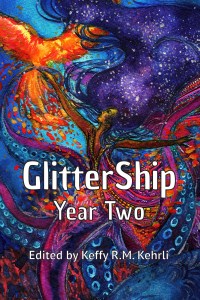
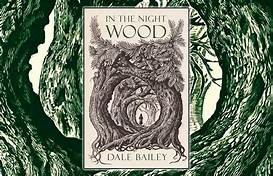
BOOK RECOMMENDATION: Sylvan dread and grief in Dale Bailey’s “In the Night Wood.”

Dale Bailey’s novel In the Night Wood exists in the nether region between dark fantasy and psychological horror. Charles and Erin Hayden have suffered a terrible loss, the accidental death of their six-year old daughter Lissa. Their marriage is also on the rocks due to Charles’ affair with a fellow professor, which in turn has caused Charles professional strife. Roughly a year after the tragic loss, Erin finds that she is the heir to the home of Caedmon Hollow, the author of an obscure British Victorian fantasy novel. The couple leave their North Carolina home, where Charles intends to research and possibly write a book about the author in hopes of rekindling his academic career. The couple also hope that the change in scenery will help heal the rift in their relationship.


Located at the edge of a primeval woodland, Hollow House is the quintessential Gothic mansion, overlooking the ominously-named Eorl Wood. The nearby village, Yarrow, has suffered a loss of its own: a young girl has gone missing. In this atmosphere of grief and fear, both Charles and Erin begin seeing things in the wood, such as glimpses of a lost little girl and the shadow of an antler-crowned figure. Charles goes down the rabbit hole of research, making connections between the local folklore and Caedmon Hollow’s phastamorgic novel. Erin isolates further, drowning her sorrows in alcohol and pharmaceuticals.


In the Night Wood is a darkly lyrical tale, drenched in literary allusion, referencing Yeats, Pre-Raphaelite literature to older folk tales, such as the Erl King and changeling myths. The novel is filled with images of sylvan dread and imbued with the kind of Celtic Twilight aura that runs through the work of Alan Garner. The undercurrent of grief gives the story an emotional weight that grounds the dark ephemerality of the narrative. Recommended for fans of Elizabeth Hand, Sarah Waters and Alan Garner.

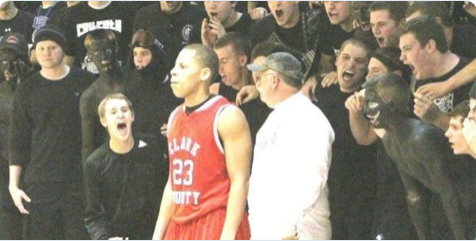
Gaslighting Racism, Part 2

When I was in high school, I wrote a story inspired by the work of the Eudora Welty and Flannery O’Connor. I was going through a Southern writers kick back then. The story was about the friendship between two women, one white, the other black in the deep South. The white woman became friends with the black woman because her out-of-wedlock pregnancy made her a pariah in her small town.

I submitted the story to the school literary magazine. I went to a small, mostly white Episcopalian high school in the DC suburbs that was moderately conservative. The vice principal rejected the story as being “immoral” (there was no sex in the story, it was just two women reminiscing, like a two person play).

The next year, the literary magazine published a story by a white girl about a homeless black woman who kills a man in a robbery and uses the money to feed her kid. The first line in that story, I’ll never forgot, had the would-be murderess’ child say, “Momma, I be huuuungry.” (Of course, the mother in the story presumably also “immoral” in the same way my piece was).

That was one of my first experiences with blatant bias and revealed how White Privilege works. A literary story by a black boy was “immoral” and “filthy because it alluded to illegitimacy;” a story by a white girl, full of violence and stereotypes (and poorly rendered African American English), however, was acceptable.

Thirty years later, we’re still centering white voices over people of colors’.


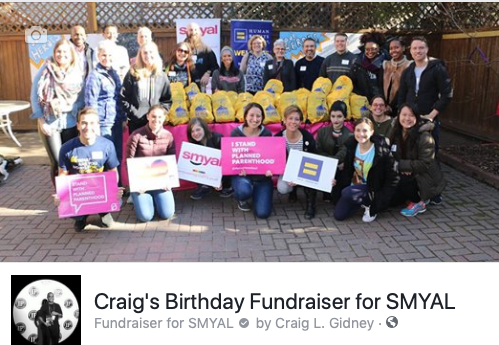
Facebook Birthday Fundraiser — for DC’S LGBTQ Youth Group

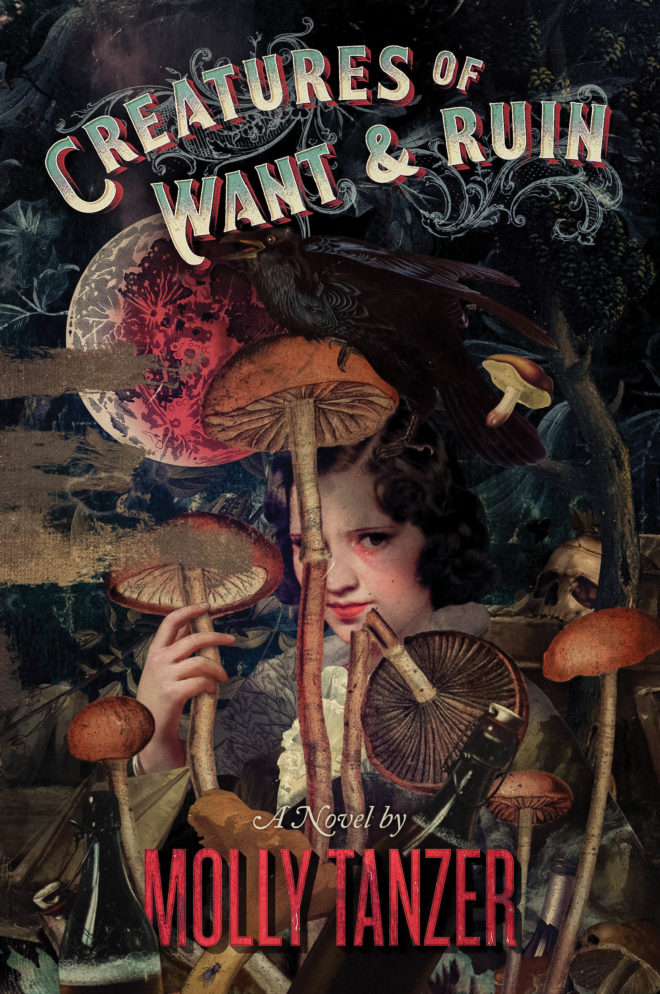
I’m raising donations for SMYAL–the LGBTQ Youth Group in the Nation’s Capital. I attended Supporting and Mentoring Youth Advocates and Leaders (SMYAL) back when I was first coming out, and can vouch from a consumer perspective the importance of the work for LGBTQ youth, who are an at-risk population. (In fact, a group like SMYAL makes an oblique appearance in my forthcoming novel!)

Here is some more information on the group:

SMYAL (Supporting and Mentoring Youth Advocates and Leaders) supports and empowers lesbian, gay, bisexual, transgender, and questioning (LGBTQ) youth in the Washington, DC, metropolitan region. Through youth leadership, SMYAL creates opportunities for LGBTQ youth to build self-confidence, develop critical life skills, and engage their peers and community through service and advocacy. Committed to social change, SMYAL builds, sustains, and advocates for programs, policies, and services that LGBTQ youth need as they grow into adulthood.

The Facebook fundraiser page is here.

Screenshot 2018-10-29 14.07.27

On the Geek Girl Riot podcast, talking about stalkers vs. love interests (& harmful relationship tropes) in spec fiction.

Stalker vs. Love Interest, the Capclave panel I was on was recorded for the Geek Girl podcast. Hear me, Alyssa Wong, A.C. Wise, and Jeanne Adams talk about Pepe Le Pew, Urkel, Edward the Vampire and Christian Grey.


Screenshot 2018-10-23 22.37.30


MUSIC: Todd Tobias & Chloë March – Hauntology & Glossolalia.

Amialluma/ Chloë March and Todd Tobias

amialluma

A collaboration between musicians Todd Tobias and Chloë March, Amialluma is an album’s worth of atmospheric ambient music that desultorily drifts between a whimsical and eerie tone. All ten compositions have a distinct hauntological ambiance. The soundscapes have the feel of the soundtrack to a forgotten children’s movie. Music box melodies, echoed bell-like tones and 60s Sci-Fi sounds are woven together, mostly in a halcyon mood that gets disturbed by the occasional dark chord progression. March sings, purrs, trills, murmurs and chants words in an invented language that manages to be both soothing and disturbing, like a feral child raised by nature. The resulting suite (which is how it is supposed to be listened to) reminds of me of the work of the English band Pram, (who share a similar tonal palette crossed) with the Cocteau Twins at their most tranquil.

White Like Me

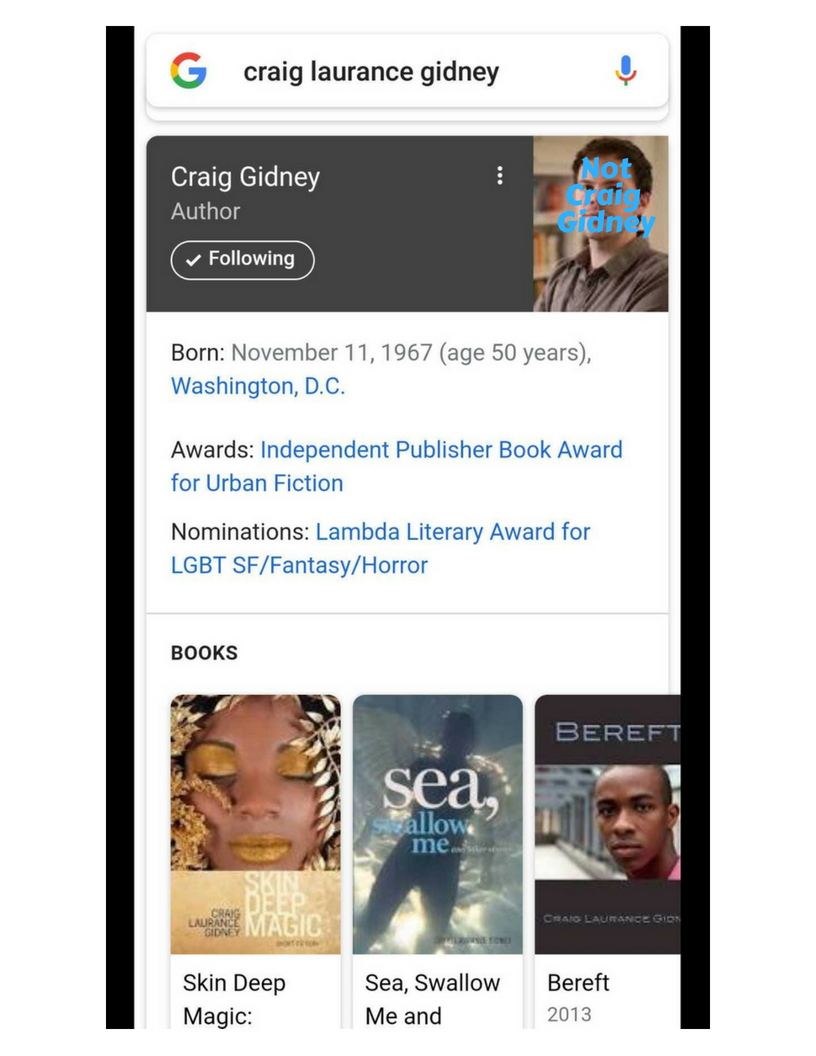
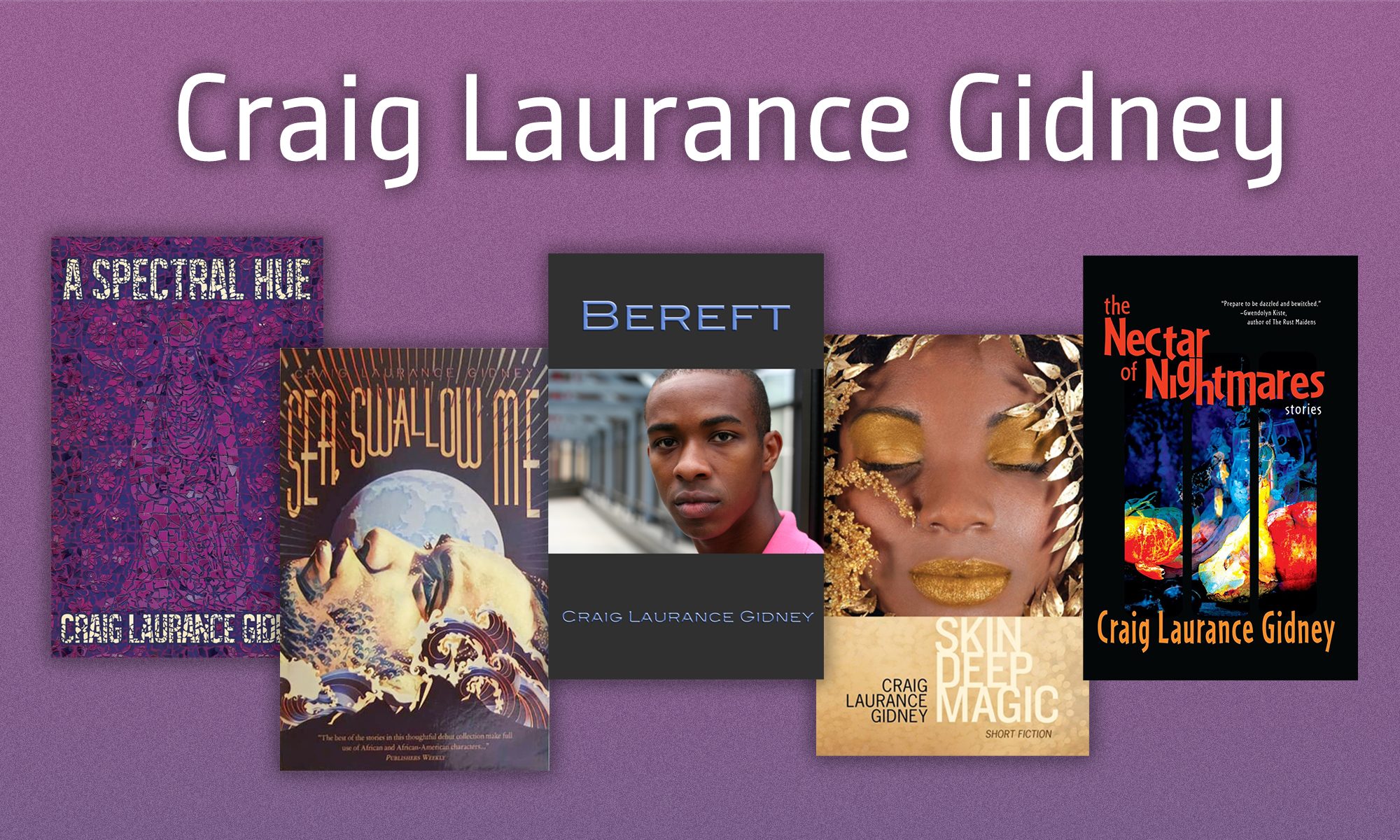
Google finally graced me with an author profile placard. Yay! But they got one thing wrong….

Not Craig Gidney
The fellow in the wrong portrait is a fellow author and also went to my college. I’ve never met him, and he’s as confused as I am.

So much for #ownvoices, amirite?

I’m more amused than anything, but I have contacted Google to see if they can rectify this situation.

Reading Log: Books by Gabriel Squailia and Sonya Taaffe

Viscera by Gabriel Squailia

I’m really  enjoying this novel, which would best be described as New Weird fiction. The world is dank and decayed and full of factions with really odd nomenclatures. The mood is one of the blackest gallows humor. The magic (here called ‘enchantments’) is bloody and messy. But don’t be fooled by the baroque grotesqueries. This is a character driven novel, full of memorable weirdos, such as a knife-crazy poppet, a drugged addled transman, and a mysterious trans enchantress who has a dead bear as a sidekick. It’s funny, gross and full of dark wonder.

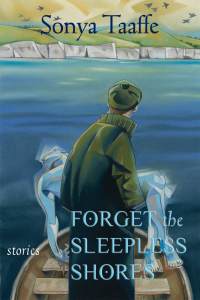
Forget the Sleepless Shores by Sonya Taaffe

Taaffe and I run in the same circles but it was only last year that I found out that she is a massive Tanith Lee fan. Her new collection was graciously sent to me by Lethe Press (the publishers of my debut). I’m not far into this large collection of short fiction, but Taaffe has a dense opiated prose style (reminiscent of Lee), and her plots mines darker mythopoetic tropes. It’s rich writing, something to be savored.

Your Problematic Faves: The Terry Gilliam edition

Damn, this one hurts.

When I in junior high, my favorite movie was Time Bandits. It was a darkly surreal (bordering on absurd) take on Time Travel Tropes. The hero/protagonist was a pensive boy, Kevin who was the child of two rather crass, materially-obsessed parents.  Kevin meets a group of time-traveling little people. The boy and  the troupe time-hop from the Napoleonic Wars to the Middle Ages to Ancient Greece to the Age of Legends, having adventures that mingle action, grotesquerie and humor in equal measure. It had a bleak, Roald Dahl-like undertone, unique in a movie ostensibly for kids. I saw the movie many times. I was obsessed. The kid who play Kevin was even name Craig (Warnock)!

I never got into the love for Brazil, but Gilliam’s expansion of La Jetée, 12 Monkeys, was a revelation. It was a taut horror film masquerading as a sci-fi political thriller, and convinced me that Brad Pitt was more than just a pretty face.

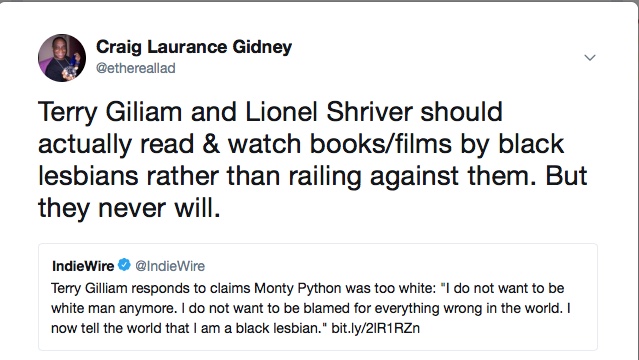
I wasn’t exactly a Gilliam fanboy, but his movies and his aesthetic opened up what speculative storytelling could be for me. It could be dark, brooding and stylish.  Then, Gilliam began saying some problematic things. First, his statement on #MeToo was disturbing victim-blaming claptrap. And now, he has joined Lionel Shriver in pushing that hoary canard that encourage Diversity in art is somehow produces diminishes quality.

“Gilliam said: “It made me cry: the idea that … no longer six white Oxbridge men can make a comedy show. Now we need one of this, one of that, everybody represented… this is bullshit. I no longer want to be a white male, I don’t want to be blamed for everything wrong in the world: I tell the world now I’m a black lesbian… My name is Loretta and I’m a BLT, a black lesbian in transition.”“(From the Guardian)

There are many things wrong with this statement.

Once more, for those in the back, Diversity Initiatives seek to address past exclusions and give a seat at the table to under-represented populations. No-one seeking out incompetent or untalented people of marginalized communities and giving them a show/book contract. Being talented and competent is a pre-requisite. Quotas are a reactionary fiction/strawman. Expanding the field in no way, shape or form damages “white men from Oxbridge.” There’s no committee of comedians saying, “Wanda Sykes’ mere existence on the scene invalidates and unpersons Monty Python,” or “John Mulvaney is no longer funny now that Kate McKinnon is in town!”

Also, making “Black Lesbians in Transition” the punchline of a joke kind of underscores the importance of Diversity Initiatives. To Gilliam, black lesbians and transgender folk aren’t real people. They certainly aren’t passionate artists whose perspective and stories haven’t been told. 

I doubt he could name even one black or trans lesbian artist. I doubt he imagines that a black gay boy loved Time Bandits. When people make statements like that, they are sending a message to their non-white, non-straight, and non-cis audiences. The message is, you don’t matter.

Gilliam:Shriver