Happy New Year!
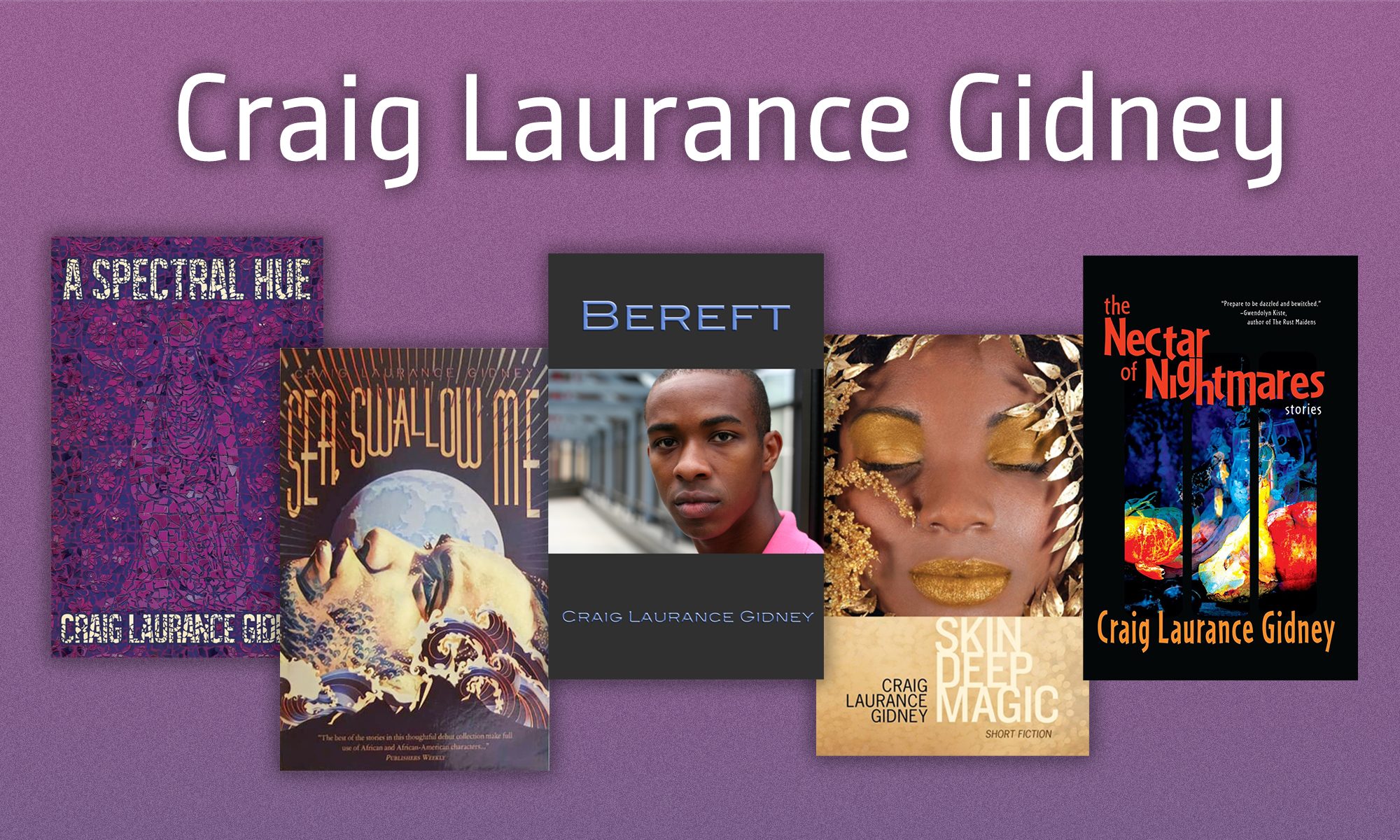
My interview with fellow DC author and future Lethe Press author Philip Dean Walker is now up at Lambda Literary.
Check it out here!
The rise and subsequent normalization of White Supremacy in this election season is the reason I wrote “Pestilence (Case Studies in Paranoid-Empathetic-Selective-Telepathy,” It’s a piece of flash fiction that deals with the new forms that racism has taken on in the current zeitgeist.
 The Incarnations by Susan Barker
My rating: 5 of 5 stars
Spanning over 1000 years, The Incarnations starts in contemporary China and follows the life of a young taxi driver and his family. Wang Jun is the son of a former Maoist official whose mental illness and bisexuality estranges him from his already cold father and his manipulative stepmother. Wang Jun is married to a massage therapist and has a 10 year old daughter who aspires to be a comic book artist. The family lives in abject poverty, a stark contrast from the relative opulence of his upbringing. Wang Jun begins receiving anonymous letters addressed to him that recount in vivid detail the past lives he and the letter writer have lived, starting from the Bronze Age and up to and including the Cultural Revolution. The appearance of the letters begins to intrude into his family life in unexpected ways.
The prose style of the anonymous letters, addressed in the second person, are rich, (homo)erotic and flavored with folklore as well as historical accuracy. The contemporary scenes are beautiful rendered, full of carefully crafted characters and emotionally resonant vignettes. There is a wonderful tension between the modes of storytelling —psychologically acute portraiture and the epic, tall-tale style of the letters. This is an uncategorizable novel—historical and contemporary, magical and mundane.
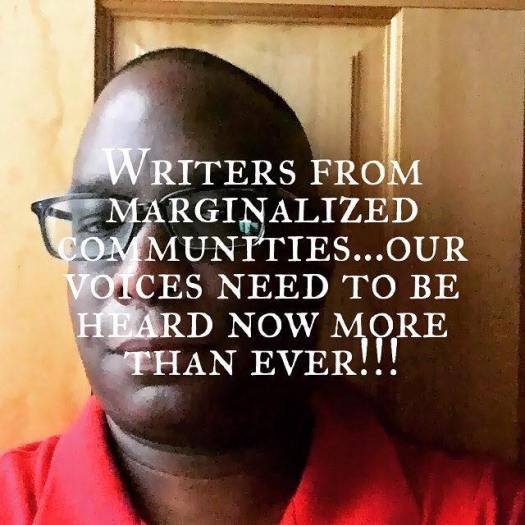
The audiobook version of Sea, Swallow Me & Other Stories is on this Book Riot list!
It is probably the only time my work will be listed along with Ta-Nehisi Coates, Zora Neale Hurston and Marlon James. I’ll take it!
While Hard Light and Wylding Hall are in different genres—respectively, crime fiction and ghost story—they both engage with the same source material. Both texts engage with the folklore of Britain and subcultures/underground artistic movements.

Hard Light is the third installment of the Cass Neary crime series. Neary is/was a photographer, an chronicler of New York’s punk scene. She is manipulative, a kleptomaniac, and a drug addict. Her first person narrative is utterly charming, full of deadpan snark, and the lump of coal that is her heart has a vein or two of gold. The Cass Neary series aren’t traditional mysteries; they are more “why-dunits” than “whodunits,” and as such, examine subcultures and their criminal elements. This time, she stumbles into the milleu of refugees from the British Acid Rock and underground film scene. Neary discovers that someone has been killing off members of a hippie commune for an unknown reason. The players in her novel are all arty bohemian eccentrics, from crooked art dealers to burnt out cult singers. (They all have wonderfully odd names: Poppy, Morven and Tamsin). While there is no overt supernatural element in Hard Light, Neary has an uncanny ability to insert herself into shady dealings:
“Ever since that night, I can sense damage, smell it like an acrid pheromone seeping from the pores of people around me. The wrong kind of street, the wrong kind of light, and the stink of my own terror floods my throat and nostrils. It’s why I can read photos the way I do, like they’re tarot cards or the I Ching. Because that’s what photography is—or was before the advent of digital—damage, the corrosive effect sunlight has on chemicals and prepared surfaces.”
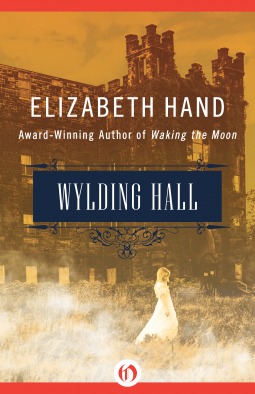
Wylding Hall is a haunted house novella set in the British Acid Folk scene. It takes the unique form of a “Behind the Music” style documentary—i.e., a series of monologues about the creation of the fictional folk rock band Windhollow Faire’s lone album. In the early 70s, the band rents out the allegedly haunted Wylding Hall to record its debut. To say more would spoil the plot. The recording sessions are mired in drug use and band tensions, all set against the backdrop of mysterious Wylding Hall, which is as menacing as Shirley Jackson’s Hill House.
While unrelated by genre, both books share thematic DNA. A Celtic mysticism informs both works. It is not the fey “Celtic Twilight” kind favored by many fantasy writers. The folklore here is primal and chthonian, more “Rawhead and Bloodybones” than Enya and the Sidhe. Both books also deal with the fallout from drug-fueled subcultures. Hard Light and Wylding Hall mine similar territory with wildly different outcomes.

I will be reading with Sunny Moraine, James Suriano, Racheline Maltese & Erin McRae on the Stars in Their Pockets: Queer Science Fiction and Fantasy panel at the DC-based OutWrite Festival, which celebrates LGBT writing.
Event details are here.
 The Ballad of Black Tom by Victor LaValle
My rating: 4 of 5 stars
Last week I went to a panel hosted by the National Academies of Sciences called “Identity, Race, and Genetics.”* It featured an author/editor, a PhD Candiate who wrote on the History of Science, a NIH geneticist and a law professor. The law professor–who was also an artist. The lawyer-scholar-artist mentioned the virulent racism of H.P. Lovecraft and suggested that black people lived in Cthulhuscene Period, due to the past and ongoing history of (pseudo)science and the black body. Lovecraftian mythos shows mankind as the inevitable victim of a hostile universe; existing while black (in a hostile/racialized universe) is part and parcel of the Black Experience.
I immediately thought about LaValle’s novella. The book is dedicated to Lovecraft (and H.P. even has a cameo). The Ballad of Black Tom is kind of an answer/re-positioning of the notorious Horror at Red Hook. It’s written from the perspective of a black first generation immigrant grifter and concerns his unfortunate dabbling in the occult. Imagine a collaboration between Richard Wright’s social realist fiction with Lovecraft at his lurid best, and you would have this novel. In place of Lovecraft’s rampant eugenical musing, LaValle shows what it was like to be of African descent in 1920s New York, complete with run ins with the police and racists. The novel compares and contrasts the horror of White Supremacy with the horror of Elder Gods. The reader is left to decide which is worse.
*DC Art Science Evening Rendezvous (DASER) Participants:
Sheree Renee Thomas, World Fantasy Award-winning editor and author
J. Cecilia Cardenas-Navia, Ph.D., History of Science and Medicine, Yale University
Bill Pavan, Senior Investigator, National Genome Research Institute
Michael Bennett, Associate Research Professor, School for the Future of Innovation in Society + Center for Science and the Imagination, Arizona State University
Prolific “ethereal-wave” Florida band Autumn’s Grey Solace just independently released their 9th album—the digital only “Windumaera.” The short album is kind of a mirror/sister album to “Monajifyllen,” released in 2014. Where that previous album was becalmed and angelic, this one is over so slightly darker. Sunlit melodies will suddenly turn sinister and menacing, resulting in a more dramatic sound.
AGS has drifted away from clearly delineated lyrics and song structures into something much more vaporous and atmospheric. It’s drifting ambient music made by electric guitars. Multi-instrumentalist Scott Ferrell manipulates his guitar into waves of chimes and ripples. The orchestrated guitar parts sound like bells and harps. Erin Welton’s voice soars over these soundscapes in coloratura swoops and swirls. For the most part, the lyrics are unintelligible, and though random phrases in English drift up, they are submerged by the virtuosic vocal technique.
ref: Cocteau Twins, Cranes, ambient music
This past weekend has been full of ups and downs.
The downs, of course, is the massacre of LBGTQ people (many of them POC) in Orlando. I feel helpless and hopeless and enraged. As long as hate and bigotry are profitable (both moneywise and politically), I fear that events like these will continue. Hence, visibility and telling our stories is important. I hope that people can find some comfort in my work during these dark times.
The ups include the reading I participated in with Carmen Maria Machado and Tom Cardamone this past Friday at Giovanni’s Room in Philadelphia. It was a full and engaged audience. Thanks to Giovanni’s Room for hosting us.

Another up: Poet and Editor Rose Lemberg has curated a list of Queer POC writers and artists in Speculative Fiction. She writes:
To celebrate Pride Month, I am highlighting ten LGBTQIA creators of color in the field of SFF. I ask those of you who would like to participate, to highlight your favorite LGBTQIA creators using the hashtag #pridecreators
You can check it here.


 Craig Laurance Gidney
You must be logged in to post a comment.