Skin Deep Magic is a Lambda Literary Finalist

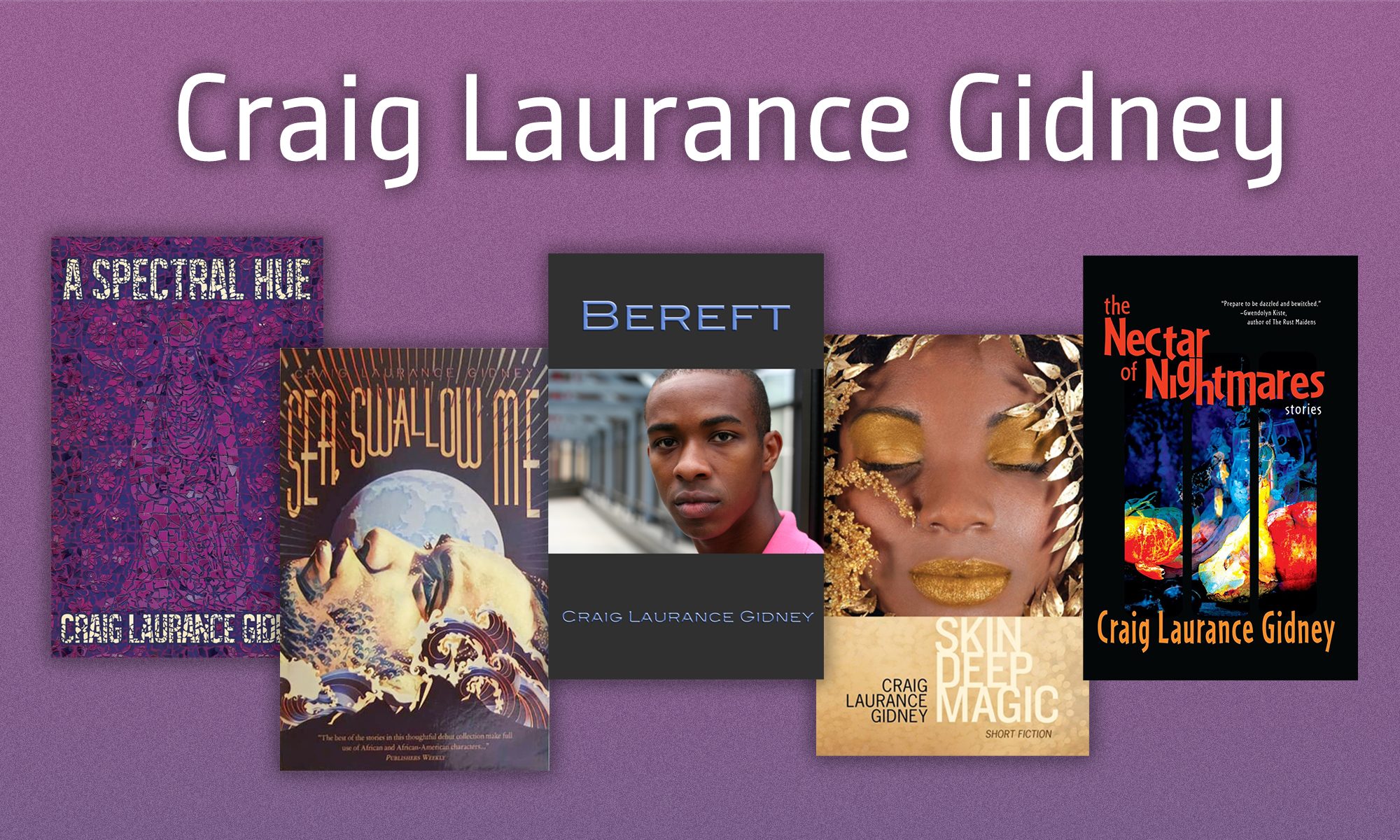
My collection Skin Deep Magic is a finalist for the 27 Annual Lambda Literary Award. I am honored to be included among my fellow finalists.

Writing is such a solitary endeavor; it’s nice to get recognition every now and then. Special thanks to Sven Davisson, the publisher/editor of Rebel Satori Press.

Lambda Lit Image

Queer & Weird: The indie Lethe Press turns 14!

Lethe Press, founded and run by Steve Berman, published my first book (Sea,Swallow Me & Other Stories). Yesterday was their 14-year anniversary. Taking advantage of Print on Demand Technology, the press has grown from publishing neglected and forgotten books to being one of the premiere gay presses. Lethe publishes gay and lesbian fiction, erotica, and various oddities (a book on the history of barber shops!) and in addition to new and exciting voices, have published work by bestsellers like Tanith Lee and Melissa Scott.

The press is particularly notable for publishing Queer Speculative Fiction. Several Lethe Press books have been Lambda Literary Award finalists, and at least three Lethe titles have won the award.

Berman is selling his debut novel, a YA ghost story titled Vintage, for 99 cents as an eBook as a way of celebrating the achievement of being in business for 14 years.  (Check out the usual online venues).

Vintage by Steve Berman

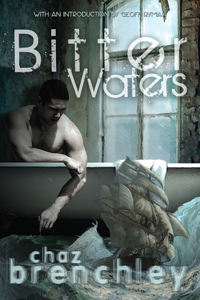
I would recommend checking out some Lethe titles. I’ve started reading Bitter Waters, a collection of gay-themed ‘weird fiction’ stories by Chaz Brenchley. The prose is top-notch, and water imagery abounds in these haunted tales, which remind one of the elegiac work of Robert Aickman.

brenchley-bitter-waters_200x300

Signal Boost: Chameleo by Robert Guffey

I’ve known Robert Guffey for almost 20 years. We met at the Clarion West Writers Workshop in Seattle. His fiction playfully explores issues of paranoia, conspiracy theories, secret societies and subcultures. His work, full of vast and somewhat offbeat scholarship, is also imbued with a Southern Californian sensibility that reminds one both of the trippy work of Philip K. Dick and the Sunshine State Noir of Tarantino (circa Pulp Fiction). His writing is emotionally warmer, and he has a deep affection for his oddball characters.

23365123

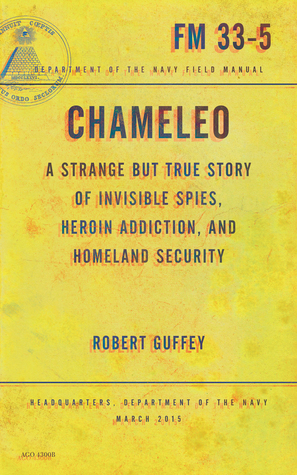
I’ve started his latest work, Chameleo, a nonfiction account of governmental conspiracy (with elements of memoir), but it reads like a novel. I could see the director Paul Thomas Anderson adapting it for the screen.

Here’s the blurb:

A mesmerizing mix of Charles Bukowski, Hunter S. Thompson, and Philip K. Dick, Chameleo is a true account of what happened in a seedy Southern California town when an enthusiastic and unrepentant heroin addict named Dion Fuller sheltered a U.S. Marine who’d stolen night vision goggles and perhaps a few top secret files from a nearby military base.

Robert Guffey’s website: http://cryptoscatology.blogspot.com

On being an under-represented voice in speculative fiction.

Skin Deep Magic was included in this challenge by K. Tempest Bradford. I’m beyond pleased that she thought of my work, and I love her promotion of diverse voices in fiction. (And I can personally vouch for some of the work of fellow authors that she included).  As open-minded as I like to think of myself, I am woefully under-read with regard to certain under-represented voices myself.  To me, the article is more of a ‘wake-up’ call than it is a call to action. It’s as much about ‘mindful’ reading and examining your biases as it is about the actual challenge.  (Besides, you can cheat and/or modify the the challenge. Or, ignore it—no-one will know!)

However, some people took the ‘challenge’ as a slight against white, straight, cisgendered (non-trans) authors. (The article has over 1000 comments) She was interpreted as mandating/policing people’s reading habits. She got hate mail, and in one particularly nasty case, described in racially-tinged dehumanizing language by one author. As one of the authors Tempest recommends, I’ve faced all of fears that the white, cis, het authors will supposedly face with this ONE CHALLENGE (not mandate) just as a matter of course. I know for a fact that many mainstream readers upon seeing my picture, or notice that I’m published in the queer small press will immediately assume that my work has nothing for them. I’ve resigned myself to be ‘niche’, even though I think there is something universal in my stories about black people, trans folk, and gay people–and my take on dark fantasy owes as much to Angela Carter or Charles DeLint as it does to Toni Morrison or James Baldwin.

In the end, Tempest challenges people to read underrepresented voices for ONE YEAR. When you are an under-represented voice, your entire writing career is often ignored for more than that.

Skin Deep Magic Story Notes on “Coalrose,” the Dark Muse


Public Domain Photo

Nina Simone (who I’ve written about before) was probably the inspiration behind the eponymous character, Coalrose, the final novelette in my collection Skin Deep Magic.  The story is in the form of a chorus of vignettes—all recounting their encounters with Zoe Coalrose, who is a kind of dark muse/patron saint for outcasts. The cast includes: a lesbian junkie, a casting director for the Negro Follies, a tattoo artist, and gay widower.  The piece is influenced by Geoff Ryman’s novel, Was, his fugue-like narrative that uses The Wizard of Oz as a touchstone.  Ryman was an instructor during my time at the Clarion West Workshop in 1996, and he read and critiqued the first draft. Coalrose was immensely cathartic to write.  I don’t know how to classify it—magical realism? paranormal? historical fantasy? Though it has darkness, I view it as a hopeful piece. It’s a homage to survival.

An Open Letter to Paula Deen

An eloquent Open Letter to Paula Deen by an African-American culinary historian. It’s a must read, if you have the time.

michaelwtwitty's avatarAfroculinaria

An Open Letter to Paula Deen:

meinkitchen

Photo Courtesy of: Johnathan M. Lewis

Dear Paula Deen,

So it’s been a tough week for you… believe me you I know something about tough weeks being a beginning food writer and lowly culinary historian.  Of course honey, I’d kill for one of your worst days as I could rest myself on the lanai, the veranda, the portico (okay that was really tongue in cheek), the porch..whatever…as long as its breezy and mosquito-free.  First Food Network now Smithfield.  (Well not so mad about Smithfield—not the most ethical place to shill for, eh, Paula?)

I am currently engaged in a project I began in 2011 called The Cooking Gene Project—my goal to examine family and food history as the descendant of Africans, Europeans and Native Americans—enslaved people and enslavers—from Africa to America and from Slavery to Freedom.  You and I are both human, we…

View original post 2,223 more words

The Age of the AfroGeek

Image

I was a geek growing up. A black geek.
Bookworm? Check yes.
Science Fiction and Fantasy fan? Check yes.
Alternative/avant garde/world/ambient music fan? Check yes yes yes.

I didn’t fit in. Square peg, etc. But there’s a unique issue faced when you’re a geek and of African American descent.

You’re an anomaly, an outcast, the punchline of the end of a joke.

See: Urkel, Stephen Q. You get funny looks at SF conventions.
The record-store clerk asks you if you need help, because you are obviously in the wrong section of store. (In my case, the Import section).

Your black peers also think you’re strange.

They police your blackness.

If you read at all, you should read ONLY  The Autobiography of Malcolm X  or  Makes Me Wanna Holler.

(“I swear that Octavia Butler is black…Just ignore the picture of the white women on the cover!”)

Don’t get me started in music.
Siouxsie, Liz Fraser and Lisa Gerrard sang the soundtrack of my late teens. Thank God(dess) that those Tower Record bags weren’t see-through!

(“Yes, A.R. Kane are two Afro-Brits… Yes, their music is strange…. And yes, they don’t appear on the cover of their albums; that’s a thing now.”)

Now, it seems that there are more Afro-eccentrics out there than before.
The field of SF/Fantasy now has Jemisin, Okorafor, Hopkinson, Daniel Jose Older and more
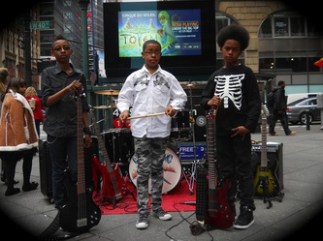
Music has Cold Specks (gothic tinged gospel), Janelle Monae (SF and Kate Bush and funk are influences) and now a heavy metal band of African American preteens called Unlocking The Truth and much more.

We’re coming. We’re here.We’re frightening the horses, shaking the foundations and laying down our roots.

Afrogeeks are no longer novel, or “in the closet.”

There’s a damn pop culture Renaissance going on!
This the Age of Afrogeekdom.
The enduring influence of “academic” racism

Back in the early 90s I worked in a bookstore—one of the now defunct “superstore” chains. The store was located in Bethesda, on the border of Rockville, Maryland, just outside of Washington, DC. That area was then mostly populated by people who had participated in the “White Flight” migration of DC proper, leaving the District as a mostly black and, in three quadrants, lower middle class to poor city. At that time, The Bell Curve was published was a ‘controversial’ bestseller, rare for an academic book. (Bestsellers at that time included a diet cookbook written by Oprah’s personal chef and the first Dr. Laura self-help book). The clientele of the store was privileged, not only in material wealth, but also in attitude. Customer service and dealing with the public can be challenging and I have my share of war stories.

One particular story involves The Bell Curve. Having read Gould’s The Mismeasure of Man in college, in addition to being aware of the media storm that surrounded the book, I knew that it was pseudoscientific claptrap. An elderly woman sidled up to the Information Desk where I had been stationed. I was the only person not helping a customer, so she deigned to engage me.
“Excuse me, young man,” she said. “Do you know where the book The Bell Curve is?”
There was a stack of the book at the front of the store. I was about to show her where the requested book was, but she interrupted me: “That’s spelled ‘B-E-L-L space C-U-R-V-E.”
Did I hear that right? Did that patrician doyenne actually spell out the title for me, as if I were an illiterate, ignoble savage?
I would love to tell you that I went all Sarcastic Darky on her, shuffled over to the book, and said “Yes ma’am. De books be here. I ‘preciate you spellin it out fuh me. I’se not too good wit de letters!’
Alas, I did not. I needed the job, so I silently pointed her to the stack of books.

The allure of that book, which has been thoroughly debunked, still reigns supreme among the fringes in the Age of Obama. I see its influence in the circles where I associate. Most recently, the gay writer Andrew Sullivan gave credence, once again to the research of differences between the races and opined that racial differences were not unlike the difference between various dog breeds. Science Fiction and Fantasy Writer’s Association, an professional organization of genre writers (of which I am not a member) has been relentless attack by a member who subscribes to the theories laid out in the book (ostensibly to drum up interest in his mediocre fantasy fiction).

The point of my anecdote is show how such poisonous theories manifest in the real world. It isn’t about ‘censoring’ intellectual curiosity, which seems to be Sullivan’s interest in prolonging discussions about race. Rather, it is grist for the racist mill, a justification for treating people of color rudely. It isn’t a coincidence that the mediocre author is boorish and nasty in his attacks. Back in 2011, a principal who subscribed to white supremacist doctrines was unmasked, after spending years catering to a mostly minority population.

My anecdote at the bookstore is mostly humorous. Other people’s direct contact with this vile form racism is serious, and has lasting effects.