Writing and Illness, an Essay by Victoria A. Brownworth

One of my publishers, Victoria A. Brownworth (of Tiny Satchel Press) has written a devastatingly beautiful essay about Writing and Illness.  An excerpt:

In November 2011, I nearly died. One lung had ceased to function, the other wasn’t doing so well. My heart, damaged by a congenital cardiomyopathy just discovered a few years ago and unfixable, was beating wildly in an attempt to counterbalance the lack of oxygen.

On the way to the hospital I knew I was dying–you do feel it–and I was terrified, begging my wife, who was driving us in the middle of the night, not to let me die.

Please.

It isn’t the thought of being dead that scares you. It’s that you’re not ready. You have so much more to do, because we are all lazy, we writers, even my friend Greg Herren who writes more than anyone I’ve ever known, or my old friend Tee Corinne, herself dead from cancer too soon, who was always doing some new project. We are lazy because we always think there’s more time.

Except so often, there is not. Three months after nearly dying, after waking up every night in the ICU drenched in sweat from fever and my imperiled lungs and the drug cocktail that made me feel sick in a different way, I have been writing as much as I can. But it is not enough–it’s not enough for the ideas in my head and it is not enough for me and it is not enough for whatever time is ticking away from me.

Pain wears me down, exhausting me. And my body works against me, over and over, all the time. Breathing treatments take time–an hour here, an hour there. Medications make me sleepy or dizzy or just unfocused. Insomnia plagues me, because pain is worse at night and so I always feel tired, unrested. I lie in the dark trying to sleep, while lists of things I want to do form and re-form in my head. A friend who died a few months ago haunts my dreams and reminds me that death is never very far away: inevitable death is the prompt that should keep us looking back over our shoulder at life.

I sit on my bed, cross-legged, hunched over the computer for hours at a time, but I’m an inveterate and omnivorous reader and time can fly as I read and read and write not nearly enough.

I have daily correspondences–the wonder of the Internet–with two writer friends. We talk every day about writing and I know that’s good for me, because I am a recluse. Like O’Connor, I rarely leave the house. I go out to teach and to doctors and hospitals. But there are days at a time when I cannot even go outside, let alone “somewhere.”

You can read the rest of the essay here.

Forthcoming essay in “The First Time I Heard…”

I had the great honor of being invited to contribute an essay to Scott Heim’s THE FIRST TIME I HEARD… project, which features essays by writers and musicians about their favorite bands.  I wrote a brief essay on the Cocteau Twins, one of the books in this series which includes such subjects as David Bowie, Joy Division, Kate Bush, and the Smiths.  The first of the series will be released sometime this spring.  More info at Scott’s site!

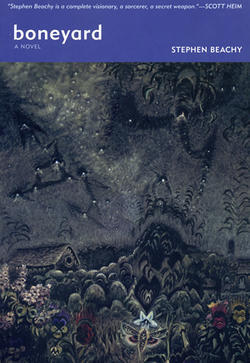
Here’s a sneak peek at the cover.

Good News: A new release on the horizon

I suppose I can make the announcement now:  my second book, a stand-alone young adult novella will be coming out this winter.  This is an expansion of my story “Bereft,” and will be published in the winter by Tiny Satchel Press.  More information/firmer dates are forthcoming.

Friday, I will pop the bubbly in celebration.  Virtual glass-clinks, all.

Happy New Year–and a great review

It’s always great when some gets your fiction.  I was please to wake up to a review of my flash piece, “Conjuring Shadows,” (at Expanded Horizons)–especially since I had received a rejection minutes before!

John Stevens of SFSignal wrote about “Conjuring Shadows”:

Craig Gidney’s offering in Expanded Horizons, “Conjuring Shadows,” was beautiful and eye-opening. The shift in forms from poetry to reportage to fiction, the nesting of ideas and images that is created, are smoothly synergistic and wonderfully written, and while they make a point, it is one that you must uncover. For me, it delivered a challenge to think about the constraints we put on pleasure and the ways in which identity can be marked and embraced simultaneously. It is a story that compels meditation not just on the meaning of the story and the fantastical tale at its center, but on the way we look at art and sexuality and beauty and power, and the entanglements that can arise between them.

I am also happy to be recommended along side the likes of Kiernan,Walton, and the Vandermeer’s collection.  His column, Fantastika is also well worth following; he writes about fantastic fiction beautifully.

New Story published – “Conjuring Shadows”

Please check out my experimental story of a transgender conjure woman in the Harlem Renaissance, titled “Conjuring Shadows.”  It’s up at the November edition Expanded Horizons, along with work by Maria Velazquez (who interviewed me), Keyan Bowes (who once helped with a story), and A.J. Fitzwater.

Review of FROM WHERE WE SIT: Black Writers Write Black Youth

Lambda Literary Foundation reviews the anthology FROM WHERE WE SIT: Black Writers Write Black Youth (ed. Victoria A.  Brownworth).
Two of my stories appear here.

One excerpt:
Craig Laurence Gidney’s new diva worship classic, “Circus Boy Without A Safety Net,” humorously delivers some much needed levity to gay coming-of-age topic that is inherently heavy.

Review of “Mechanique: A Tale of the Circus Tresaulti” by Genevieve Valentine

Mechanique: A Tale of the Circus TresaultiMechanique: A Tale of the Circus Tresaulti by Genevieve Valentine
My rating: 4 of 5 stars

Though it has steampunk flavoring, Mechanique is a hybrid novel, much like the half-human/half-mechanical characters (creatures?) it describes. It’s a New Weird dark fantasy tale set in a dystopian war-torn landscape. The structure of the story and its narrative cogs are very postmodern. The text vacillates between first person narrative (in the voice of Little George, the Circus gofer) and third person points-of-view that range from brief character sketches to omniscient mis en scenes.

The novel tells the story of how the circus came to be. It was created by a former opera singer who discovers she has the power bind living flesh to skeletons made of copper. The process is magic, rather than scientific. She becomes just Boss, a ringmaster and owner of the Circus Tresaulti, which features mechanical aerialists, strongmen and a walking one-man orchestra. The circus travels over a bleak landscape of crumbling cities.

One story-line tells how each of the damaged folk managed to join, and describes the personal politics of the various members, who have all seen horrible things or come from bad backgrounds. Little George’s story has a bildungsroman arc; other characters, such as the prickly aerialist Elena have their own arcs while other circus folk, like the cipher-like Bird, emerge as characters through indirect observation. The other story-line is about a ‘Government Man’—who like Boss has no name save his job title—and his desire to learn Boss’ powers for creating remade people for his own nefarious means.

Valentine employs a variety of techniques, from poetic quasi-fables, to brief anecdotes to full-fledged action sequences. Her world-building is suggestive rather than exhaustive—the Balkanized citystates the circus travels through have a vagueness that is more allegorical than precise. The story is ultimately about finding loyalty and beauty in dark times. Lovers of the work of the Brother Quay or Terry Gilliam, the painter Mark Ryder or the novel Geek Love by Katherine Dunn will find much to admire here.

View all my reviews

Summer 2011

This summer has been a busy one.  In June, I went to the Atlanta Queer Literary Festival, where I represented Lethe Press on a couple of panels.  In July, I went to Readercon, outside of Boston, for the first time as a panelist, where I spoke about Geoff Ryman’s fiction, and sat on a panel about postcolonialism in speculative fiction.  And finally, last week, was the first annual Outwrite Book Festival in my hometown.  Steve Berman came down with books and other goodies.  I met many people, readers, authors and editors and got energized to write again.

Speaking of which, I have a couple of ‘gigs’ (i.e., invitations to submit), so I’d better start working on some of them!

All of these literary travels inspired me to grab a book or two as souvenirs….

(Let’s Play White, Chesya Burke; Smoketown, by Tenea D. Johnson; Songs for the Devil and Death, by Hal Duncan)