“34” Tanith Lee ( writing as Esther Garber): Darkly erotic queer fantastika

book_34_small

Immanion Press has reprinted 34 in an extremely handsome edition that even has illustrations and pictures. 34 was written Lee, who claimed to channel the work of the enigmatic Esther Garber. The novel is a darkly surreal lesbian quest, part Colette, part Angela Carter.

I wrote about 34 when it first came out in 2004.

If you are expecting a straightforward dive into lesbian erotica by Tanith Lee (or Esther Garber), you will be pleasantly disappointed. This brief, dense and somewhat experimental book explores the erotic imagination, the nature of memory and mediates on aging. Sexual obsession is the focal point through which many discursive images and ideas flow.
The plot finds 17-year old Esther fleeing London after her mother’s dramatic death. She absconds on a boat across the Channel, and ends up in drab hotel in rainy Paris slum. The amoral and jaundiced Esther is mistaken for a prostitute by the front desk clerk and her services are bought by a virago named Julie, who poses as a man. The sexual chemistry between them awakes passions in Esther, who leaves after the tryst. Thus begins Esther’s quest, almost mythic in scope, to find Julie.
If “34” is not a fantasy, it does not happen in the real world. Rather than a traditional `other world’, the action takes place in the clouded, magical world of memory and perception, as the first person narrator encounters patently incorrect or wrong things (such as a dog that is part wild boar) or too surreal (such as a Gothic mansion).
The main narrative is interrupted by glimpses into a distant childhood past in Egypt and visions of a future Esther, who is going through menopause in London, and may or may not have a sister (or alter-ego, Anna). Both the future and the past Esthers live in a reality closer to `normality.’ The child faces loss and dislocation; the old woman is trapped by her illnesses and indolence. Both are prone to extensive fantasizing.
All of these disparate threads are held together by hypnotic, feverish prose and a dark, sardonic wit. Mythology intersects reality-Demeter, Persephone and Isis all have cameos here. Female ciphers, villains and strange children cavort on the stage. Eroticism and desire infuse everything, obliterating logic and reason.
This novel isn’t for everyone, though. The vaporous, meandering storyline and the disturbing, politically incorrect sexuality on display here will stop many a reader. But those who like sophisticated erotica and experimental fiction will find this Angela Carter meets George Bataille work entrancing.


Capclave Schedule (October 6-8).

Below is my Capclave (sponsored by the Washington Science Fiction Association) schedule, which occurs October 6-8, 2017.

small_dodo_transparent


7pm Friday

Salon A

Toward A More Diverse Genre

How do authors portray persons of color, the disabled, and gender in their stories? Science fiction and fantasy have come a long way and have often been at the forefront of these issues and sometimes not. What more needs to be done? What’s the next step in portraying a more diverse universe?

K.M. Szpara, Craig L. Gidney, Vanessa Phin (m),Michelle Sonnier, Sarah Avery

3pm Saturday

Bethesda

Reading – Craig L. Gidney (3:30-4pm)

11am Sunday

Frederick

LGBTQ Speculative Fiction

Panelists will discuss where to find the best LGBT fiction being written today and what they think are the dos and don’ts of writing LGBT characters.

Craig L. Gidney, Sarah Pinsker, Vanessa Phin (m)

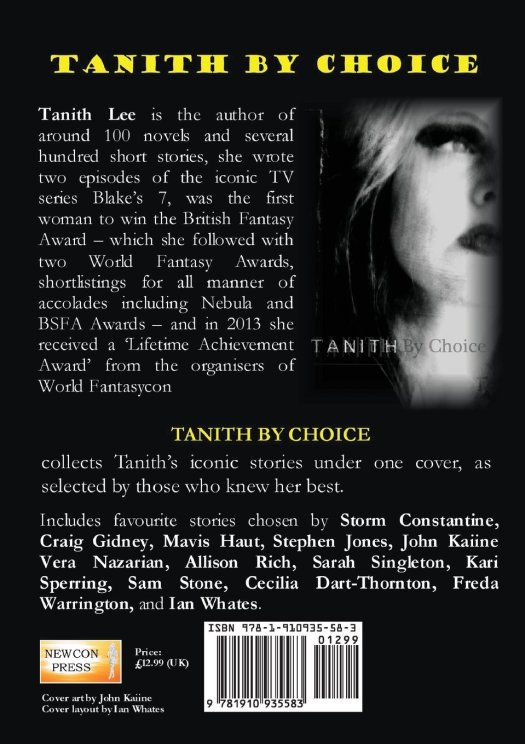
Back cover copy of “Tanith By Choice”

I just saw the back cover copy of Tanith By Choice, a forthcoming anthology from Newcon Press that collects the favorite fiction selected by TL’s friends and colleagues.

I picked “The Crow,” from Disturbed By Her Song. Tanith by Choice should be available later this month.

Tanith by Choice

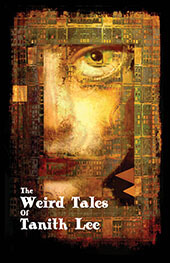
Tanith Lee’s Weird Fiction

I wrote an article on Tanith Lee’s weird fiction on Weird Fiction Review in honor of her 70th birthday.

While Tanith Lee (1947-2015) is mostly known as a fantasy writer, much of her short fiction existed in that interstitial region between genres. Not quite horror, or fantasy, her work in this mode would most comfortably fit in the weird tale category. Lee’s ‘weird’ fiction had a distinct gothic tone, and was often underscored by her eccentric wit.

You can read the rest of the article here.

book_weirdtalestanithlee_small

The Great God Pan, an Opera in 2 acts, by Ross Crean

A week or so ago, a Facebook friend of mine in the composer world shared an image of CD he’d recently received, called The Great God Pan: An Opera in 2 Acts. I ended up chatting with Ross Crean, the composer of the opera based on Arthur Machen’s work. I had just come home from NecronomiCon, where there was a panel on Machen’s work. I missed that panel, but people who had attended mentioned that a panelist spoke about the “psychedelic nature” imagery that shows up in Machen’s work.

1502519125_va-ross-crean-the-great-god-pan-2017

Crean’s opera uses unorthodox instrumentation (prepared piano) to bring Machen’s trippy masterpiece to life.

My schedule at the Baltimore Book Festival (Sept 22 – 24)


logo-bbf

Saturday Sept 23


2 PM: #OwnVoices: What Does It Mean to Write What You Know? Identity and SF/F
Authors discuss what it’s like writing characters who share their own marginalized identities and mapping issues of identity into science fiction and fantasy.

Authors: Craig Laurance Gidney, Kosoko Jackson, Sam J Miller, Day al-Mohamed, K.M. Szpara

4 PM: Turning Old Monsters Into New
Still scared of the Boogie Man? Our panel resurrects the monsters you grew up with, talks about all the monsters you grew up with, from fairy tales to urban fantasy to myths and legends and the thing underneath your bed, discuss how modern fiction is reinterpreting them.

Authors: Scott Edelman, Ruthanna Emrys, Craig Laurance Gidney, Vivian Shaw, Ruth Vincent. Moderator: Scott H. Andrews

Sunday September 24


12 PM Politics, Resistance, & Speculative Fiction
Science fiction and fantasy have always been political, and have always used genre trappings to explore the here and now through the past and future. What does that look like in the current political climate?
Authors: Lara Elena Donnelly, Ruthanna Emrys, Craig Laurance Gidney, Addison Gunn, Malka Older. Moderator: Scott H. Andrews

1 PM – Signing (w/ Tom Doyle)

2 PM Fantasy: It’s Epic, it’s Historic, it’s Dark or Weird or High or Low or Urban
How are all of the categories of fantasy even the same genre? From dungeons to dragons to vampires in our midst, our panel will discuss what they love, what they write, and what you should be reading.

Authors: DH AIre, Ruthanna Emrys, Craig Laurance Gidney, Jeremy M. Gottwig, Ilana C. Myer, Ruth Vincent. Moderator: Jon Skovron

Podcast: The Outer Dark panel discussion at NecronomiCon is now up!

Outer Dark Providence

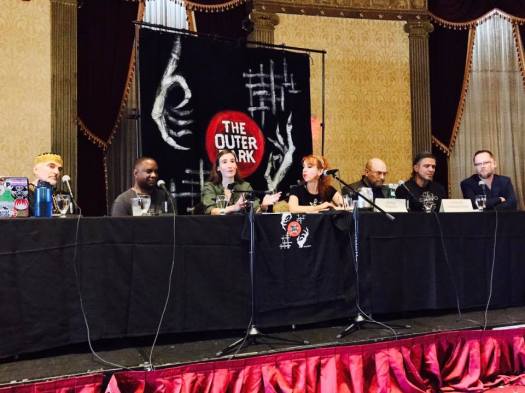
The Outer Dark panel discussion at NecronomiCon is now available for your listening pleasure at This Is Horror.

The Outer Dark presents an all-new panel discussion recorded at NecronomiCon 2017 featuring Craig Laurance Gidney, Scott R. Jones, Stephen Graham Jones, Peter Straub and Sonya Taaffe. hosted by Scott Nicolay and moderated by Anya Martin (00:18:25). The discussion focuses on long term trends in Weird fiction including living in Weird sociopolitical times, the growth of the Weird Renaissance and its effect on the greater Literature Fantastica, new Weird visions by marginalized voices, destabilization versus reassurance/escapism, ‘reality as a trampoline,’ Weird fiction’s conservative past versus a different kind of Weird story emerging now, Lovecraft’s anxieties as a ‘window’ onto a much larger horrifying world, ‘new’ voices challenging our concept of what is The Weird, embracing versus rejecting fear and loving Otherness, altered market forces and the effect of editorial shifts and the rise of the small press, why speculative fiction should be interstitial, writing ‘things we don’t know,’ less explored topics in Weird fiction, and some exciting announcements about the future of The Outer Dark. This panel took place on Saturday August 19 at noon.

Link: Lovecraft’s Legacy by Paul St. John Macintosh

Over at Greydogtales, a weird fiction blog, author/critic Paul St. John Macinktosh has an essay that examines the latest kerfuffle in the weird fiction community. (Lovecraft’s racism and the legacy of his fiction in many ways mirrors the current culture war over Civil War monuments). In the essay, he highlights POC writers (N.K. Jemisin, Victor Lavalle) who subvert/revise/challenge the subtextual xenophobia in HPL’s work in addition to calling out the denialism/minimizing that many aficionados use.

If there was a huge racial component to Lovecraft’s definition of “unknown,” then you could almost read into such remarks a frustrated longing to engage with other unknown peoples, as much as fear and distaste towards them. That’s as plausible an interpretation as any claim that Lovecraft’s mature work is some kind of systematic dog-whistling for underlying racism, with Deep Ones and ocean-going cultists standing in for black Americans and Catholic immigrants.

Link: Lovecraft’s Legacy