
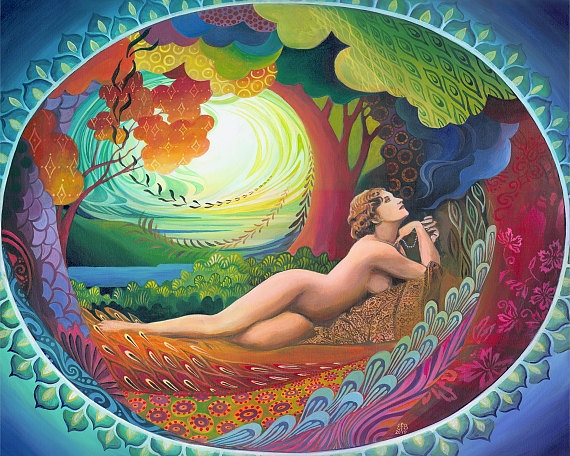
H.P. Hatecraft: On Nepenthe and N*ggers


by Emily Balivet
by Emily Balivet

The first H.P. Lovecraft story I read was “The Outsider.” It was, and still is, a fine piece of work. It’s a poetic tale about an introvert who touches a dark “eidolon,” drinks the elixir of “nepenthe” and then joins the ghastly beings who live in the nooks and crannies of time and space. “The Outsiders” is, in addition to a horror story, a mediation on isolation and loneliness. As a closeted student in a mostly white high school, I felt like an outsider myself, and wanted to ride with the ghouls in the chilly, beautiful vistas of other dimensions.

Then I read the next story in the collection, “The Rats in the Walls.” I never finished it, because the narrator had a cat, called “Niggerman.” I have never read any other Lovecraft afterwards. I later found out that Lovecraft was a racist and anti-semite of the highest order, who subscribed to the pseudoscience of eugenics. Lovecraft wrote a poem that is practically talismanic for the White Supremacist crowd, called “On the Creation of Niggers.” Black people, like myself, are described in other stories as being bestial and like gorillas. Apologists will say that Lovecraft was a product of his time. To which I say, no. There were white progressives back then, and white people who even married black people.

I came back to “The Outsiders,” years later, and realized that there is an allegory there. Lovecraft, like the narrator of the story, lived alone in a castle of fear and hatred. He only found kinship with the ghouls and shades in an alternate universe. And what are racists, except ghouls and shades that hide out in some alternate universe where non-whites are subhuman? White Supremacy is the ultimate nepenthe.

*There is a character in the New Scooby Doo Adventures named H.P. Hatecraft.

REVIEW: The Devil in Silver by Victor LaValle

Pepper is a working class furniture mover who, through an act of misguided gallantry, and the laziness of the a trio police officers, gets thrown into a psychiatric unit in Queens. What is initially supposed to be a 72-hour hold turns into a months long stay, due to bureaucratic incompetence and Pepper’s foolish decisions (a failed escape attempt among other mistakes). After being drugged and reprimanded, Pepper finally acclimates himself to the ward, he meets his fellow patients/prisoners and learns their back stories. Loochie (or Lucretia), the nineteen-year bipolar young woman who’s been in and out of hospitals for most of her adolescence and has a wild temper and can kick ass if need be. Dorry, an old white woman who’s been in the ward for decades and is full of wisdom. And Coffee, a Ugandan refugee who is obsessed with contacting the president and letting the world know about the miserable conditions at the New Hyde psychiatric unit.

Image

And miserable the conditions are. The building is in need of repair, there’s a rodent problem, the administrators are overworked,  and code violations are routinely broken. Finally, there is a violent patient, whom the patients call the Devil, who picks them off one by one. The staff seems to be in some conspiracy with the Devil, and steadfastly refuses to do anything significant to stop the murders.

If all of this sounds grim and depressing, it’s not. Humor—sometimes gallows and sometime Keystone Cops like—suffuses the text. There’s suspense, yes, but it’s also backed up by mordant social commentary about the state of public mental health and touching back stories for all of the characters—including various staff members. LaValle has created a horror story, a Swiftian satire, and a black comedy of errors in one story. Imagine Colson Whitehead writing One Who Flew Over The Cuckoo’s Nest and you have some idea of The Devil In Silver. It’s a powerful novel, and I want to read more LaValle!