REVIEW: Fossil Circus by John Kaiine. Lewis Carroll directs Silence of the Lambs

Storm Constantine is reprinting John Kaiine’s horror novel Fossil Circus via her Immanion Press.  I reviewed it when it first came out in 2005. Kaiine is an artist as well as a novelist–and the husband of Tanith Lee.

Four former psychiatric patients are given a palatial, ruinous asylum by their kind, eccentric doctor in her will. The troupe of misfits includes Ernie, a grown man mentally flash-frozen at the age of six; the misanthropic (and therefore misogynist, and racist) cripple Mr. Jackson; the Byronic necrophiliac Roane; and the flatulent, hapless Norman. The four men move in together, and settle into a dysfunctional family unit. The house has its own history, and affects all who live there-particularly Roane, who is prone to psychic frequencies. Meanwhile, a serial killer, Jerusalem Lamb, cuts a bloody path across London, drawn to the strange, almost supernatural pull of the former asylum.
book_fossil_circus_front_sized

Kaiine’s debut alternates between sick comedy (think John Waters meets Erasehead-era David Lynch) and warped horror (Lamb is as chilling and surreal as Hannibal Lechter). Norman and Ernie form a kind of Pooh and Piglet friendship, and get trapped in all sorts of odd, comic situations. Nasty Mr. Jackson’s foul proclamations are only matched by those of his pet parrot, Maudsley. And Roane wanders the weird asylum, a tortured Theseus in a labyrinth. Lamb, meanwhile, moves through London’s underground, mired in murk and gore.

All of this is written in a pun-filled, present tense poetic prose. The inventive language, shot out with rapid-fire wit, draws the reader into these strange characters’ mindscapes. It’s as if Monty Python decided to produce Peake’s Gormenghast. Other times, it’s Lewis Carroll’s version of Silence of the Lambs. Kaiine has a strong grasp of dialog and dialect, and a love of the surreal. There’s nothing quite like it. The closest reference is (American) southern horror writer Caitlin Kiernan, with a dash of Vonnegut.

Short Story Recommendation: The Thing Under the Drawing Room by Jedediah Berry

Jedediah Berry’s story, The Thing Under the Drawing Room, is now up at the inaugural issue of the online zine Interfictions. It’s as colorful as a Jack Vance tale, with a distinct hint of P.G. Wodehouse. It’s a mash-up of the Mighty Thewed Barbarian trope and the coming drawing room comic tale. It has a sardonic wit that reminds of certain Tanith Lee fiction–and like many of Lee’s characters, sexual orientation is amorphous.  Berry’s prose is neat and crisp, and not purple. Maybe a little lavender. This is the second of Berry’s pieces I’ve read; check out the wonderful but very  different A Window or a Small Box now up at Tor.com.

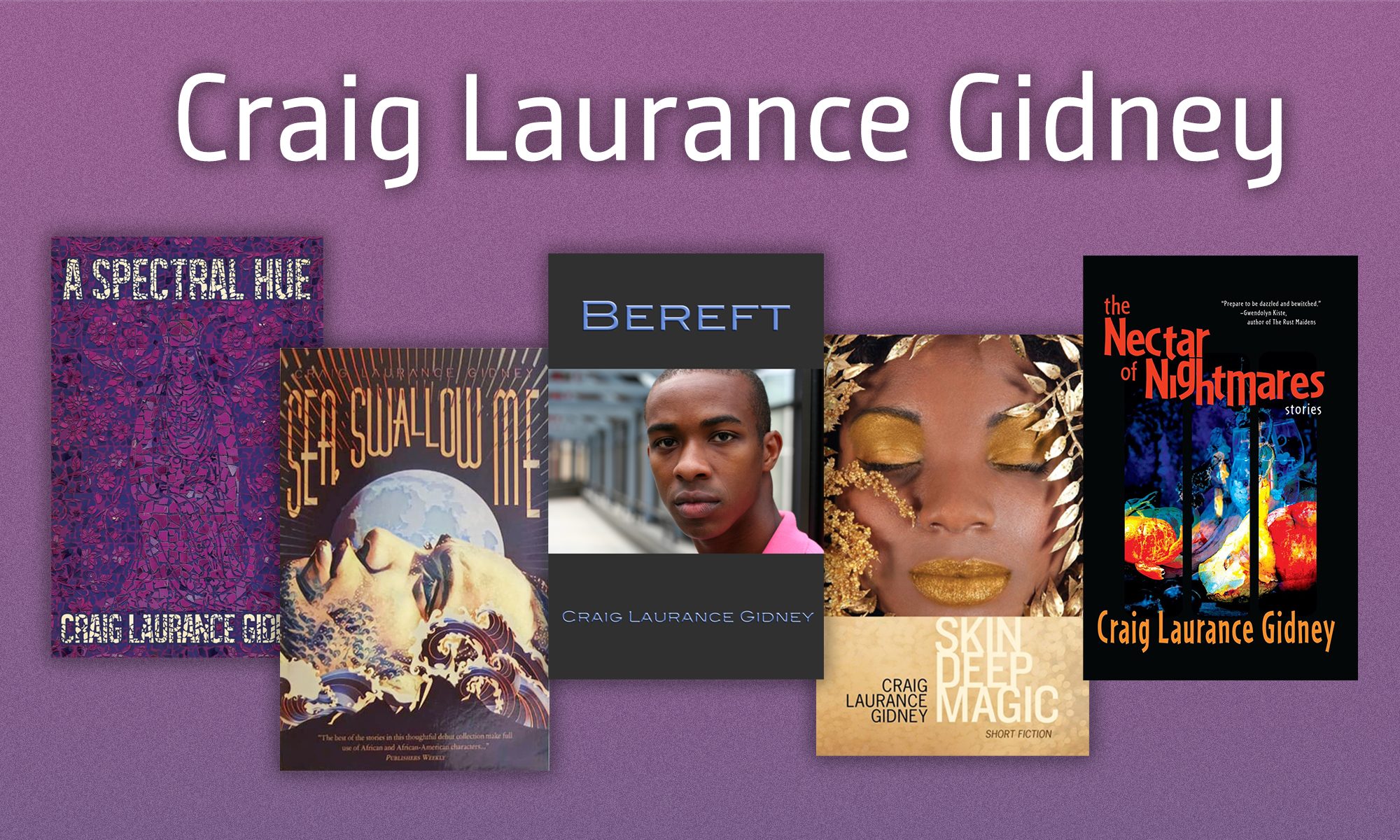
Bereft gets a blurb from Tanith Lee. #tanithlee #blurbs

Bereft is…a very important book on a smaller scale; a passionate, angry, sorrowful book, full of humor… an extremely easy read that challenges, educates, warns and celebrates true freedoms. The writing is fluid, colloquial and entertaining.

–Multiple award winner Tanith Lee (Young Adult, Science Fiction, Horror etc)

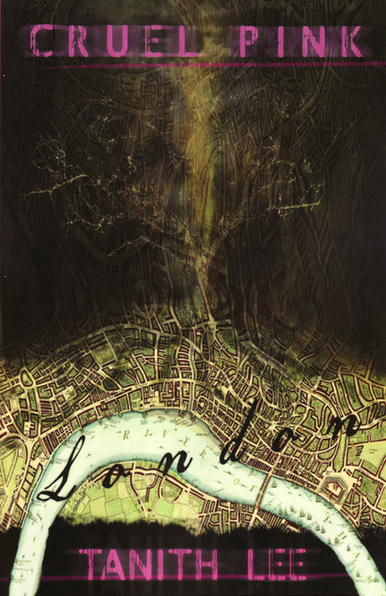
REVIEW: Cruel Pink by Tanith Lee. #tanithlee #immanionpress

Cruel Pink is the sixth book in Tanith Lee’s loosely configured Colouring Book Series. All of the previous books in this series explore both odd psychology and odd situations in mostly realistic settings. The stories can, and do leap into the paranormal, but that isn’t their focus. The theme of color, often in lurid hues, is the overarching motif of the series. The books share a distant kinship with other liminal and cross-genre writers like Chuck Palahniuk and Jonathan Carroll. Elements of crime fiction, ghost story, horror story and even metafictional conceits all parade through the narratives.

Cruel Pink might be the strangest of the books so far. The novel is a symphony of voices across various times, a style most recently and famously used by David Mitchell in his Cloud Atlas and Ghostwritten novels. The cast includes Emenie, a serial killer who lives in a post-apocalyptic future; Rod, an office worker in contemporary times; Klova, a young party girl living in a future society; and Irvin, a bisexual actor in the late 1700s. Each tells his or her story in conversational first person, and follows a day or a week in their lives.

cruel_pink

(Mild Spoiler)

As the novel progresses, coincidences begin to appear. It becomes quickly obvious that all four personae live in the same house just outside of London, but in separate times. And every now and then, they catch brief, ghostly echoes with each other. Also, the color pink in some form appears in each of their lives.

The book has ‘mood whiplash,’ like the Mitchell novels. Emenie’s sections are suspenseful and full of horror. Rod’s pieces are full of contemporary anomie. Klova ’s monologues describe a glittering semi-utopia and have erotic undertones, while Irvin’s life is full of ribald anecdotes.

The final denouement slots into place, courting but never becoming outright bathos. Cruel Pink, in the end, examines, almost playfully, narrative conventions in genre, flirting with both parody and homage.

Cruel Pink is compulsively readable and full of Lee’s trademark lovely language.

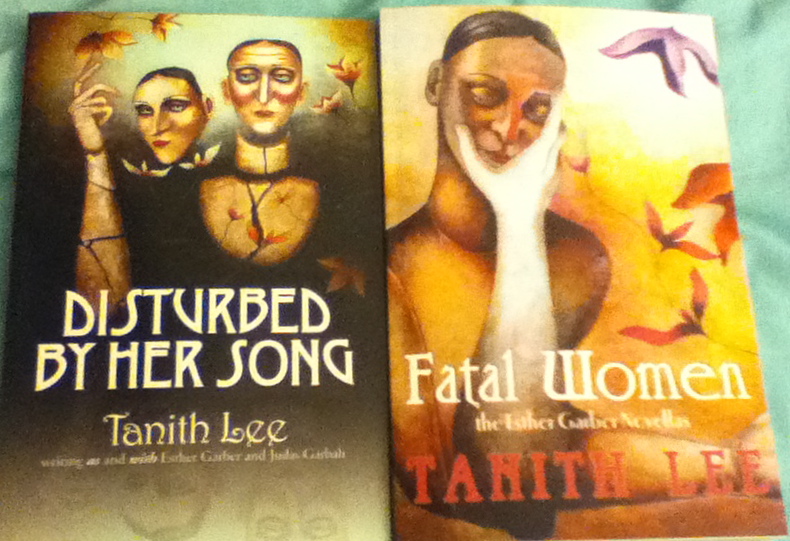
Tanith Lee writing as Esther Garber

Fatal Women: The Esther Garber Novellas by Tanith Lee are finally out from Lethe Press. It was a pleasure to work with Ms. Lee and get these books back in print.  The interiors, designed by Alex Jeffers, are exquisite.

Esther Garber books

These books are surrealistic historical lesbian fiction–kind of like Sarah Waters on opium, with Jeanette Winterson and Colette popping in as influences.

Tanith Lee Blurb

tanith_lee

The legendary author Tanith Lee has agreed to blurb Sea, Swallow Me.  Future copies of the book will have an edited version of the following blurb.

Sea, Swallow Me is a wonderfully original and eventful collection, whose stories range from the supernatural to the historical to the right-now moment. Craig Gidney combines an exceptional gift for prose poetry – often as dark and steely as it is beautiful – with an unerring sense of the preposterous and the horrifying. ( But add to that also occasional hilarity that should make a stone laugh aloud.) He breaks rules and remakes them, as many talented writers will, and is undaunted by the murks of society or psyche. Though inevitably ( and rightly ) he brings to his work the voices of Black and Gay Experience, what speaks most strongly throughout is the Human Experience – yes, even when confronted by a god of the sea. Here are elements of the young Ray Bradbury, of John Steinbeck, of Toni Morrison and James Baldwin and Angela Carter. But most of all it is the uniqueness of Gidney’s own take on life, clad in vivid, cunning and, in places, Dionysian language, that make this a must-read ( and read again ) collection. With new writers producing work of this caliber, the future of books looks bright.

Thanks to Ms. Lee.  It truly is an honor!