New Review of SEA, SWALLOW ME!

Sea, Swallow me, by Craig Lawrence Gidney

# ISBN-10: 9781590210666, # ISBN-13: 978-1590210666

From Lethe Press, Sea, Swallow Me is a haunting, heart-breaking and lush collection of short stories. Gidney explores the trials of being African-American, of being gay, of being human. His language is beautiful, his themes are unique, and again, mythology threads beautifully through very modern stories. I don’t think I’ve seen a more lovely blend of old and new.

From: http://wingsliftingwide.wordpress.com/2011/07/17/books-and-music-junejuly-2011/

Readercon 2011 Schedule

Friday July 15

1:00 PM        Complicating Colonial Encounters. Craig Laurance Gidney, Anil Menon (leader), Robert V.S. Redick, Vandana Singh, JoSelle Vanderhooft. The colonialist narrative of taking over a wealthy new world to fund a decadent old world, while increasingly disparaged, is still prevalent and popular. Scholars Istvan Csicsery-Ronay and John Rieder have both written about science fiction’s portrayal of empires; Nalo Hopkinson’s anthology So Long Been Dreaming sought to expand the ways SF writers discuss colonial excursions; and there is substantial ongoing discussion of colonialism and anti-colonialism in steampunk. How can we as writers and readers complicate our understanding of narratives surrounding invasion, conflict, and territory before setting out to write another tale of humans conquering “the final frontier”?

Saturday July 16

1:00 PM      Urban (Fantasy) Renewal. Leah Bobet (leader), John Clute, Ellen Datlow, Craig Laurance Gidney, Toni L.P. Kelner. The term “urban fantasy” has encompassed the work of Charles Williams, a contemporary of Tolkien who sometimes situated his fantasy in London or suburban settings as opposed to a pastoral secondary world; the novels and short stories of Charles de Lint, Emma Bull, or Robin Hobb (as Megan Lindholm); the phantasmagoric cities of China Miéville or Jeff VanderMeer; and most recently, the magical noir of Jim Butcher and Charlaine Harris. Is it possible to reclaim “urban fantasy” as useful critical term? Rather than wring our hands at how it no longer means what it did, can we use it to examine what these very different writers have in common, and to what degree they reflect different eras’ anxieties around and interests in the urban?
8:00 PM        I’ve Fallen (Behind) and I Can’t Get (Caught) Up. Don D’Ammassa, Michael Dirda, Craig Laurance Gidney (leader), Jennifer Pelland, Rick Wilber. In a recent blog post for NPR, Linda Holmes wrote, “Statistically speaking, you will die having missed almost everything…. There are really only two responses if you want to feel like you’re well-read, or well-versed in music, or whatever the case may be: culling and surrender.” How do you choose among the millions of books that you could be reading? Do you organize your “to read” books or are all your books “to read” books? How useful are book reviews, Amazon recommendations, Goodreads, LibraryThing, etc.? How do you budget your limited reading time? And how do you cope with the knowledge that you will never read everything you want to?

My schedule at the Atlanta Queer Literary Festival on June 23-25

Saturday, June 25, 11 a.m. to 5 p.m.
Day of Readings, Panels & Workshops at Decatur Public Library

11 a.m. to noon: Brunch in the lobby

11 a.m. Social Media Panel: Collin Kelley, Karen Head, Stan Fong

12 p.m. Publishing Panel: Bryan Borland, Craig Gidney, Philip Rafshoon

1 p.m. Film Panel: Andy Ditzler, Alex Arias, Taryn Crenshaw, Jim Farmer

2 p.m. Fiction Panel: Daniel Allex Cox, Craig Gidney, Collin Kelley

2 p.m. Poetry Reading: Akinfe Fatou, Bryan Borland

3 p.m. Diversity in Literature: Kerrie Cotton Williams, Akinfe Fatou, Bucky Motter, Charone Padgett, Craig Gidney

4 p.m. Poetry Workshop: Akinfe Fatou

4 p.m. Fiction Reading: Daniel Allen Cox, Megan Volpert, Daniel Black

Gears of the City by Felix Gilman

Gears of the CityGears of the City by Felix Gilman
My rating: 3 of 5 stars

This sprawling novel is a mess–full of dark magic, horror and bits of beauty. It has a plot that is rather vague and hazy. The structure shifts and changes, like the city it describes. At its best, Gears Of The City mixes the high gothic style of Mervyn Peake with the fever dream surrealism of Lautremont’s Maldoror. There are times when Gilman’s invention overpowers his storytelling skill, and some of the characterization is weak. But the overheated, imagistic prose keeps the dark marvels coming.

View all my reviews

Review: Greyglass by Tanith Lee

Greyglass is a small, quirky book. Not quite a ghost story and not quite a character study novel. It has elements of Gothic literature and moments of offbeat, distinctly British humor. In many ways, it reminds one of  the uncategorizable novels of Jonathan Carroll or Jeanette Winterson but with its own unique flavor. The supernatural element–the seemingly sentient house–while integral to the plot, reflects the disturbed mother-daughter relationships that are at the heart of this novel.
While there are men in the novel, it mostly explores female bonds–familial, friendship, love, betrayal and even hate. It moves quickly for a mostly interior novel, mostly due to the exquisitely crafted language.

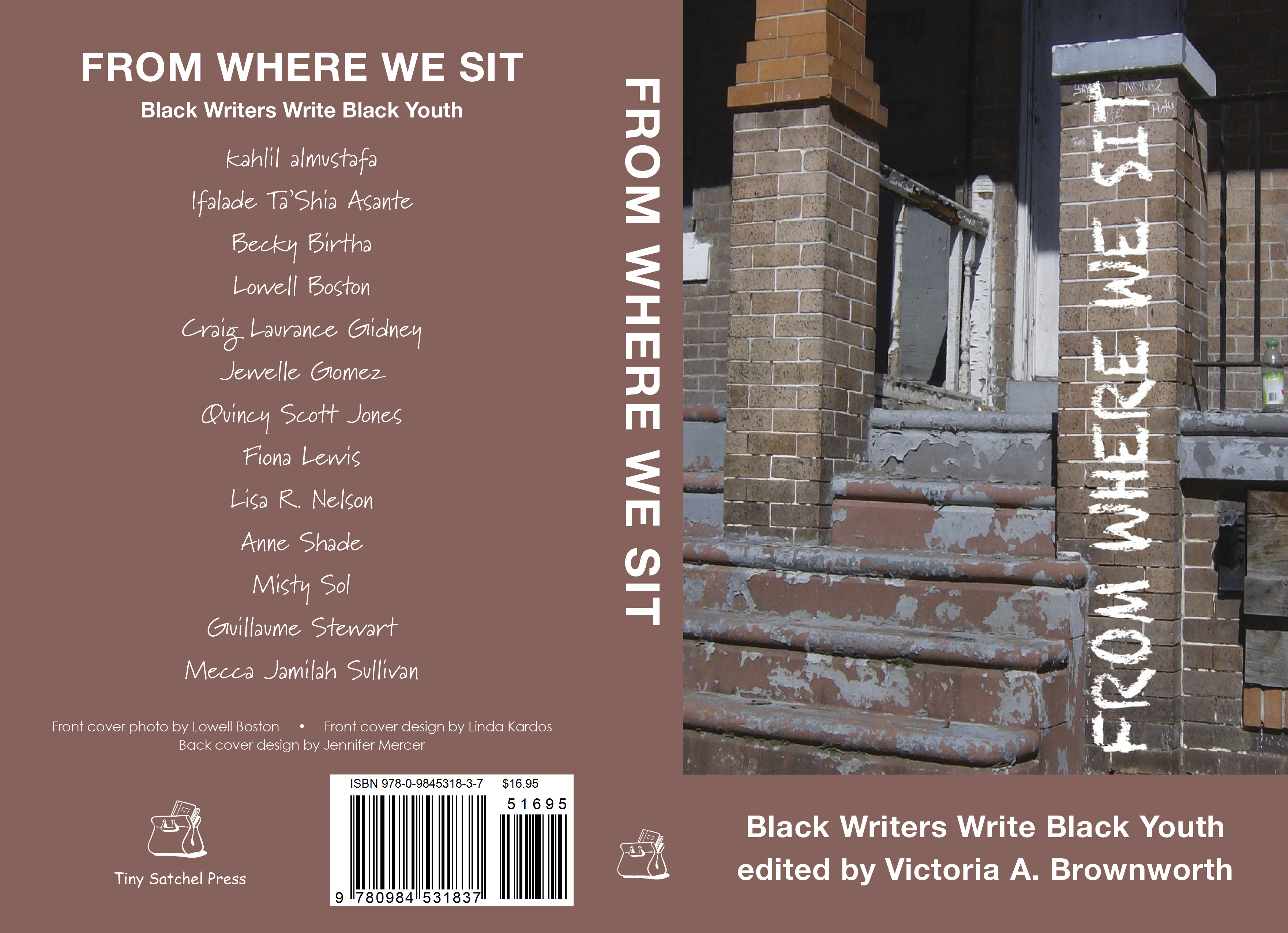
From Where We Sit: Black Writers Write Black Youth

I have two stories in the forthcoming anthology From Where We Sit:  Black Writers Write Black Youth (Edited by Victoria A. Brownworth).  The allegorical “Circus Boy Without A Safety Net,” and the darker tale of sexual abuse, “Bereft.”  The book comes out in February.

Icarus 7: Winter 2010

I acquired 3 stories printed in the forthcoming issue of Icarus:  The Magazine of Gay Speculative Fiction.  I’d be awfully happy if you bought the magazine–or subscription!

The seventh issue of Icarus released next week: Winter 2010 has several stories that will contribute to your shivers, of delight and dread. Hauntology is a genre of music that combines voices from obsolete recording technology with modern electronics. “Lonesome Road,” by Matt Cheney, is almost a literary version of hauntology, a different kind of ghost story—postmodern, but chilling all the same. Distant voices also play a role in Sunny Morvaine’s “The Shapes of Shadows,” a mysterious tale of alien technology. Esoteric knowledge, lust and revenge spill through the pages of Alejandro Omidsalar’s “Abbadon’s First Rule,” a tale of horror and black comedy. And “Bargain Books” asks the question, is invisibility a blessing or a curse for gays? “Blue Moon,” this issue’s poem, shows that mothers don’t always know best. Hal Duncan is one of my favorite authors. Every time he publishes a short story, the field of gay speculative fiction is that much richer. So we hope you take some delight in Craig Gidney’s interview with the man.